Happy Monday –
This is the kind of New Monday that I adore writing, one that takes us through music and recording into lives and culture, and weaves all sorts of people and places and things together. There’s even a link to a lesson. I don’t often pull these off, but I think I did with this one.
Here’s Fly Like an Eagle.
https://youtube.com/playlist?list=OLAK5uy_lRxgtVPfsBuzpgFdYdFi0Ej0J2mNwzz2A&si=Y6MhFhO07t7bqHsc
Steve Miller
Steve Miller’s dad, George, was a doctor and an amateur recording engineer in Milwaukee, Wisconsin. His dad’s best friend was from Waukesha, and he was a recordist, and also a guitarist, named Les Paul. Les was Steve’s godfather.
George and family moved to Dallas, Texas, in the early 1950s. Dad continued recording, and young Steve hung around with cats like Charles Mingus and T-Bone Walker. Obviously, Steve was going to become a musician.
It helped that his family was well-off. Steve went to college, studied comparative literature for a semester abroad in Denmark. He dropped out of school at the last minute and went to Chicago to play blues. Eventually disenchanted, he returned home, was disenchanted with that, then went up to San Francisco and caught the Jefferson Airplane live. San Francisco enchanted him. He stayed and formed the Steve Miller Band in 1966.
The band was signed, made blues-based psychedelic records which were so of the time and place that was San Francisco during the Summer of Love. They had a few minor hits.
Steve was, of course, more than a guy who played guitar in a band. The dude was 6 credits shy of a degree in literature. He was incredibly well-read. Similar to Paul McCartney, who was his friend and played on a few songs with the Steve Miller Band, Steve was into the avant-garde, and experimented with tape loops and electronic music when he wasn’t recording and touring.
In 1973, he released The Joker, and finally had a breakthrough hit with the eponymous single. Similar to Bowie, Miller performed in personas, and name checked them on The Joker—the Space Cowboy, The Gangster of Love, and, of course, Maurice.
His next two albums, Fly Like an Eagle and Book of Dreams, were recorded at the same time but released consecutively in 1976 and 1977. The Steve Miller Band became the biggest thing in the world. Singles like Take the Money and Run, Rock’n Me, Jet Airliner, and Jungle Love were inescapable on FM radio. It was the soundtrack of high school in white-boy America, of which I was an unknowing member. But the real killer was the totally frickin’ cool Fly Like an Eagle.
Fly Like an Eagle
Fly Like an Eagle started with a synth intro/etude, played by Steve M. on an ARP. It was a nod to his avant-garde leanings and hinted at some of his later stuff, albums like Abracadabra in 1982.
The blues of the song evolved out of jam sessions across three years, as the band cut unsuccessful versions of the song multiple times at studios on the West Coast. They finally nailed a version up in San Francisco at probably Pacific High Recording in San Francisco. The basic tracks featured Miller on guitar, bassist Lonnie Turner, and a fantastic drummer, Gary Mallabar. Crucial to the final version of Fly Like an Eagle was Joachim Young, who played the brilliant Hammond organ parts on it.
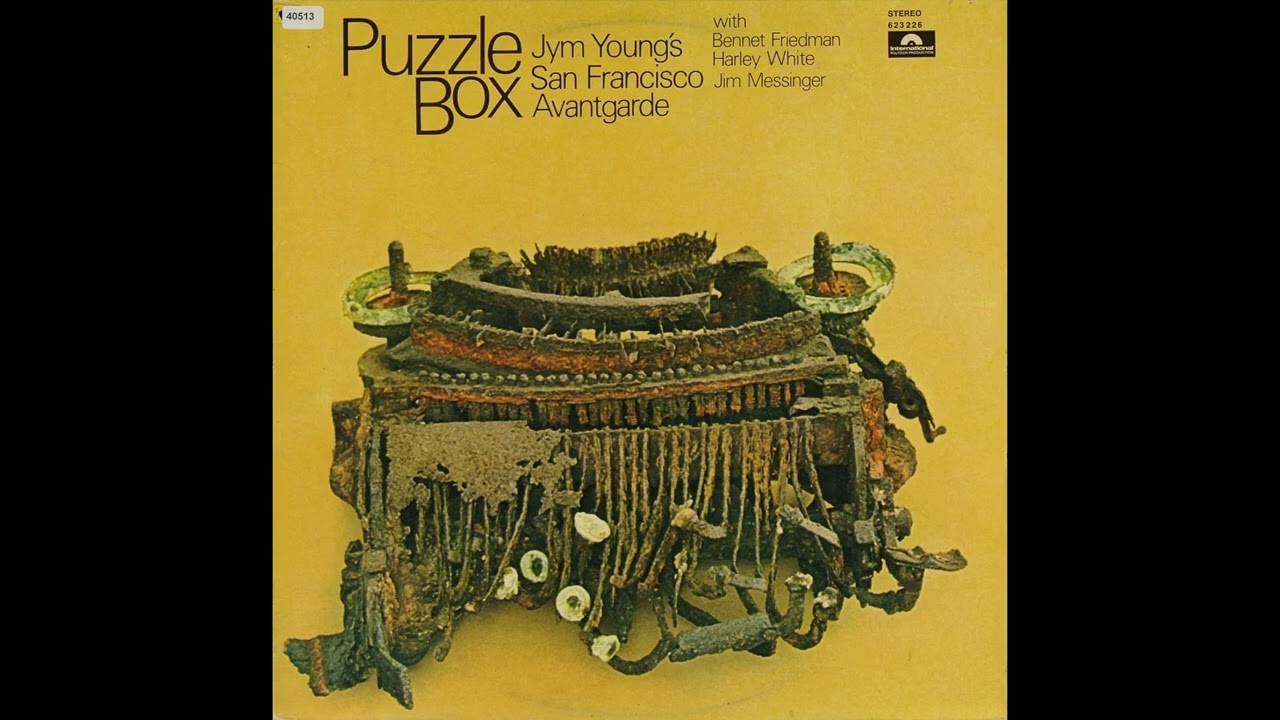
Joachim Young is another wonderful musician out of Rochester, New York. He was a jazz pianist deeply involved in San Francisco’s avant-garde and free jazz music scene. I have this album on in the background right now. The first minute is Young on thumb piano, and then it stretches into free jazz.
Jon Mattox, who has multiple social media channels under the name Creating Music and Sound, did a great breakdown of Fly Like an Eagle a few weeks ago. In fact, the reason I am writing on this album and song today is that Jon messaged me that Steve Miller used a Shure Level-Loc on the vocal… “Really?” I thought. “It doesn’t sound all crushed and mangled like most Level-Loc usages.”
Here is a link to Jon’s breakdown. He goes into depth on the organ parts. Well worth a listen.
https://www.facebook.com/reel/1761438001519380
Back to the recording of Fly Like an Eagle. They had a 16-track recording of it, sans vocals. They added a stripe of time code to it, and synced it to a portable 8-track recorder that Miller traveled with. They mixed the 16 tracks down to two, which left Miller 5 tracks for vocals (remember – another track on the 8-track had to have time code on it so they could synch things for the final mix.)
Now, 3M didn’t make a portable 8-track recorder, so actually, it is likely that Steve travelled around with this monster broken down into road cases. Miller’s home studio was in Novato, California. There he had a little console built by Dick Swettenham (he of Olympic Studios and later Helios). We can see a bit of it in this picture, but no Level-Loc.
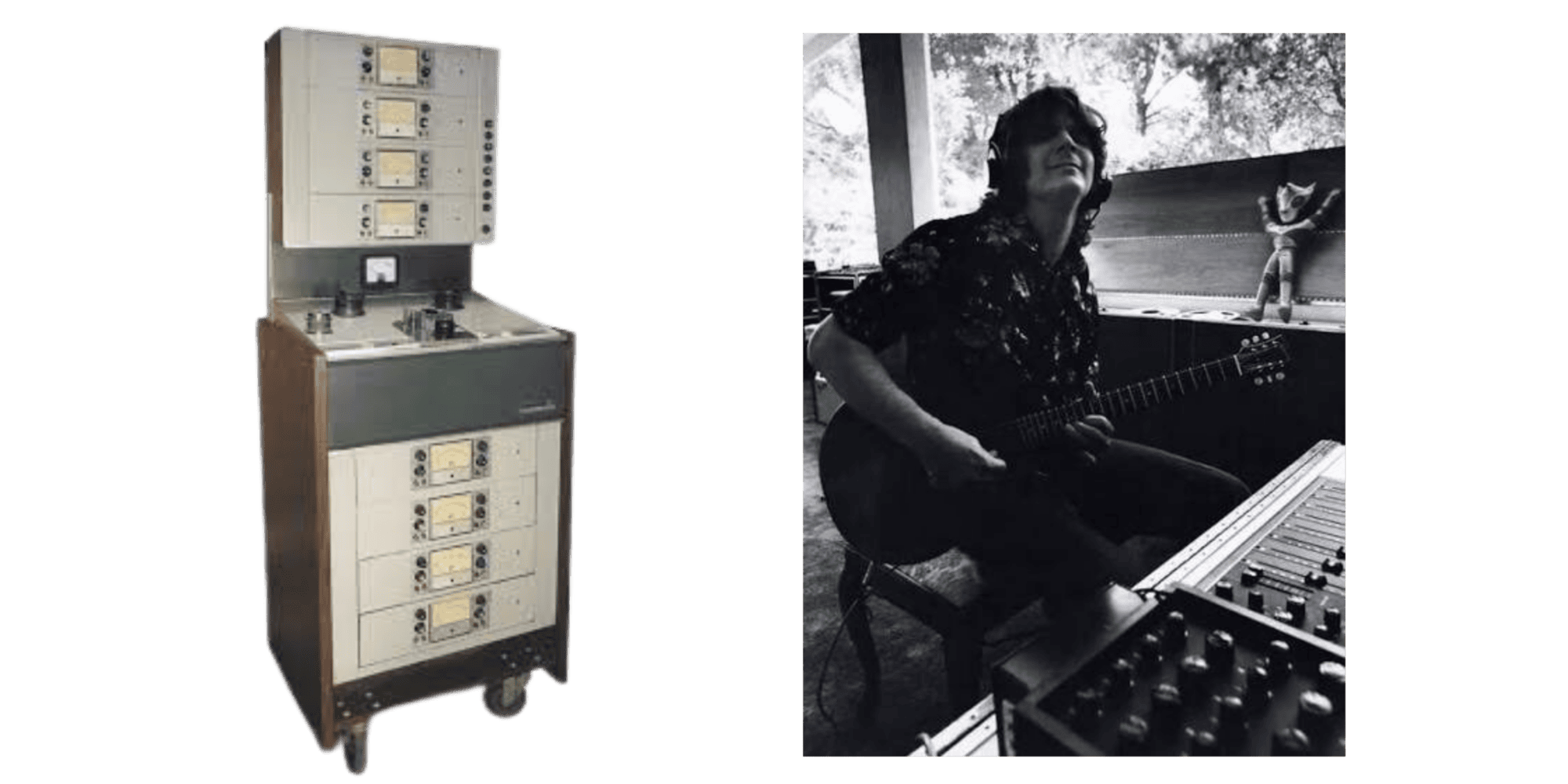
Miller tracked his vocals using an RE-20 through a Shure Level-Loc.
Kaye-Smith Studios
Fly Like an Eagle was mixed at Kaye-Smith Studios in Seattle. Oh my…. yet another story…
Kaye-Smith started out as a broadcast company, with actor Danny Kaye as an investor. Unfamiliar with Danny Kaye? Oh POOR YOU!!! Danny Kaye is one of the most brilliant people of all time. An amazing singer and physical comedian. Some of you might have seen this sword fight from The Court Jester. Good lord! This is so good!

The whole movie is great. Show it to your kids.
Fly Like an Eagle was mixed on a customized 40 input API console. The opening synth parts appear to have been played live during the mix by Steve Miller. Weirder things have happened.
Kaye-Smith was a major studio. Miller mixed a number of albums there. Bachman-Turner Overdive cut You Ain’t Seen Nothing Yet and their entire Not Fragile album there. Heart recorded their breakthrough Dreamboat Annie (Barracuda, anyone?) and Bebe Le Strange there. Steve Lawson purchased the studio in 1979. In 1991, the Wilson sisters of Heart bought in and renamed the studio Bad Animals. Nirvana, Soundgarden, Pearl Jam and Alice In Chains all worked out of Bad Animals, making it a major locale during the grunge era. The Wilson sisters left in 1997, the new owners renamed it to Studio X. It moved from the original Kaye-Smith location in 2018.
A Level-Loc Lesson
As for the Steve Miller Level-Loc vocal… I experimented a bit and wrote up a lesson on how to use the Level-Loc as a compressor. Frankly, it really doesn’t work like a compressor, but if you set it right, you can get a very nice vintage FET sound out of it for vocals. Follow the link below.
Level-Loc 02 – Controlling the Compressor
Ok. Enough for a Monday. Have a great week. Make some music, do some recordings, hang out with friends, listen to the entire Fly Like an Eagle album, because it’s great and WATCH THE COURT JESTER.
Much love,
Luke