Happy Monday –
Let’s start off by listening to something quite astounding:

The Bad Plus started as a jazz piano trio led by Ethan Iverson with Reid Anderson on bass and Dave King on drums. Iverson left in 2017, replaced by Orrin Evans, who left in 2021. Guitarist Ben Monder and tenor player Chris Speed joined. In 2026, The Bad Plus are embarking on their farewell tour, capping a career that has stretched the boundaries of avant-garde jazz.
This song is off their fourth album, Suspicious Activity? The Bad Plus did a lot of interesting covers—We are the Champions, Heart of Glass, Iron Man (the Black Sabbath song), Every Breath You Take, Smells Like Teen Spirit…
Suspicious Activity? was produced by Tchad Blake, as were the two albums preceding it. They are amazing recordings.
Tchad, these days, is known as a mixer. I got to know Tchad for his engineering, though, much of it through his work with producer Mitchell Froom on albums by Elvis Costello, Crowded House, Suzanne Vega, Richard Thompson, Los Lobos, The Bangles and more.
This Chariots of Fire recording is awesome. The upright bass… I recorded tons of upright bass and never got a sound like that. The piano… the drums! The pump and plash of the cymbals, the breathing of the room. The rolls that sound like thunder rolling in. Amazing drum sound.
Tchad tracked the drums with a Shure Level-Loc, the hardware unit. This is a more subtle use of it. On other recordings, such as Bone Machine, the Tom Waits record which was Mr Blake’s first use of the Level-Loc, the processing is much more obvious. And of course, there’s Soul Coughing’s Ruby Vroom album, which Tchad produced and recorded, the album is full of sonic experiments.
The Level-Loc
The Level-Loc is a FET compressor that was designed to flatten out the levels of disparate speakers using a microphone, like on a podium at a high school awards presentation. It is a weird box.
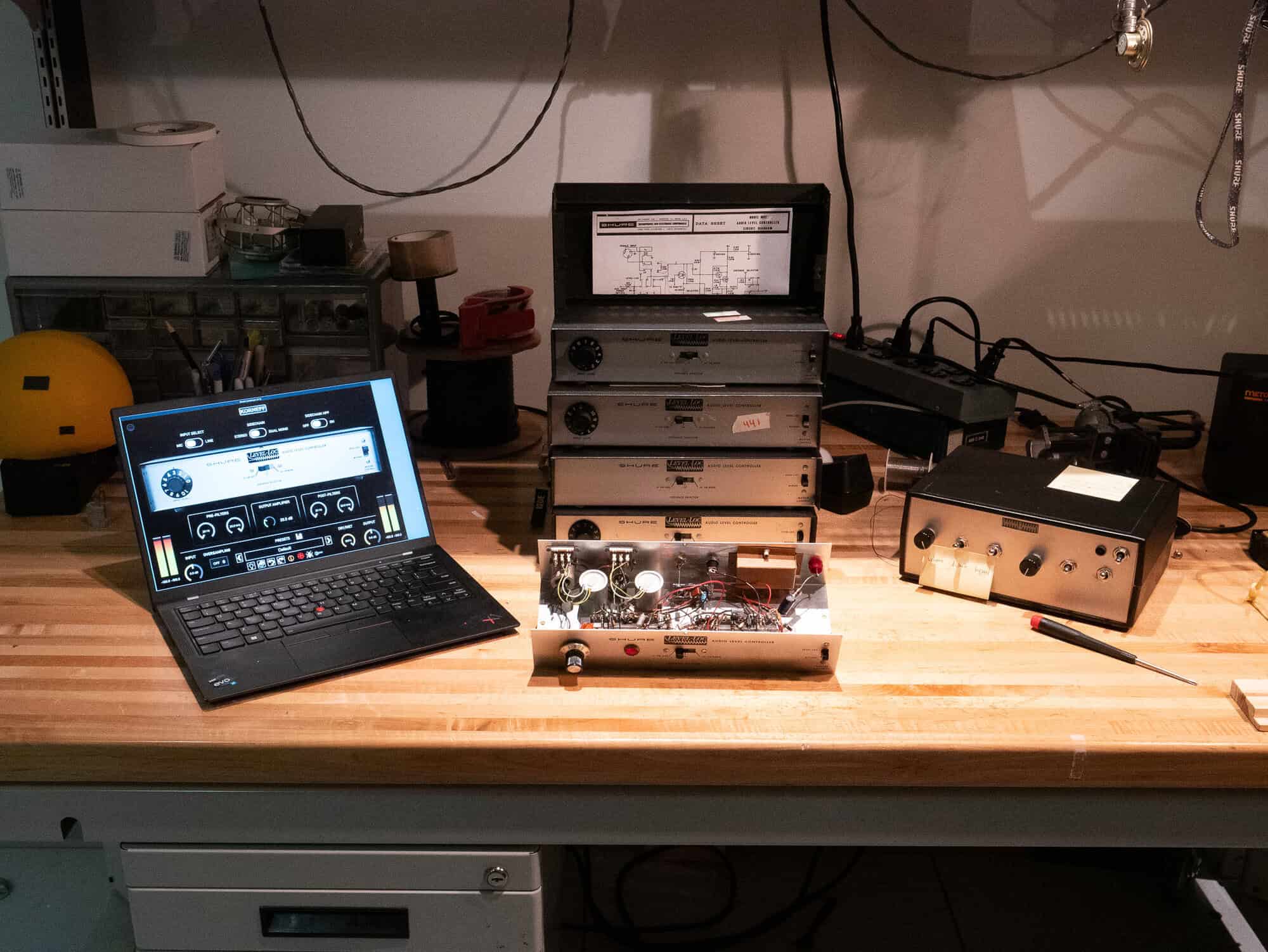
First of all, the hardware unit runs at mic level. Which means that the signal flow was supposed to be something like:
Microphone–>Level-Loc–>Mic Preamp–>Mixer–>Power Amp–>Speakers
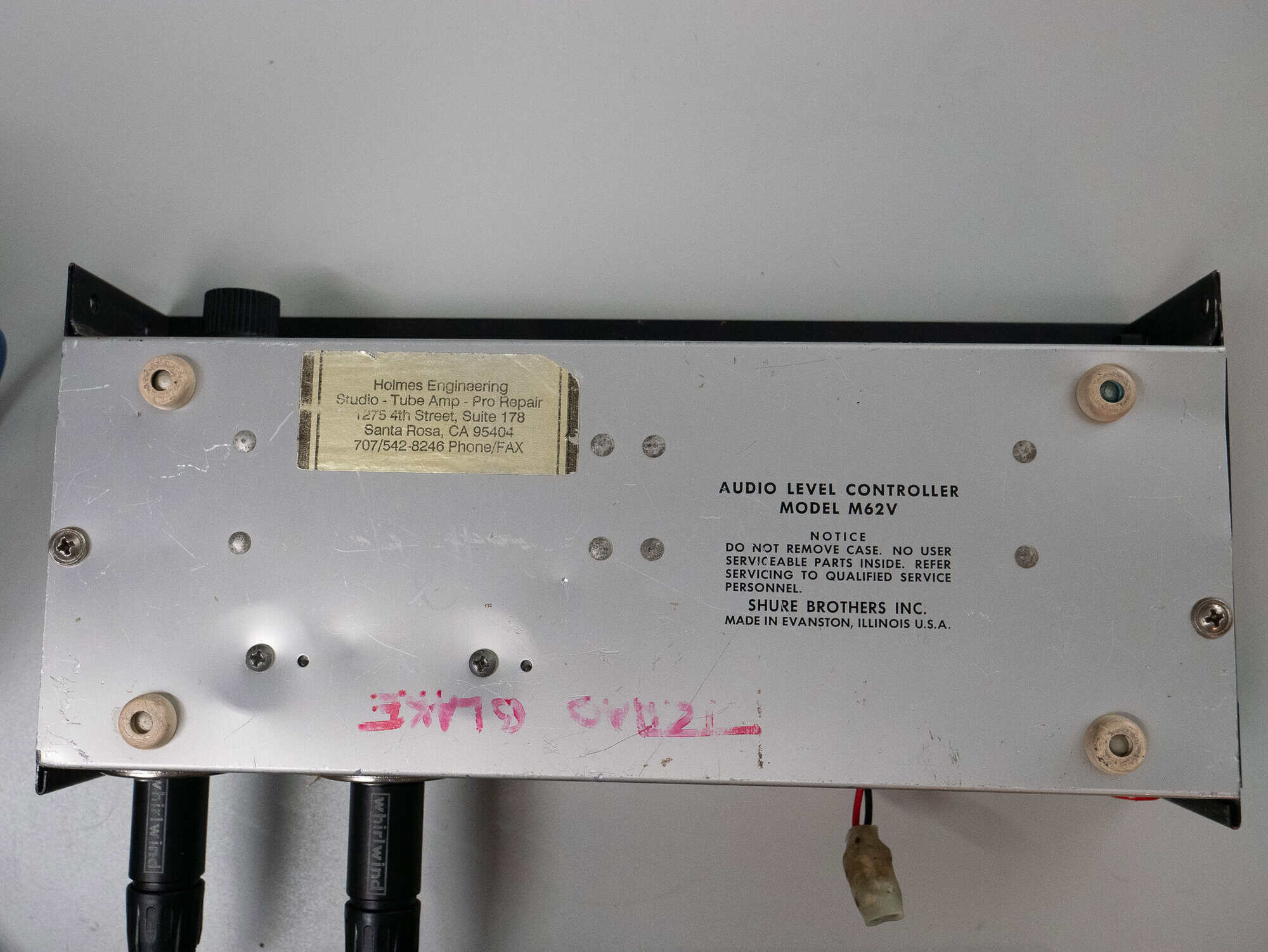
Huh? A compressor BEFORE the pre-amp? Wouldn’t that be noisy? Yep! The hardware Level-Loc was noisy. And it wasn’t really designed to be adjustable. It had a fixed release time, which you could change by soldering in different capacitors and resistors, all sorts of impedance matching switches (because the whole trick to getting a great sound out of a mic is to properly match the impedance—I kid you not) and a switch on the front panel to compensate for the distance from the person’s mouth to the microphone. The Level-Loc was supposed to be installed and left alone to do its noisy work.
Tchad and Tom Waits stumbled across a Level-Loc at an amateur radio swap meet (these are great events. I have a ’57 Fender Bandmaster 3×10 combo amp from a radio swap meet). Tchad bought it for five bucks, having no idea what it might do beyond the fact it had XLR connections, plugged it into a console at line level and promptly blew his very first Level-Loc up. Of course. Because who ever heard of a mic level compressor? After getting it fixed, he ended up using it all over Bone Machine, and on drums, somewhere, on virtually everything else he tracked or mixed after. These days, he uses our plug-in version, because not only does it sound identical, it has no noise! When he was tracking with the Level-Loc, he always had to chase it with a Rocktron HUSH unit to keep the hiss and hum at bay.
Using the Level-Loc
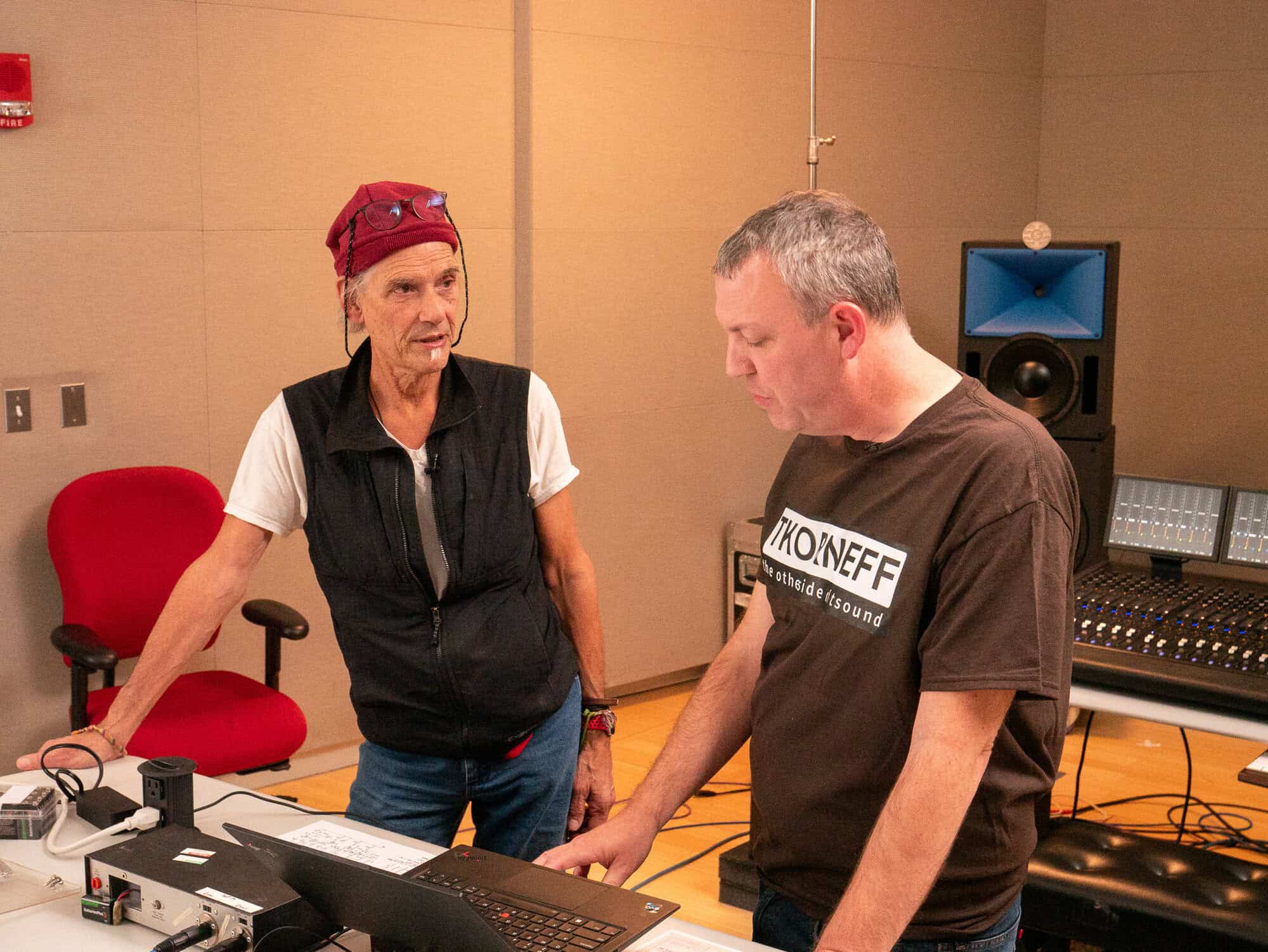
The hardware Level-Loc, and our plug-in, have a lot of nuances. It’s an easy box to ram a signal through and get a distorted output. It’s another thing to master it and really get control out of it.
I’m writing a course on it—the first section is done. It covers a simple, fast way to set the Level-Loc up and a bunch of quick tips that will help you get some control on the little beast. You can download a Shure Level-Loc demo here.
Click here for lesson one of the Level-Loc course.
And that is all for this Episode. Go make a bunch of records.
Warm regards,
Luke