Happy Tuesday!
Monday was Labor Day in the US, and that is what Dan and I did, and are still doing on Tuesday. Laboring. Because we’re working on getting out, finally, the Sound Techniques Alpha Range Channel.
I was thinking of pasting in part of the manual for this email, rather than writing anything new. All I’m going to be writing about is the Sound Techniques anyway, right? But there are always new stories to tell.
Dan and I have both been mixing using the Alpha Range, and it winds up on everything. Yes, we are testing it, but it genuinely brings something special and drops it in the lap of your tracks. It sounds great. The question is why. Don’t all preamps sound the same?
The designer of the circuit, Geoff Frost, was very clever. He came up with an unorthodox amplifier that was designed to have a specific harmonic distortion to it. There’s no way it was an accident; it was on purpose. The distortion is asymmetrical. What does that mean?
A waveform has a positive movement—a crest or a peak, and a negative movement, a dip or a trough. The waveform does this—peak and trough—150 times in a second if the frequency of the wave is 150Hz. Asymmetrical distortion means that the shape of the peak is different than the shape of the trough. What goes up looks different than what goes down.
Asymmetric waves like this are common. A lot of consoles and equipment have this happening. But the Sound Techniques one looks unique. Frankly, it’s a little weird-looking, and one of the biggest issues with developing our software was matching that weird-looking waveform without maxing out the processor of the computer. Remember, we make our plug-ins by simulating the circuit, not by slapping on a wave shaper.
The issue with this particular plug-in is that the waveform changes depending on the signal feeding in and the saturation of the input transformer and the gain of the amplifiers involved, and the settings on the EQ and the gain of the EQ makeup gain amplifier and the gain of the summing bus amplifiers, all of which Dan had to model, and all the math has to be done at the sample rate of the project, so 48kHz or whatever it is set to. The trick wasn’t getting it to sound good, it was getting it to sound good fast.
There’s another weird thing about the preamp that’s clearly on purpose: it has a bump in the frequency response at 10Hz. Why that? 10Hz is below the range of our hearing.
The 10Hz bump changes the way low frequencies generate harmonics. Remember, harmonics always go up above the fundamental. If you goose up the low-end with a bump down there, you change the harmonic structure of the lows above it. This is sort of the same thing that happens when you run analog tape slower, you get a low-end bump.
That asymmetric distortion and low-end bump are endemic to the preamp circuit, and the Sound Techniques uses that same circuit all over the console. The preamp, the makeup gain amp, the summing amps are all the same thing, so the sonic characteristics are amplified through each stage of the console. The sound passing through just gets better, bigger and richer until it comes out.
The original Sound Techniques A-Range console sounded so different and better than anything else out there, that Tutti Camarata of Sunset Sound Studios in Los Angeles, chose it specifically to install in his new room, Studio 2, and had it imported into the US, the first British console on US soil. The second was installed at Elektra Sound Recorders a few months later. The execs at Elektra loved the sound of Sunset 2 and had Tutti broker a deal.
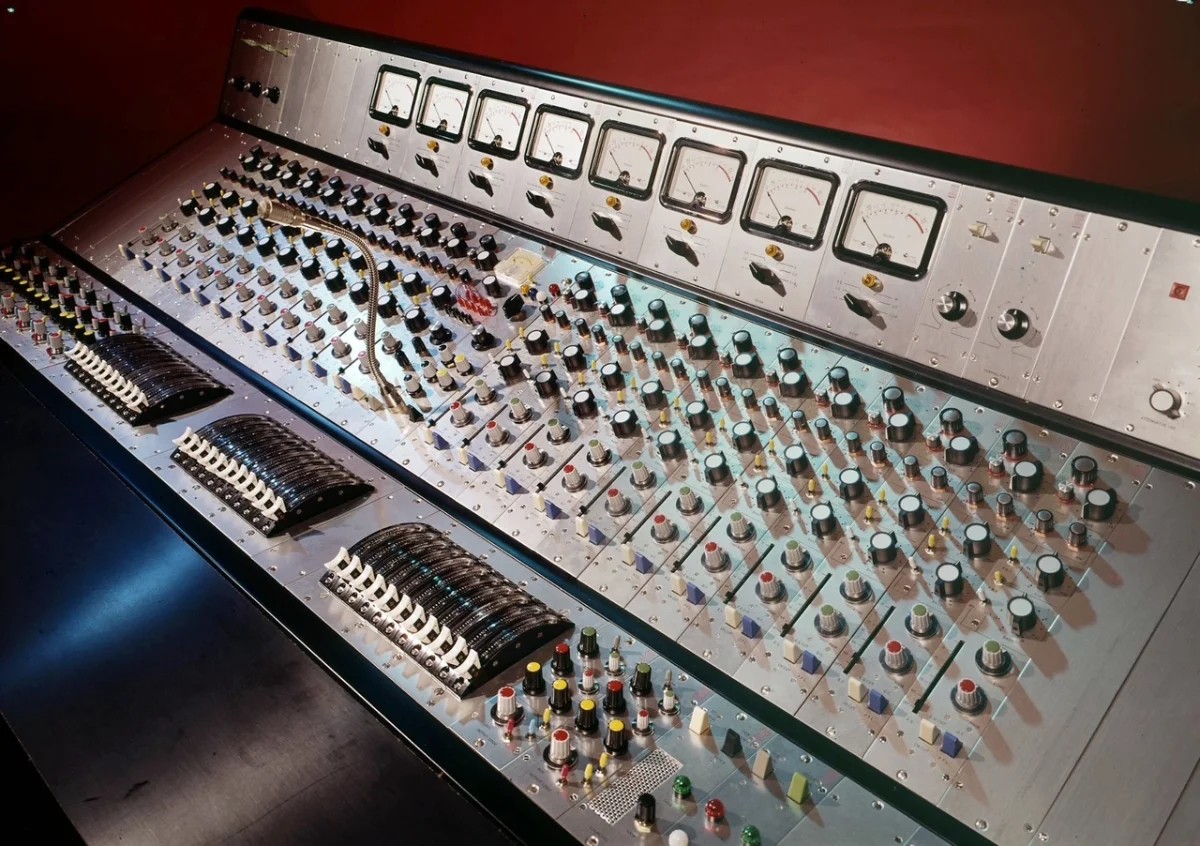
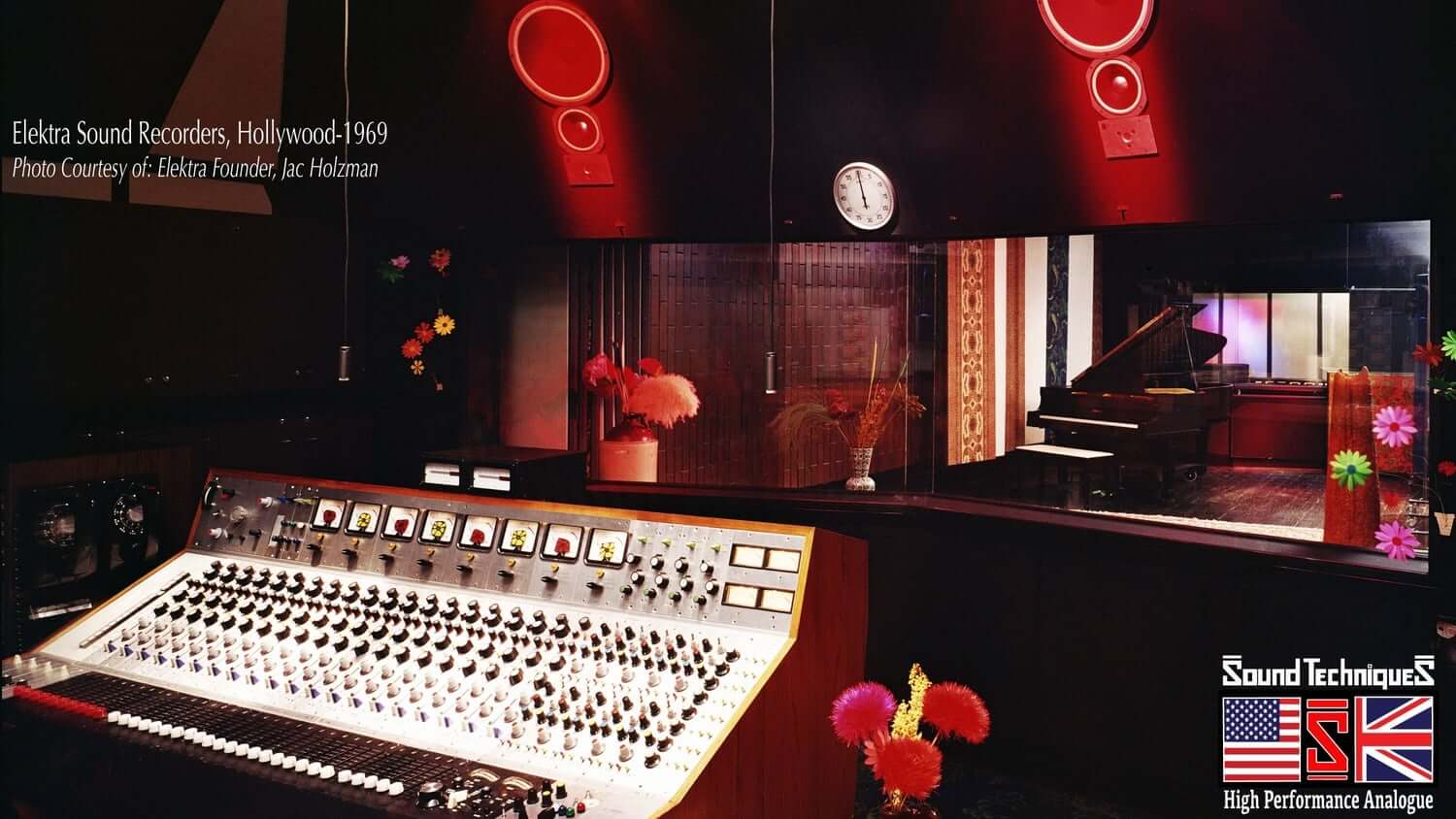
Everybody loved the sound of Sunset 2. It had a great reverb chamber, a sweet recording space, and what was technologically the best recording console in the world at the time, a Sound Techniques A-Range. Artists and producers started flying across the Atlantic and then across the US to record or, at the very least, mix on the Sound Techniques at Sunset.
The Rolling Stones especially loved Sunset Studio 2. Their fabled best album run, starting with Beggars Banquet and ending with Exile on Main St., was mixed in total or in part on a Sound Techniques, often at Sunset Sound Studio 2. And in 1973, the Stones bought a Sound Techniques System 12, which was a smaller, more mobile console, and did Goats Head Soup with it.
Trident Studios opened around 1968. The owners, Norman and Barry Sheffield, chose a Sound Techniques A-Range console. When the studio expanded, they moved the first one, which had eight buses (designed for 8-track analog recording) and installed another Sound Techniques with sixteen output buses for 16-track recording. Typically at Trident, bands tracked downstairs and then mixed upstairs.
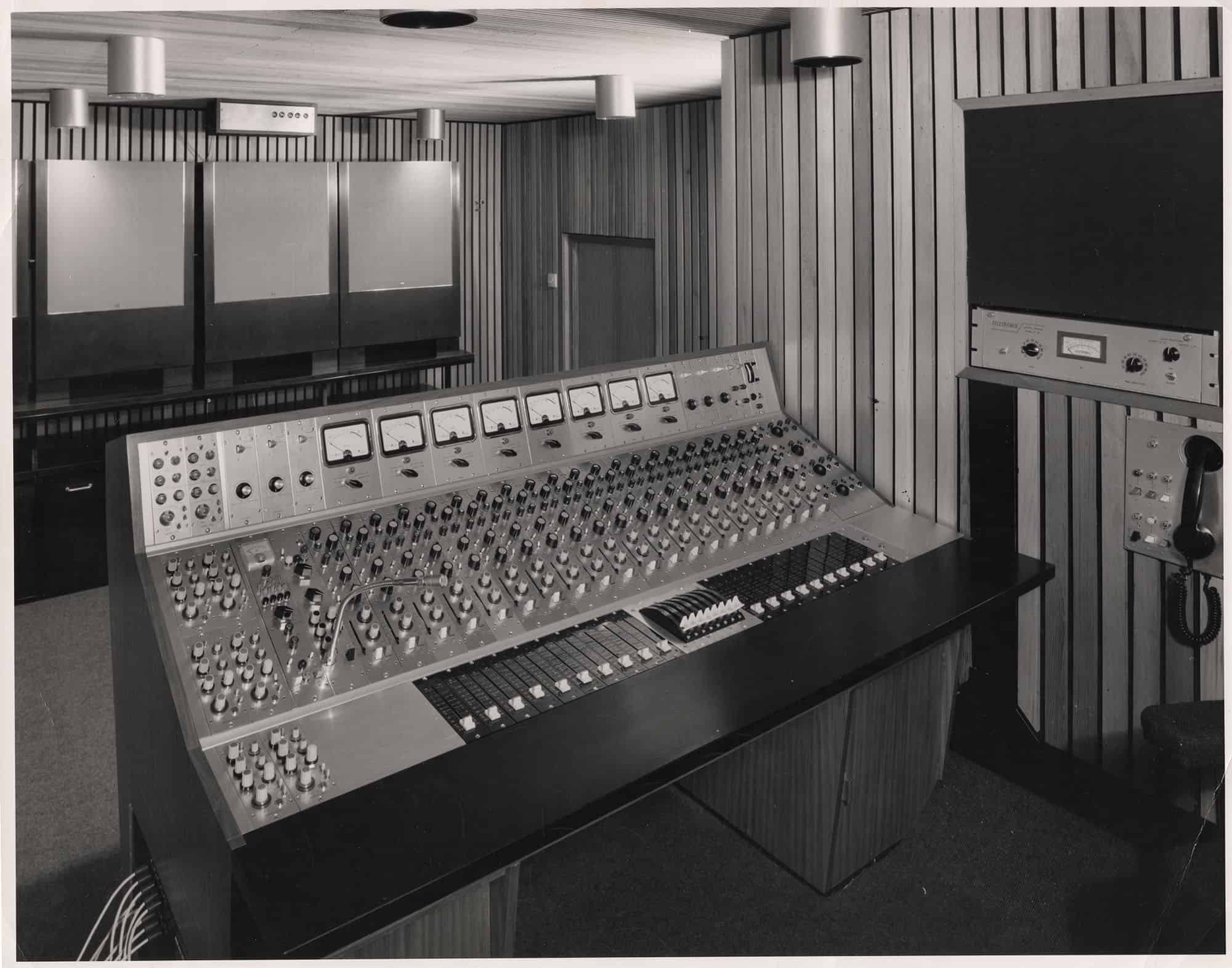
Records made at Trident through about 1971 were tracked and/or mixed on a Sound Techniques desk. This includes things like “Hey Jude”, and David Bowie’s album Hunky Dory—recorded and mixed at Trident on Sound Techniques.
In 1970, it became apparent that 24-track was next, and the Sheffields began looking for a console that had the needed twenty-four bus outs. There was another issue: Trident had a really small control room, as you can see from the picture below. The desk had to fit that control room. They ultimately decided to build it themselves.
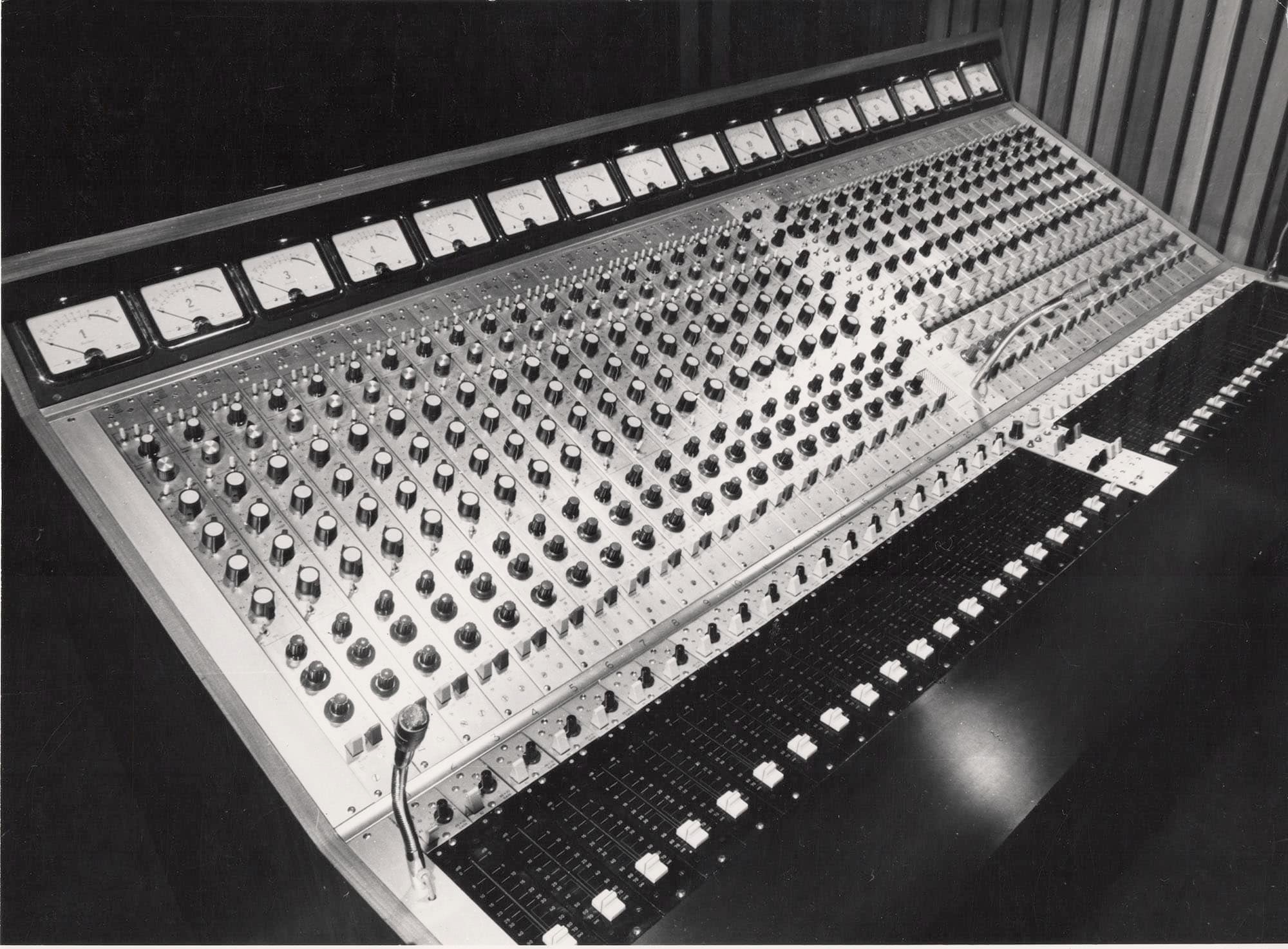
The main designer was a guy named Malcolm Toft, who was Trident’s lead engineer and eventual studio manager. As he mapped out the console, he encouraged feedback from the rest of the engineering staff, which included Ken Scott and Roy Thomas Baker—certainly not slouches—and they collectively came up with Trident’s first console, also called the A-Range. They installed it in the tracking room and that’s the first Trident console made. This is sometime in 1971. The Sound Techniques A-Range remained in the mix room. The staff loved to mix on it. Ken Scott is quoted somewhere as saying it was the best sounding desk he’d ever heard.
It stayed in the mix room until 1976, maybe even 1977—the dating is fluffy. What is certain was that most, if not everything, coming out of Trident from 1971 onwards was mixed on the Sound Techniques. They finally installed a Trident console in the mix room around that time, 1976. Four years later, Trident was sold and out of business as a studio. The majority of Trident’s recorded legacy ran through a Sound Techniques console.
Sound Techniques Studio in Chelsea lost its lease in 1974. Eventually Olympic Studios bought the space and ran it as a studio until the 80s. Founder John Wood was a marvelous recording engineer and stayed in the production business. His partner in Sound Techniques, Geoff Frost, was, I think, a restless guy with an eye out for new adventures, and what caught his eye in the 1970s was software. He pivoted into software, was very successful at it, and Sound Techniques faded away, although clearly it had a place in Frost’s heart as he kept it as a business, renewing its registration and licensing even though it was somewhat of a zombie.
Malcolm Toft copyrighted the term A-Range, which further pushed the profile of Sound Techniques down. Trident didn’t rewrite history as much as gloss over it. Read official histories of the studio and even of the console maker, and often it will say records were recorded at Trident Studios and not mention the fact they were recorded on a Sound Techniques. When you’re at Gordon Ramsey’s restaurant you might well assume Gordon is in the kitchen.
Danny White, an American, became enamored of Sound Techniques and bought the company and all its IP from Geoff Frost. In 2018, he released the ZR, the first new Sound Techniques product in 40 years or so. Danny White literally brought this iconic, amazing brand and technology back to life. Dan Korneff and I worked a bit on a ZR at Clay Blair’s Boulevard Recording. It. Sounds. Wonderful. There’s a reason people wanted to mix on these things. There’s nothing else out there like it.
All preamps don’t sound the same.
You now know the story of Sound Techniques better than about 90% of the industry. And here’s the next part of it:
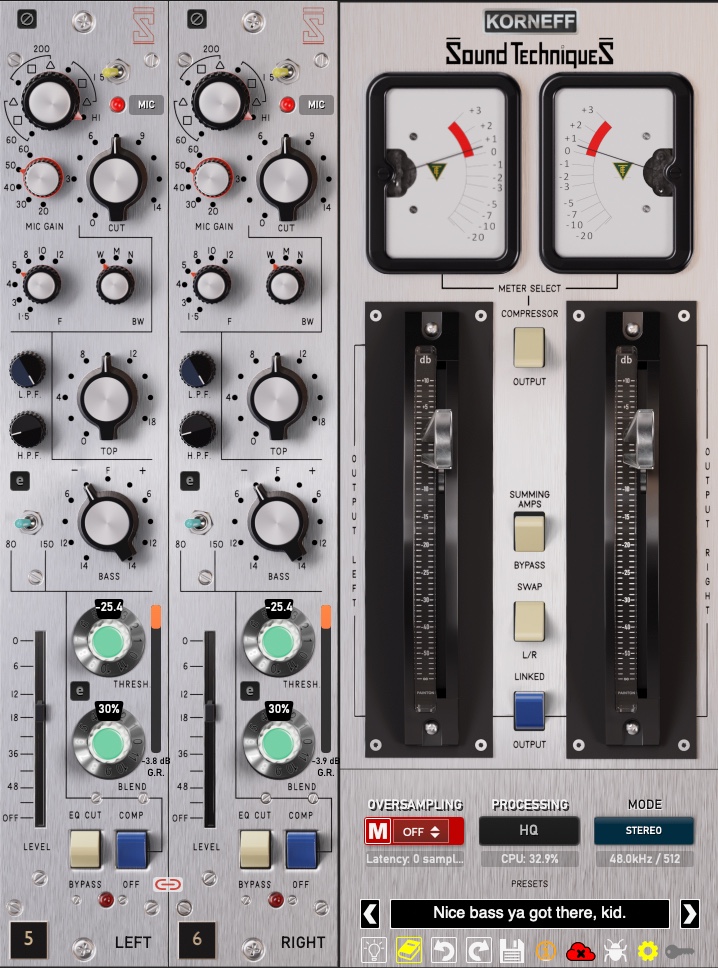
And here’s a button to find out more:
https://korneffaudio.com/product/sound-techniques-alpha-range-channel/
Warm regards and happy Tuesday,
Luke <–huge Sound Techniques fan.
PS – And now you know why we call it the Alpha Range.
PPS – A-Range is a trademark of Trident Audio Developments (PMI Audio Group).