Happy Monday!
We’re going to mix history, music, production and tech all into one thing today. If you listen to the music examples, and read through this, I think you’re going to learn a lot and really hear some interesting things. Try to stream from a good sounding service, like Apple Music. I’m including links for YouTube and Spotify. YouTube is the worst, Spotify is much better if you have it. I think you’ll still hear what there is to hear on YouTube, but you’ll be rewarded by a better service in this case.
We’re at Trident Studios in 1971. And we follow David Bowie and Ken Scott through the recording of three albums.
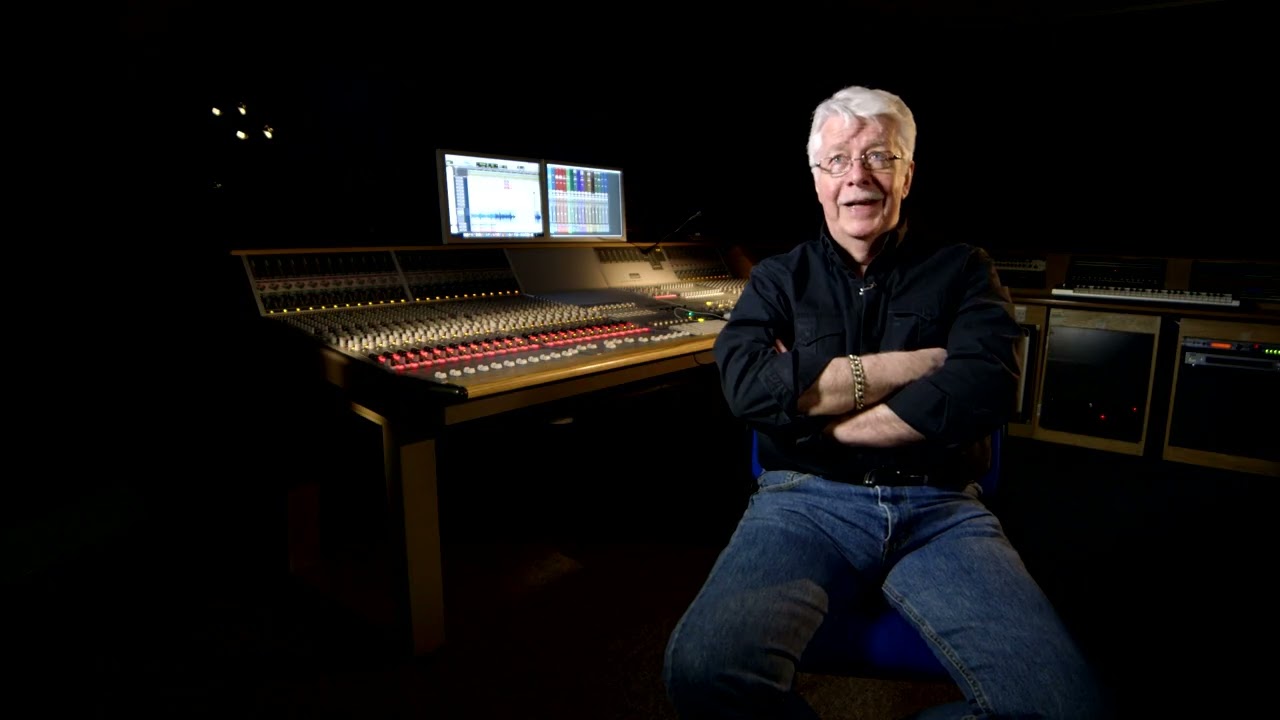
Ken sets us up:
KOOKS
Start by listening to this:
Apple: https://music.apple.com/us/album/kooks/1039798000?i=1039798014
Spotify: https://open.spotify.com/track/1w3W1hz6xVUSWkbh0paMgs?si=f07b4d264dad4e88
YouTube: https://youtu.be/jCaMwqtwJTc?si=2eh2J6Jd02hf4CIn
Here’s what’s on it, in the order it appears to your ears.
Acoustic 12 string guitar with some fast tape echo, at the top, and then unaffected acoustic guitar in what sounds like an open tuning.
Great big round articulate bass over to far left.
Drums in mono to the far right – surprising amount of bottom end and punch.
Lead vocal down the center.
In come two additional backing vocals and a string ensemble – in stereo.
Then a trumpet and a stereo piano recording.
“Kooks” is off David Bowie’s 1971 album Hunky Dory. He and the musicians that later became The Spiders from Mars—Mick Ronson, Trevor Bolder and Mick “Woody” Woodmansey knocked it out mostly live in the studio. The studio was Trident. The tracking console was a Sound Techniques A-Range, and it was mixed in Trident’s upstairs mixing room on yet another Sound Techniques A-Range. Hunky Dory was recorded on 8-track analog, produced and engineered by Ken Scott.
Hmmm… How do we fit “Kooks” on 8-tracks? The track numbers are just there to indicate the space usage, not the actual layout on the tape.
1) Bass
2) Drums
3) Acoustic Guitar
4) Lead vocal
5 – 6) Piano
7 – 8) Strings
So, where do we stick the at least two additional vocal tracks and the trumpet, and maybe the acoustic guitar intro as yet another overdub? I thought for a while that they might be putting the piano and strings on the same two tracks, but at the end, pianos and strings play at the same time, so there goes that theory.
My best guess: They did the basic tracks – the first four in the list above, then Bowie added two or perhaps even three background vocals and they bounced all the vocals together — lead and background — and then overdubbed the strings in stereo to two tracks, the piano—played by Rick Wakeman of Yes. Then they snuck the trumpet—played by bassist Trevor Bolder, and popped the acoustic guitar intro in wherever it could fit. The acoustic guitar intro could also be part of the acoustic guitar track.
This could also be a 16-track recording with a lot of room to spare, but most of Hunky Dory is mono drums, and all of Bowie’s next album, The Rise and Fall of Ziggy Stardust and the Spiders from Mars, has stereo drums.
“Kooks” was written right after the birth of Bowie’s son, Duncan, who is a film director (seen the movie Moon with Sam Rockwell? Director Duncan Jones). It has a lot of Burt Bacharach influence in it, from the chords to the jaunty trumpet. An utterly charming, joyous story of the start of a family, with a fantastic one-take vocal from Bowie, especially expressive in the last verse, where he sings of not wanting to get into fist fights with other fathers. Wonderful. This is my favorite song on Hunky Dory.
Hunky Dory was finishing up recording in August, 1971. Bowie started recording Ziggy Stardust in June—two months before Hunky Dory was in the can.
Bowie knew the songwriting on Hunky Dory was of a high level, but he didn’t think it was overall commercial enough—he wanted to be a star, damn it. Ziggy Stardust wasn’t conceived as a concept album; it was conceived as a star-making vehicle, and it did exactly that—made Bowie an international name.
STARMAN
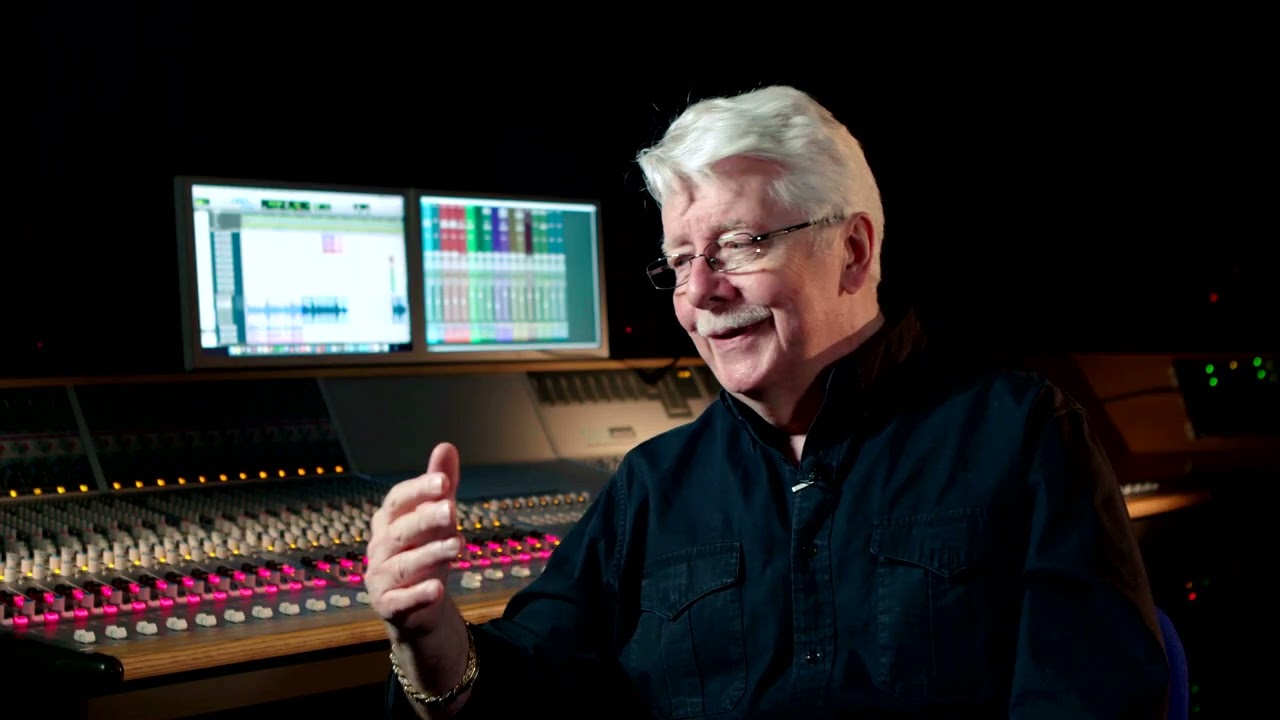
Ken Scott continues the story:
Now listen to “Starman”.
Apple: https://music.apple.com/us/album/starman-2012-remaster/1039796877?i=1039797280
Spotify: https://open.spotify.com/track/6A1qZSENVbwBTZSljp1viz?si=298beff25f994384
YouTube: https://youtu.be/h9tPn70Hq8Y?si=gk2Ztc2XvYxd0OVx
Again with a 12 string, and something sort of sinister in the ambient depths of the record—perhaps an open piano with a mic on it? Another guitar off to the left. A stranger, small vocal, seemingly far away.
Then a big stereo drum sound and big round bass. Note the close, slight sounding vocal. Very little air to this singing, barely enough to hold the pitch.
The disco-sounding Morse Code bit…
The chorus with a different-sounding vocal—Bowie louder and more ambient. Further from the mic? And stereo strings, arranged by Mick Ronson.
Then the post-chorus with an electric guitar left and right, two tracks of claps left and right.
Repeat, add more vocals at the end and then a sweeping guitar solo by Mick Ronson, cut with a mic pulled back from the amp in the room to capture ambience.
“Starman” was recorded at the end of the sessions for Ziggy. RCA Records didn’t think there was a hit yet, Bowie wrote “Starman” and that was the hit the album needed. Producer/engineer Ken Scott has said this was tracked and mixed on the Sound Techniques A-Range, and this might be true. The Trident A-Range was under construction and about 1971 is the date given for its introduction. Definitely, all of Ziggy was mixed on the Sound Techniques.
The whole thing sounds like Sound Techniques to me. The bass and drums have the same punch and bottom, the vocals and acoustic guitar the same high end clarity. There’s a 3D sort of forwardness to the whole thing. After a month of using our Alpha Range plugin, this is a familiar thing to me. Compare “Kooks” and “Starman”—I picked them out because of their sonic similarities—and see if you think they were cut and mixed on the same console.
Quick note on the vocals: you can hear a difference between the verses and the chorus. Ken Scott has talked about punching in Bowie at different distances from the microphone. Ken Scott would also set up two different microphones, a C12 and a U67, at 90 degree angles to Bowie, and then he’d pick whichever sounded best, or sometimes use both, depending on the section. Tony Visconte cut the vocals on “Heroes” in a similar manner. Maybe this is something you can try in your own recording,
The Rise and Fall of Ziggy Stardust and the Spiders from Mars, and a beautifully timed appearance on Top of the Pops, put Bowie on the star map. The Top of the Pops “Starman” performance was iconic, as Bowie seemingly blessed everyone watching to unleash their inner freak. Off the band went on tour to America. They returned to the studio in January of 1973 and cut the majority of the tracks for the next release, Aladdin Sane.
ALADDIN SANE
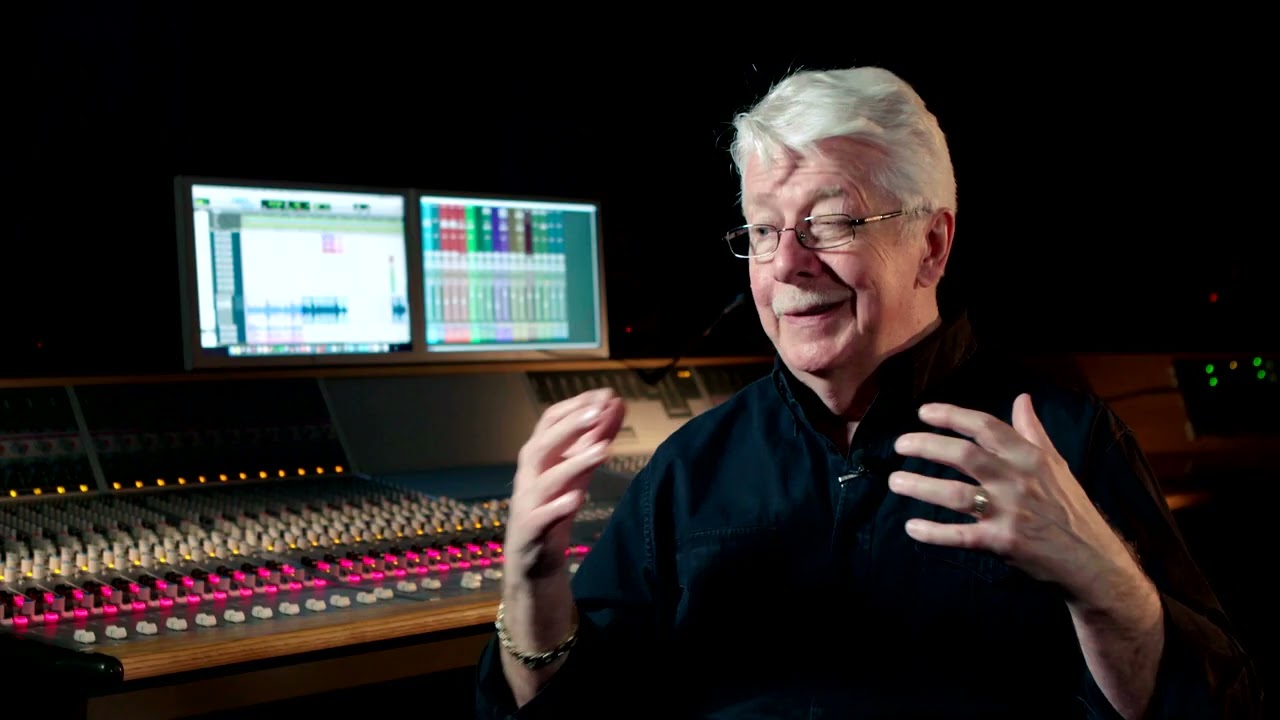
Again, Ken Scott sets us up.
Now, listen:
Apple: https://music.apple.com/us/album/aladdin-sane/1039655668?i=1039655670
Spotify: https://open.spotify.com/track/0iKRf868w4SYEBDILQu8ob?si=2b6a911481424cba
YouTube: https://youtu.be/bc-E78guBLI?si=4EO4MeimIa-hJEOx
Stereo drums, a wonderful stereo piano. Bass. Vocals. Some electric guitar parts. A few blats on a sax by Bowie and then…. WTF!??!!
If you’ve never heard Mike Garson’s absolutely bonkers free jazz piano solo on “Aladdin Sane” I’m delighted to be the person turning you on to it. OMG. I remember the first time I heard this. What a mind blower.
Now… this is the same bunch of players, except for pianist Garson. The same instruments. The same room. The same engineer, Ken Scott, so we can assume the same mic techniques. The same tape deck.
The first thing I think is WHERE DID THE BOTTOM END GO? What happened to that wonderful, huge bass? Where’s the kick? Where’s the snare? And what’s that haze on the high end and the brittleness in the upper mids?
Methinks we are hearing the difference between tracking on the Trident A-Range and tracking on the Sound Techniques A-Range. It is incredibly different.
To perhaps confirm, here’s some Supertramp…
ASYLUM
Apple: https://music.apple.com/us/album/asylum/1440798820?i=1440799019
Spotify: https://open.spotify.com/track/3YlslxRWfNycyYsB6sKrJW?si=4dda7a266bcc443d
YouTube: https://youtu.be/OHUF6dAudOg?si=yoyu4WL-Xa-fHKjd
You can skip to 4:00 when the drums and band kick in—it’s a better comparison point.
I looked for something recorded by Ken Scott on the Trident and mixed on the Sound Techniques. I hear the same sonic fingerprint: the lack of bottom-end punch, and a general haze across the top, that brittle upper mids, the seeming flatness of the whole thing. Listen to Ken Scott engineered America, by the group America, and you can hear the openness and clarity of the Sound Techniques again.
Obviously, we are not controlling for mastering, remastering, the sources used to get the songs to YouTube—I did my listening on Apple Music. But for me it is pretty obvious what each A-Range console is bringing to the table.
A Lesson
I wrote a lesson on the Sound Techniques Alpha Range Channel’s weird and wonderful equalizer.
Warm regards,
Luke