EQ, Sound Techniques Style
The Sound Techniques Alpha Range Channel has a two-band EQ on it, with all of the quirks and superpowers of the original hardware.
The default instantiation has the EQ uncut. When it is cut, it grays out, and when it's cut it saves you CPU, so don't just set the EQ gains to 0; if you're not using it, cut it.
Only two bands—I can hear you thinking this. Why nothing in the mids?
It's a Passive EQ
At the time—1965 to 1975ish, EQ curves were all passive and accomplished using something called an inductor. An inductor is a coil of wire, quite a bit like a transformer, and it converts electricity to magnetism, and in doing so, changes the phase relationships of the signal, which causes dips in the frequency response. Not boosts, only dips. So, if it only can dip, how does it boost up a signal—I'm sure you see positive gain on the controls, not just cuts.
This is a passive EQ. How it kinda works: the circuit gets tuned to where every frequency is reduced in gain by a fixed amount and the response is somewhat flat. Then a cut FURTHER reduces the gain in the targeted frequency band, and boost dials back the reduction in the targeted frequency band. An analogy: A bunch of guys all hunch over, so they are all "down." A cut causes a guy to hunch over even more, a boost allows the guy to stand up a bit—unhunch, if you will.
And if the whole circuit starts flat because it's been overall reduced, we have to stick an amplifier after it to bring the signal back up to normal. That's how a passive, inductor EQ works.
The lowest frequency the Alpha Range EQ can hit is around 1.5kHz. That's not very low. Some inductor EQs from this period can get down around 700Hz, but that still isn't low, really. The issue is the inductor itself. At this time, inductors were a coil of wire wrapped around a hollow tube. To bring the frequency lower, the hollow tube had to be made much larger, too large to fit into a console but small enough for a Pultec or something outboard in a larger box. Eventually, companies started using a solid core inductor, which could go to lower frequencies, and that starts happening in 1971, with the Trident A-Range, the QuadEight 310, the Neve 1073, etc. So, yes, limited midrange control, which is a problem in our midrange obsessed modern world. But we can maneuver around it...
The Bass EQ
The Alpha Range bass EQ has two frequencies, 80Hz and 150Hz. Actually, this is what's engraved on the panel; the actual frequencies are closer to 60Hz and 210Hz, which is good for us because for modern music those are handy dandy frequencies. The Bass EQ has a shelf for cuts at either frequency, a shelf boost at 80Hz, and a peak boost at 120Hz. The gain is in steps of about 3dB, and yes that is a lot, and that is what was on the hardware. We're working on making that gain increment smaller, but it is a matter of working around processor speed issues. It's a long story for another blog post.
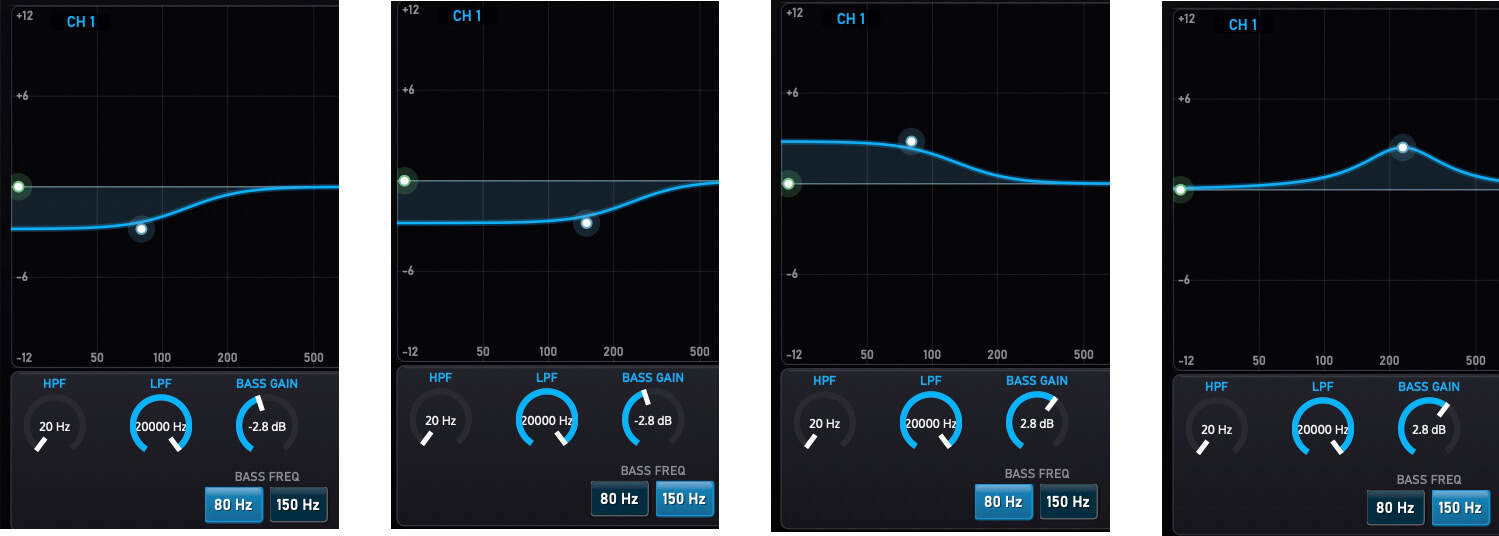
The Bass EQ sounds HUGE. Truly. A boost at 80Hz on a kick or a bass, or even low guitars, is revelatory. A boost at 150Hz does wonders to warm up and add heft to a voice or a guitar. It's lovely down there.
The Top EQ
The Top EQ is Pultec inspired, and it can do a boost and a cut at the same time and at the same frequency. Before we get to that...
There are frequencies from 1.5kHz to 12kHz to choose from. The cut is a shelf, the turnover frequency is fixed at 5.5kHz. This is a nice, smooth cut, and with a lot of negative gain, it goes quite low—way below the turnover frequency, down into the midrange.
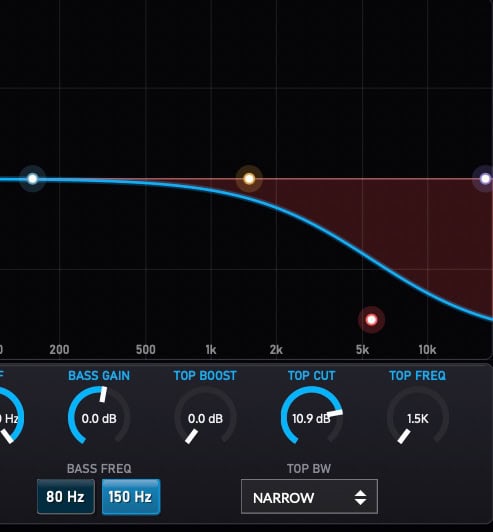
The boost is a peak, following the selected frequency, and there are three bandwidths to choose from. It is very Pultec and there's no console at the time, other than the Sound Techniques, with this sort of control. Even the narrowest bandwidth is wide, but this isn't an EQ to use to notch stuff out. It wasn't designed to do that. Actually, at that time, the idea was you didn't record things badly such that you had to surgically remove stuff. The idea was to get it on tape as you wanted it.
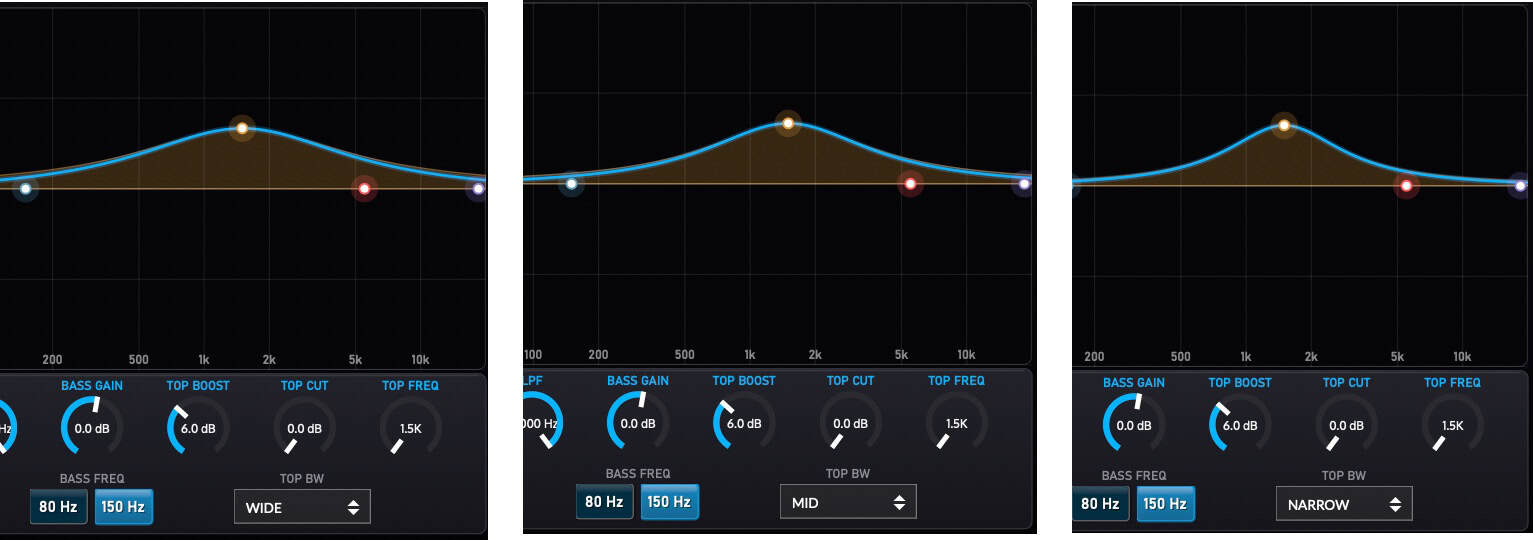
The boost is wide and musical, and it's lovely on anything. One thing I noticed about it: compared to a more modern EQ, you can set it lower than you might think and get a great sound out of it. For instance, if you're used to boosting something at 7kHz, try this EQ at 5kHz or 4kHz, or even 3kHz.
The High Pultec Trick
You're going to find that very often you're going to be boosting and cutting at the same time, and loving the sound of it. Like the Pultec, the two bands interact to give you a compound curve that modern EQs can't do. I find I am almost always boosting and cutting at the same time, usually boosting a lot more than cutting. First of all, it sounds good, and second of all, it makes the EQ that much more powerful, especially if you change your thinking about it.
Hitting the Midrange: Think Opposites
Using the way a passive EQ works for inspiration, instead of thinking about boosting the mids, think about reducing the Top and the Bass and bringing up the fader. That's how mixers like Ken Scott and Bruce Botnick and Eddie Kramer thought, always in terms of comparisons and never just about the thing itself.
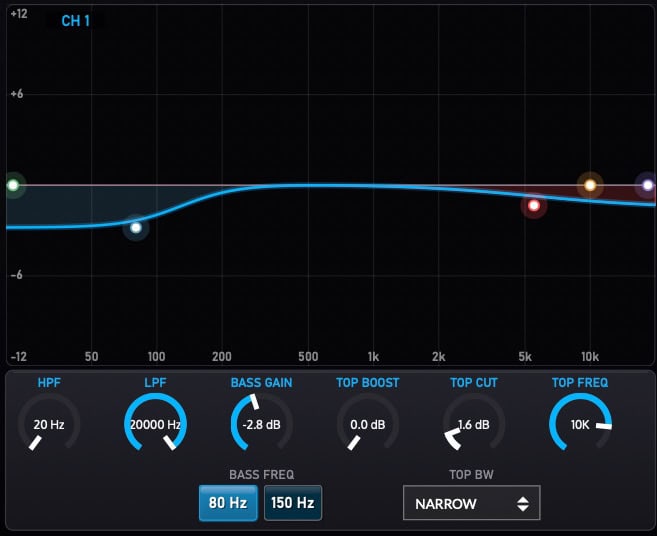
How do you cut the mids on the Alpha Range? You boost the lows and the highs, and then you CUT the highs, and that's the magic of this EQ.
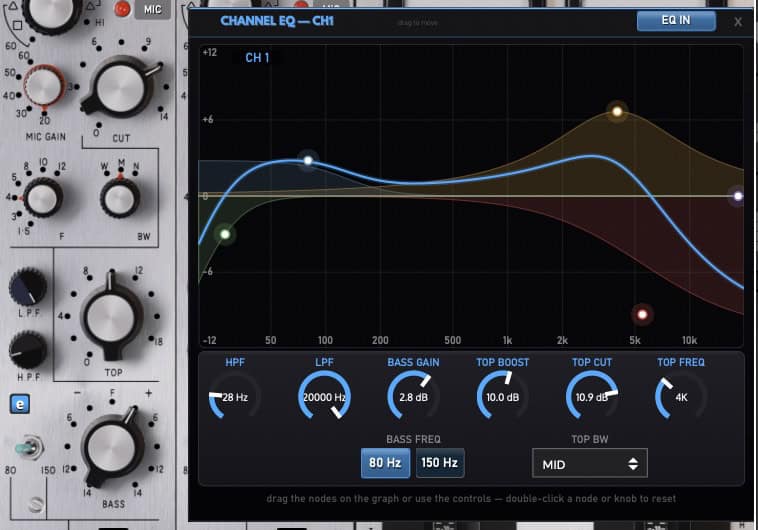
Applying this thinking, here are some EQ curves I got for some heavy guitars. This sounded great, and of course, I chased this with the WOW Thing and the result was monstrous. Look at the settings along the bottom to see how I did this.
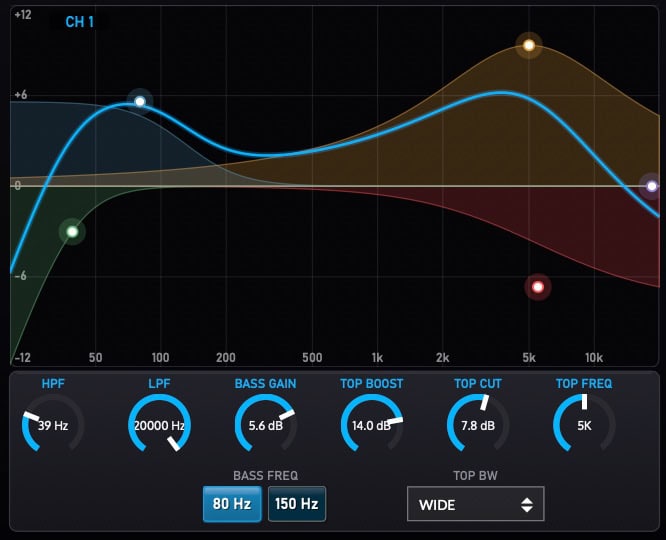
You might be thinking, "Dude, that is a HUGE amount of boosting and cutting, that has to sound harsh." No, because it's PASSIVE, it's not adding amplification, it's releasing the signal from negative gain. Can it get harsh? Of course—a ton of 5kHz is painful stuff, but an inductor-based 5kHz boost is really different than a modern op amp EQ 5kHz. Like our SITRAL, which is also inductor-based, it is hard to make the Alpha Range sound bad. There's a reason people wanted to mix on these things.
Amplifier Calibration
Click the Korneff Nameplate to get 'round back, click on the AMPLIFIER tab. You'll see the EQ Amplifier in the middle of the panel.
So, calibration. This lets you turn up the gain of the EQ makeup gain amplifier. Feel free to crank it up and get some saturation and squash happening. HQ is High Quality mode. I've written on this before, and here's what's happening in plain talk: when you switch into HQ, the plugin looks at the signal, and if it detects anomalies, it reprocesses that sample slightly differently until the anomalies go away. If you're using a lot of saturation, then you'll hear the issue and HQ will hopefully get rid of it. I usually switch things to FAST when I am saturating things, and occasionally NORMAL. BEST... if I'm using best I'm bouncing things.
The next lesson is on the ElektraComp, and it is so much fun and a great addition to the Alpha Range.