
New Monday #127
Happy Monday!
I hope you’re all well.
This is a catch-up New Monday, a bunch of quick things, some links, a bit of this and that.
While we catch up, listen to this:

Dakhabrakha is a Ukrainian group that’s billed as a string ensemble but they could also be a huge furry hat ensemble. You can listen to this in the background while we catch up.
A bunch of you have been writing, and I truly appreciate it, but it does take me a bit sometimes to get back, and sometimes I miss... because deep down I am an ADHD MORON. From now on, when I am late answering emails, I will sign them ADHD MORON. Be prepared to see that.
As long as we’re going on about writing... we’ve added a Tip email on Thursday. Should these be shorter? Would that be more useful to you?
Speaking of useful...
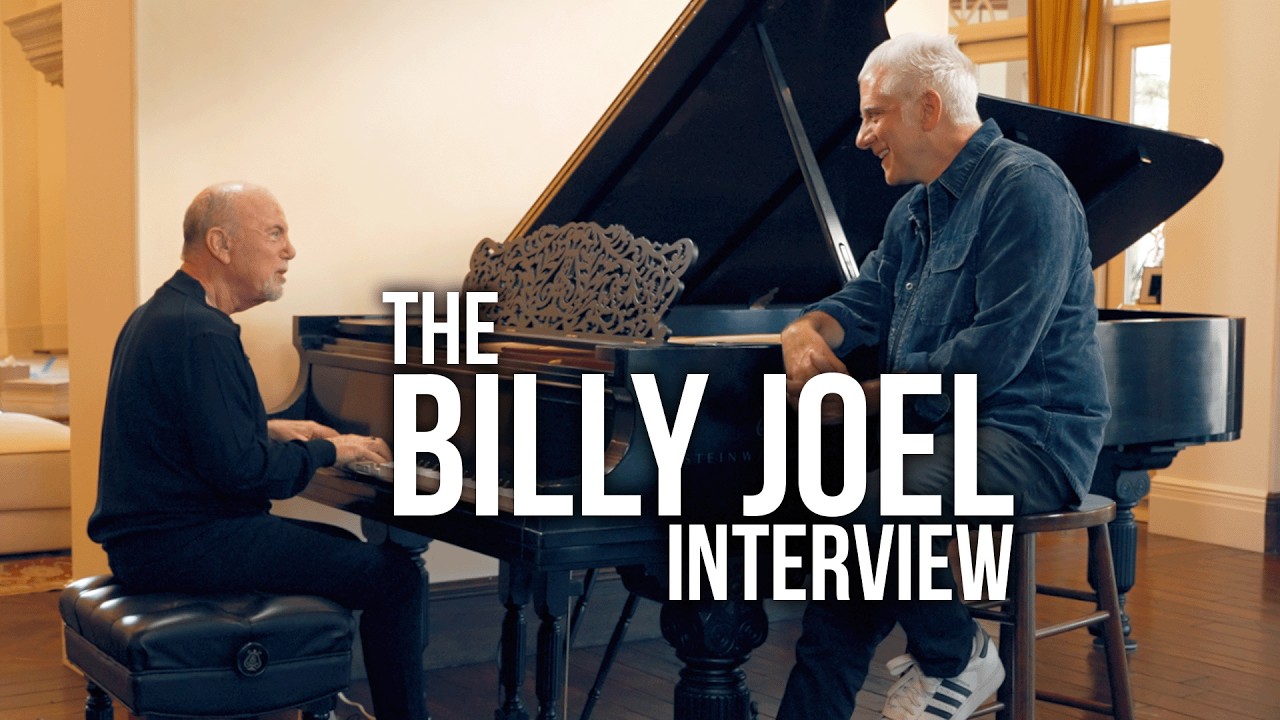
Billy Joel Interview
This is one of Rick Beato’s best interviews. It’s really a songwriting lesson. And whether or not you like Billy Joel’s music, he’s a hell of an accomplished musician. He’s so generous in this interview regarding inspiration, his approach, his career. Mr Beato is an expert at getting artists to unfold themselves, and Billy Joel is a blooming flower in this. Well worth your time.
Dear Prudence Mystery
I wrote about Trident Studios a few weeks ago. In 1968, The Beatles spent three days at Trident on the (say it with me all you console mavens) SOUND TECHNIQUES A-RANGE CONSOLE (our channel strip is in beta!) recording Dear Prudence, the second song, first side of The White Album.
Dear Prudence is one of the highlights of The White Album, with its haunting guitar parts, the melody, the production, and, of course, Ringo’s utterly fabulous drum outro.
But since 1988, there’s been a controversy. Mark Lewisohn, in his book, The Beatles Recording Sessions, listed Paul McCartney as the drummer, and the scuttlebutt was that Ringo was out of the country, because he temporarily quit the band. By the way, the Mark Lewisohn books are amazing. I spent months with Recording Sessions and all the CDs, my head between two speakers, muting the left and the right until I could hear everything described in the book.
Onward: My ears tell me that it’s Ringo. MAYBE Paul plays the easy part, but that is Ringo at the end.
Here’s Dear Prudence cued up to the end drum part:

Well, it looks like I’m exonerated. This new video outlines the controversy and the case for it being Ringo on the whole damn record. The video is very interesting because it breaks everything down so you can hear individual parts, including who’s singing which harmony part.

It is wonderful that there are people in the world, like Michael Sokil, Ray Schillinger and Obadiah Jones, who have time on their hands and a weird passion for doing forensic Beatles investigations.
There are also maniacs that do things like this: https://www.instagram.com/p/DaxwGYeDb4k/
Music Biz
Have you heard the term “Audience Capture?” It’s a business strategy that’s been used forever: find your audience, hook them deeply with your product, then lower the quality while raising the price. They won’t leave because they’re “captured.” Sounds like a music biz strategy, an AI company strategy, or a plug-in company philosophy (not ours).
It’s been Netflix's philosophy for years, but now it’s falling apart. Ted Gioia article on this is here: https://open.substack.com/pub/tedgioia/p/the-collapse-at-netflix-signals-the
The RIAA, Recording Industry Association of America, has released a labeling program for music to indicate how much AI was used. Here’s their own description of it.
This is important stuff for all of us. Companies like Spotify and Suno both use an audience capture model, and how AI music becomes profitable—how any AI business venture becomes profitable—still isn’t clear.
We don’t have control of this, but we do have control of our reaction to it, and we can keep it in mind as we dream our futures and plan our next step.
Blumlein Pair
Since I’ve been off on a tear about Mid/Side, here’s another micing technique no one uses anymore that is really handy in certain circumstances.
If you take a single figure-8 mic, like a ribbon or a multi-pattern condenser, you can put a person or a sound source in front of it and behind it. On playback, the signal is mono with two sounds in it. A figure-8 is basically a cardioid in two convenient locations.
Get another of the same figure-8 mic and place it such that the two mics' capsules are perpendicular to each other: put one above the other and offset the faces by 90°. Pan one mic to the left, the other to the right, and you’ve got a Blumlein Pair, invented by EMI engineer Alan Blumlein in 1931.
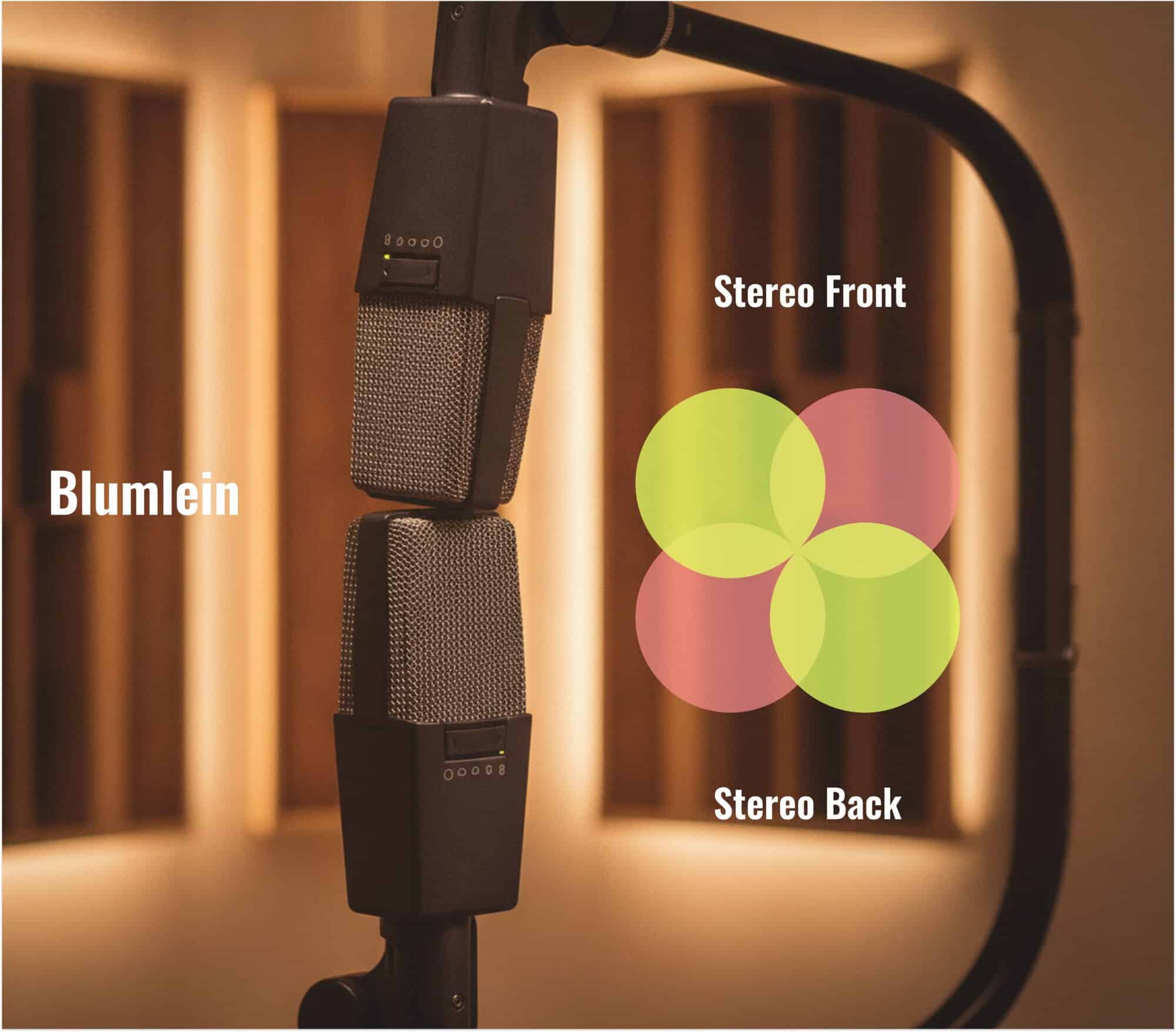
The Blumlein Pair stereo micing technique.
A Blumlein pair is a stereo mic’ing technique with virtually no phase issues and complete mono compatibility. The problem is that it is basically FOUR cardioid mics in two locations. You have a stereo pair in the front, and a stereo pair in the back, which on playback fold into each other, mixing the back and the front. This sounds great if you have a great-sounding room—because that is what that back pair is picking up, room. But if the room sucks, then Blumlein sounds awful.
But what about sticking a Blumlein pair in the middle of a string ensemble, or a small bluegrass ensemble? The players can all see each other, so timing and chemistry go through the roof. Control the mix by moving people closer or further back. On playback, you get a lovely stereo image.
Other uses: percussion, vocals (this is a great way to record a capella groups when they can actually sing), gang vocals, claps, things like a radio play or spoken word pieces involving multiple voices, etc. And it collapses to mono with no phase issues.
I used to record jazz ensembles on a small stage with a C24 in the middle—the Blumlein pair—and then the group arrayed around that, with spot mics on the kick and snare, the upright bass, the sax, and an omni buried in the piano.
Blumlein is a good thing to have in your toolbox. So is a KA1776, which is still on sale. AND there’s an update soon...!
Have a great week, all.
Warm regards,
Luke