
These tips have turned into my personal quest to find the worst music related stock photography. It took me a bit to find this one, but clearly it wins some sort of award. Maybe I’ll turn this into audio and fashion tips!
Let’s talk about fixing bad drum sounds today and we’ll get to clothing faux pas some other time.
The easiest way to get a great drum sound is:
1) Get a great drummer
2) Hire a great drum tech
3) Put that all together in a great room at a great studio
Problem solved! Thank me later!
For most of you, that’s what I call “un-actable advice.” Sounds good, but for a number of reasons, it’s simply impossible to do.
This is also an awful solution to the problem:
1) Have the drummer play like shit on a shit kit in a shit room
2) Fix the playing in a DAW, trigger the sounds from samples
Honestly, if you’re going to do that, just program everything from scratch and don’t make the poor drummer come in just so they can feel terrible about themself.
Most of you aren’t dealing with big budgets and changing the heads every song. You don’t have a smorgasbord of microphones to choose from. You don’t get three days to set up in the studio and experiment with mic placement in between “The sushi’s here!” moments. It’s more like, “Once we track the drums for the whole album can we get a pizza? So, like, 5 hours?”
Here are ideas for you, with your 8 channels of ADs and six mics. God bless you. I started with even less and it was the best time of my life.
Tuning
Learn to tune a drum. It’s not hard, and even if you suck at it, things will still be better. I learned by watching drummers at sessions and a couple of times I paid guys to teach me. Y’all can watch videos. It’s not as good as a lesson or two, but it’s really useful.
There are a ton of ways to tune a drum. This is a video that is closest to the way I learned to do it. It’s practical and clear. Most of the time you’ll be fixing someone’s kit, rather than starting from scratch, so you can skip in about 4:50 and that might be more useful to you, but I would start at the beginning and watch the whole thing. And then get an old piece of crap tom-tom from somewhere and practice tuning it.
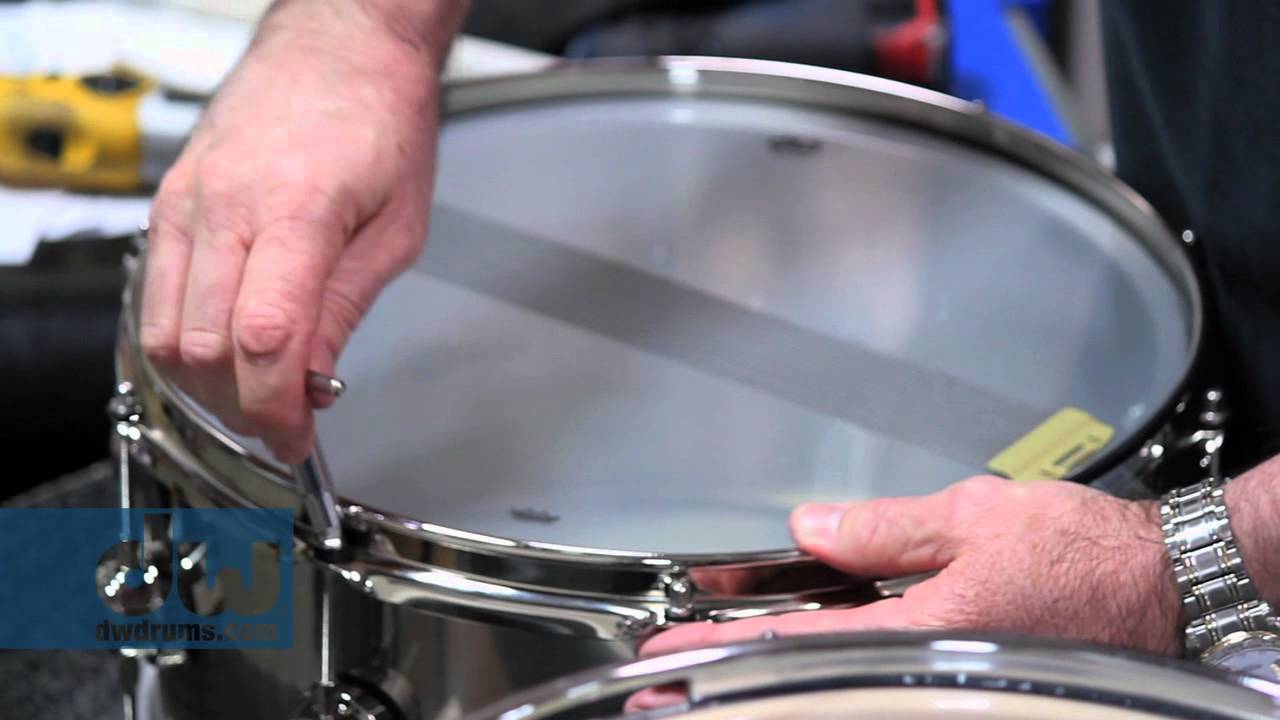
Snares
First of all—and here comes a bunch of opinions you can ignore—snares are over-emphasized these days. They’re too loud and too compressed, and they all sound the same to me. I guess this is the result of samples or the basic unoriginality that has taken over music—everyone seems to want the same snare sound. It’s a lot of effort poured into something that most of the audience doesn’t care about. Really, snare is basically hit on 2 and 4. No one ever says, “Do you know this song? The snare part is like … DUSH …. DUSH”
I like weird snares, the snare the drummer brings in. The snare on John Mellencamp songs in the 80s that had that strange YANG thing to it. I like a bit of ring. Sometimes a lot of ring.
Have the actual drummer hit the head a few times. Are they hitting the rim too or just the head? Are they consistent or all over the place? Stick marks all over the head or clustered? If they’re all over the place, scribble a circle in the middle of the head with a Sharpie. Having a target works really well. It will also lessen the chances of them sticking into the snare mic.
Pull all the tape and crap off the top head. Like in the video, tap around the head at each lug. Tighten or loosen to get the pitches at each lug about the same. Then tap the center of the top head with a stick and run your hand around the rim, pressing with four fingers on the skin. Usually there’s a “magic spot” that seems to control most of the ring of the snare. Sometimes there are two, but usually, there’s one. You can put something on the magic spot to control the ring. I use Moongel, but not a lot. I cut a single piece into quarters and then start with one quarter and see what that does. I don’t want to choke the damn thing. No Moongel? Make a little pillow of tape and then tape that down. Again, don’t choke the hell out of it.
Snares are usually too rattley for me. They can hum and buzz from the kick, the toms, other instruments in the room, etc. Here’s my best trick to fix that: Loosely roll up a piece of paper, like standard notebook paper—and stick it under the drum, between the snares and the stand, perpendicular to the snares, then let the paper roll expand naturally. It will hold the snares tight against the lower head but there will still be plenty of snare sound for the mics. Tape the paper to the stand so it doesn’t move around.
People use tons of mics on snares. You can use one on top, that’s fine. I think the underside of a snare sounds awful and the only reason to mic down there is if the drummer’s doing a lot of ghost notes. Of course, reverse the phase on the mic down there.
You can use as many mics as you want, of course, but remember, the more mics, the more phase issues.
Maybe instead of using lots of mics, try a few different ones. Everyone uses an SM-57, and it works great, but it might not have enough highs, so try a condenser and see what that does. Of course, that will pick up more hi hat bleed, but that’s the game. You make decisions about it. Don’t agonize over it. Remember, it basically goes … BONK … BONK.
I always track just about everything with compression. Snares… the attack slow enough to let the transient through, the release to control how much resonance and ring you hear. Set the release not so long that the compressor isn’t fully recovered before the next snare hit. Rolls might tend to get quieter with a compressor on the snare. Usually it’s not a problem but if it is, bypass the compressor on rolls or automate it.
Quick Fix in the Mix with Pumpkin Spice
A quick fix is to use a sample, which I hate doing because I feel like I’m pouring cereal into bowls and telling the kids “I made breakfast.” My mom, rest her soul, would do this. Don’t be like my mom. Our Pumpkin Spice Latte is a superb snare fixer. Insert it on your snare channel and start with these settings.

SPICE – adds some saturation, so it gets a little bit brighter and a tiny bit limited/clipped.
WHIPPED CREAM – adds a little bit of a room sound, which lengthens the snare—this is another “hang” thing.
CINNAMON – a tiny bit of snapback, again a lengthening component to make that snare hang around a little bit longer.
WARMTH – this is the KEY control. It’s an adaptive filter network. As you sweep, you’ll hear it bring out various areas of the snare’s frequency response—it will feel more like you’re adjusting the mic and its placement more than tweaking an EQ. Once you get something you like, listen to the drums and snare in context with the whole mix and adjust the WARMTH and whatever else you think needs a tweak.
One last idea. Get a big notebook and take notes on every session you do. Write down the mics you use, where you put them, EQ settings, your thoughts on how it sounded. A few days after a session, review your notes on the session. Ram this stuff into your head. Eventually, that notebook of yours will become very valuable to you.