Happy Monday –
Some production philosophies to read, some songs to hear…
Diverse in its Unity, Unified in its Diversity
The central idea is that a production should have a certain consistency across it (that’s the unity part) but that every moment in it should also be distinct (the diversity part). So, one thing consisting of different bits combined to make one thing. Like different courses in a meal. I learned the concept, I think, when I was a teenager. My cousin gave me a book, Experiencing Architecture, a book about architecture (obviously), and I remember this idea being thrown around a lot. I first really noticed it on the Beatles song “Hello Goodbye.”
Hello Goodbye
“Hello Goodbye” is not one of the great songs in the Beatles catalog. It sits in one key, has throwaway lyrics that are simply words that rhyme, and it is redundantly repetitive. Just four sections, repeated four times.
A Section: A stop and go part. The lyrics in the first verse are, “You say yes, I say no, you say stop, and I say go go go.”
B Section: The band kicks in and it’s an instrumental with a two-note melody on what sounds like a slide guitar and Paul sings “Oh no.”
C Section: Kind of a break and the lyrics are, “You say goodbye, and I say hello.”
D Section: I suppose this is the chorus. We hear “Hello Hello… I don’t know why you say goodbye I say hello.” There’s a distinctive sub-melody as well. The first time we hear it, it’s played by a guitar.
The instrumentation is drums, bass, an electric guitar through a Leslie speaker cabinet, two violas, maracas, a few claps and finger snaps here and there (supposedly bongos and congas in there, too??), two pianos, and then vocals. I think there might be a hi-hat overdub in there as well, mixed in with the hand percussion.
The third time through sort of serves as a break or bridge—the vocals are very different, and the D Section the fourth time through has a different ending, and then the band jams out a bit and the song fades out.
So, yes. Very unified. But within that, incredibly diverse. I picked this mix out—I think a Giles Martin remix—because the separation allows you to hear all the parts.
Listen here:

Some of the diversity is easier to hear than others. The guitars and backing vocals trade off playing the sub-melody on the D section. The violas play something different every section. Sometimes there’s one piano, sometimes two. Way in the background is an organ, most obviously 4th time through on the D-section. There are little percussion accents all over the place, a few nice bass fills.
The ending jam has lyrics I hear as “Hey la Heb hey lo ah.” Nonsense words. Alternatively, people have claimed the words are “Haera, Hey Rah Aroha,” which might or might not be Maori and what’s really happening is the Beatles are sending off their recently deceased manager Brian Epstein to the great beyond with a Maori funeral chant sort of thing. Interesting thought, but it’s pretty clearly “Hey la Heb hey lo ah.”
It ain’t much of a song, but the production saves it enough that it was issued as an A-side single in 1967.
Back to Life
I come back to this phenomenal recording every so often. Soul II Soul was a loose musical collective formed by DJ Jazzie B, that started out as a sound system and grew in stature during their featured nights at Africa Centre, London, which was and still is a charitable cultural center. The group evolved and cut a number of albums in the late 80s and early 90s, the best known being Keep on Movin’ as it is called in the US, or Club Classics Vol. 1, as it is known in Britain. The album was a bit of a bomb drop. Dance music at this time was dominated by American acts and “New Jack Swing.” Soul II Soul, with its looser grooves and jazz inflected sounds, focused attention on what was going on in Britain, and changed dance music through the 90s.
The album isn’t overly coherent, more of a collection of jams, live recordings from club performances, and a couple of killer singles: “Keep on Movin'” and “Back to Life”.
Written by its singer, Caron Wheeler, “Back to Life” started life as some sampled drum loops augmented with drum machines and synths, then a layer of strings played live in the studio by Reggae Philharmonic Orchestra, a mixed race string and woodwind ensemble that performed with Soul II Soul in the studio, live, and put out a bunch of their own records. Vocals were cut in a studio and perhaps sampled and additionally flown in, especially for the lead vocal. There’s some guitar in there towards the end.
The record benefited from the presence of producer Nellee Hooper, an amazing talent just starting out. Hooper went on to work with Björk, Sinéad O’Connor, Massive Attack, U2, the Smashing Pumpkins, Madonna, etc.
You probably haven’t heard this in a while. Hot damn, is it good.
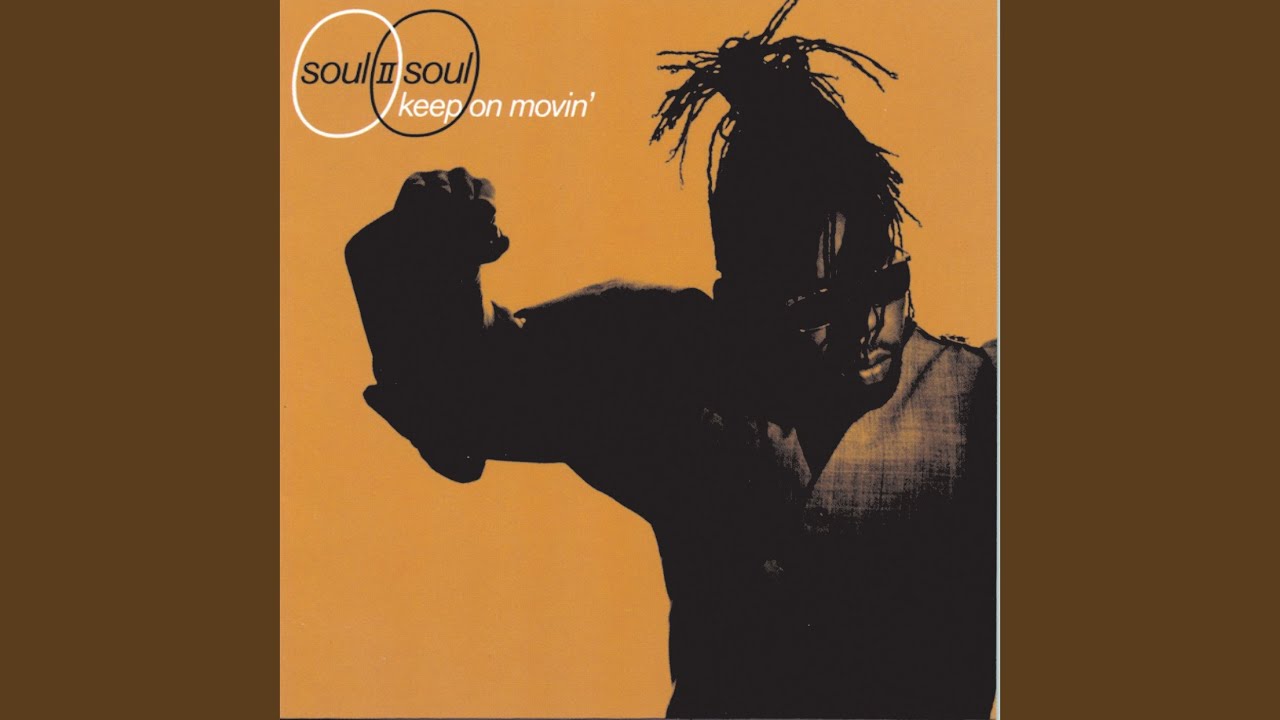
Once you get into the absolutely relentless groove (count the hi-hat: they start on the end of one and end on four, and repeat that the whole song) you’ll hear all sorts of piano stabs, slinky guitar parts, record scratches, congas—all sorts of little ear candy treats deployed with amazing taste and subtlety during the mix. A single clap will be a little louder than another and catch your ear. A conga will lift out a tiny bit and then dip back into the mix. Reverbs change. Whispery vocal parts tug at your ear. There’s really never a dull moment, although the song itself is the same thing over and over again, until it hits a glorious bridge. And you can dance to it the entire time. What a mix!
The KA1776
We released an upgrade to the KA1776 a few weeks ago. If you’ve not gotten yours yet, the introductory price of $17.76 is ending on Friday, October 30th at 11:59pm EDT. Get it before the price goes up to $39.99.
As the weather gets cooler, you have no excuse to not warm up in the studio. And for those of you on the other side of the world… as you move into the summer heat, remember that studios are air-conditioned!
Warm and cool regards,
Luke