Sound Techniques and Trident
Trident Studios opened in London in 1968. It was designed from the outset, in a manner similar to Sound Techniques Studio in Chelsea, to be a more laid-back, creative environment than EMI and the majority of studios in England at the time. Trident was also the first studio in England with an 8-track tape recorder.
Trident's founders were brothers Norman and Barry Sheffield. Norman was the businessman, Barry the audio engineer. They named the studio after a jetliner that passed overhead during construction—a Hawker Siddeley Trident.
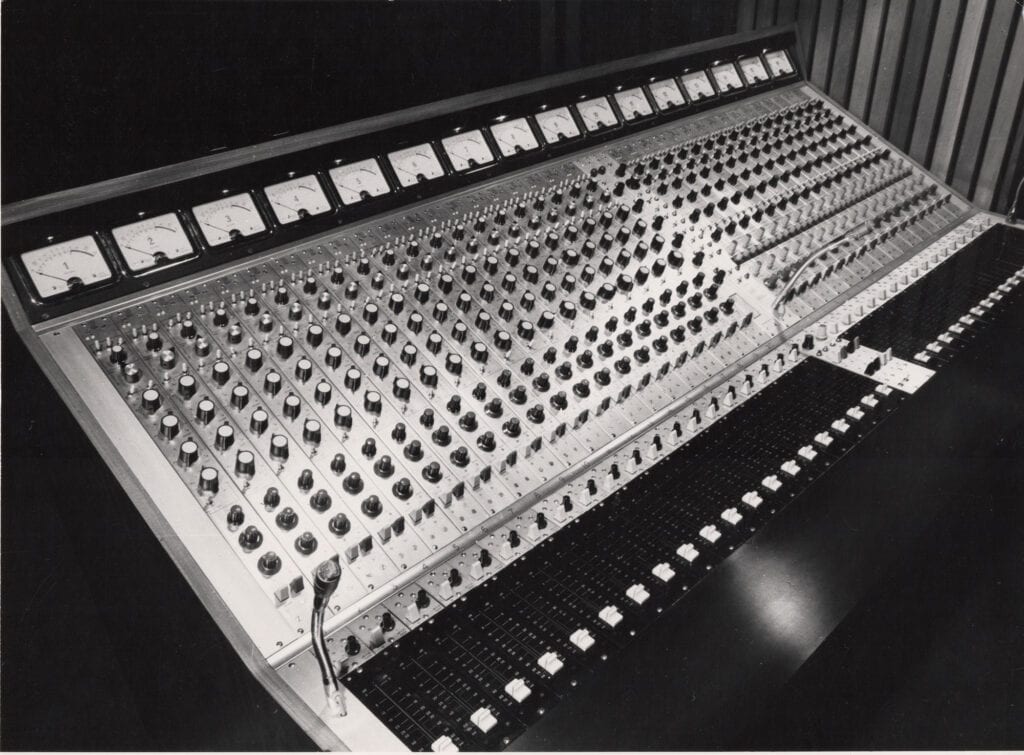
Sound Techniques consoles at Trident Studios
The hot studio in town at the time was Sound Techniques, and the Sheffield brothers commissioned Geoff Frost and company to build the second Sound Techniques A-Range console for them, a 20 x 8. Between the casual nature of the studio, the Sound Techniques console and 8-track of tape, Trident was an instant success.
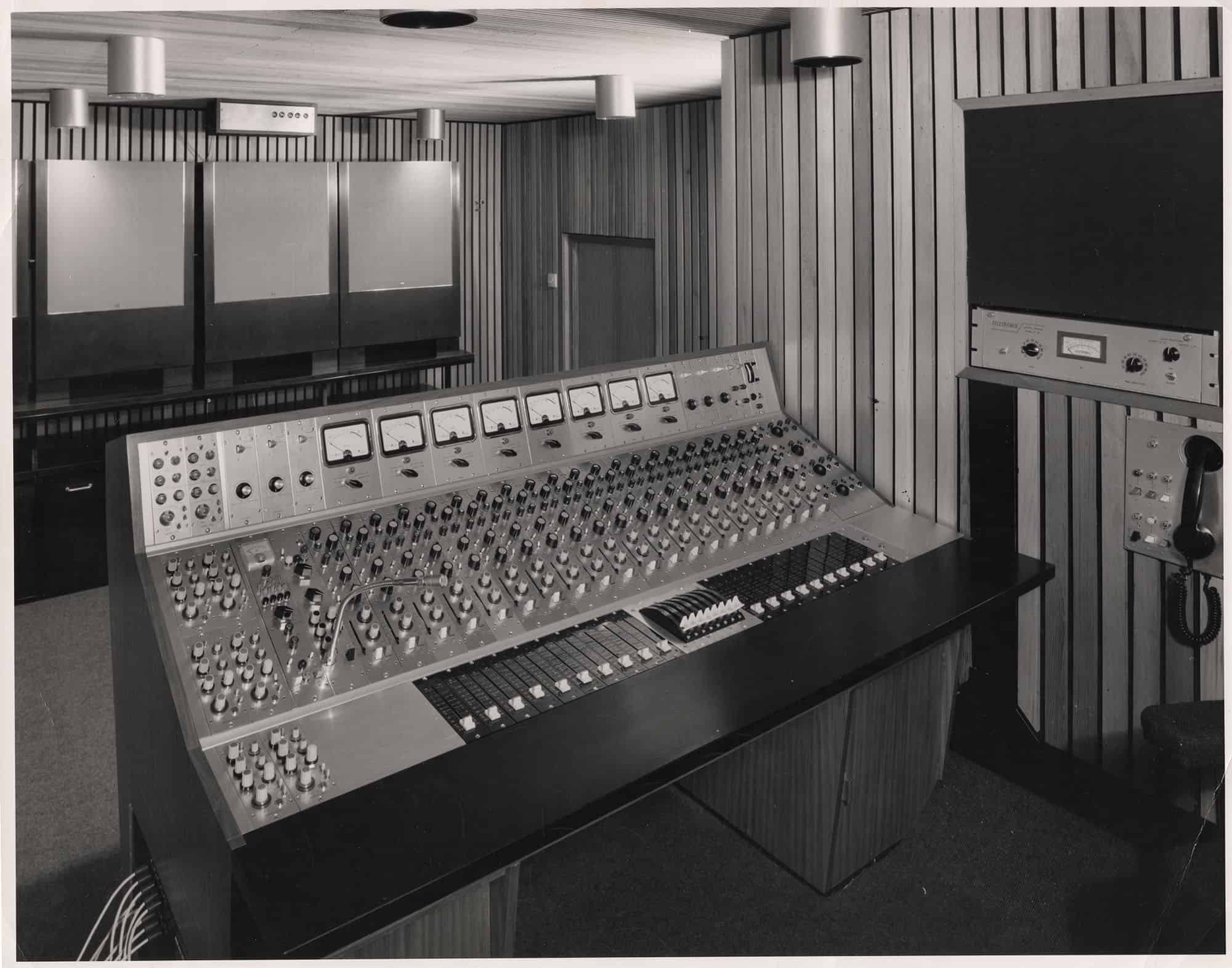
A Sound Techniques A-Range console, 20x8, in Trident Studios in 1968.
The Beatles cut Dear Prudence, Honey Pie, Savoy Truffle, Martha My Dear, I Want You (She's So Heavy), and Hey Jude on the Sound Techniques A-Range for later mixing at EMI Abbey Road, which finally had an 8-track deck in the fall of 1968.
David Bowie recorded his first album, David Bowie, at Decca in 1967. In 1969 his second album, David Bowie (also known as Space Oddity), was recorded at Trident, as were his subsequent albums The Man Who Sold the World, Hunky Dory, The Rise and Fall of Ziggy Stardust and the Spiders from Mars, and Aladdin Sane. Bowie also produced Lou Reed's Transformer, and the single Walk on the Wild Side, at Trident as well as Mott the Hoople’s album All the Young Dudes. The breakthrough single, written by Bowie and gifted to Mott the Hoople, was recorded and mixed at Olympic Studios.
Queen recorded their first three albums at Trident. The Sheffields were also managing them for a while. That arrangement soured, Queen dropped the Sheffields and Trident, recording at a number of studios in England. Death on Two Legs is their ode to Norman Sheffield.
Elton John cut his first three albums at Trident. T-Rex cut a number of albums at Trident. Carly Simon's You're So Vain and Ringo's fabulous single It Don't Come Easy were recorded at Trident. And there's more, of course...
We made a quick playlist for you.
Sixteen to Twenty-Four
In 1970, Trident upgraded to 16-track, and installed another Sound Techniques A-Range, this one a 20 by 16. But as the 70s wore on, it became obvious that 24-track was becoming the standard, so the Sheffield brothers started hunting around for yet another console. They approached Neve, but by now the staff at Trident was some of the best in London and they had very specific things they wanted out of a console, and Neve wasn't accommodating. They decided to build their own, putting Trident's engineers Malcolm Toft and Barry Porter on the project.
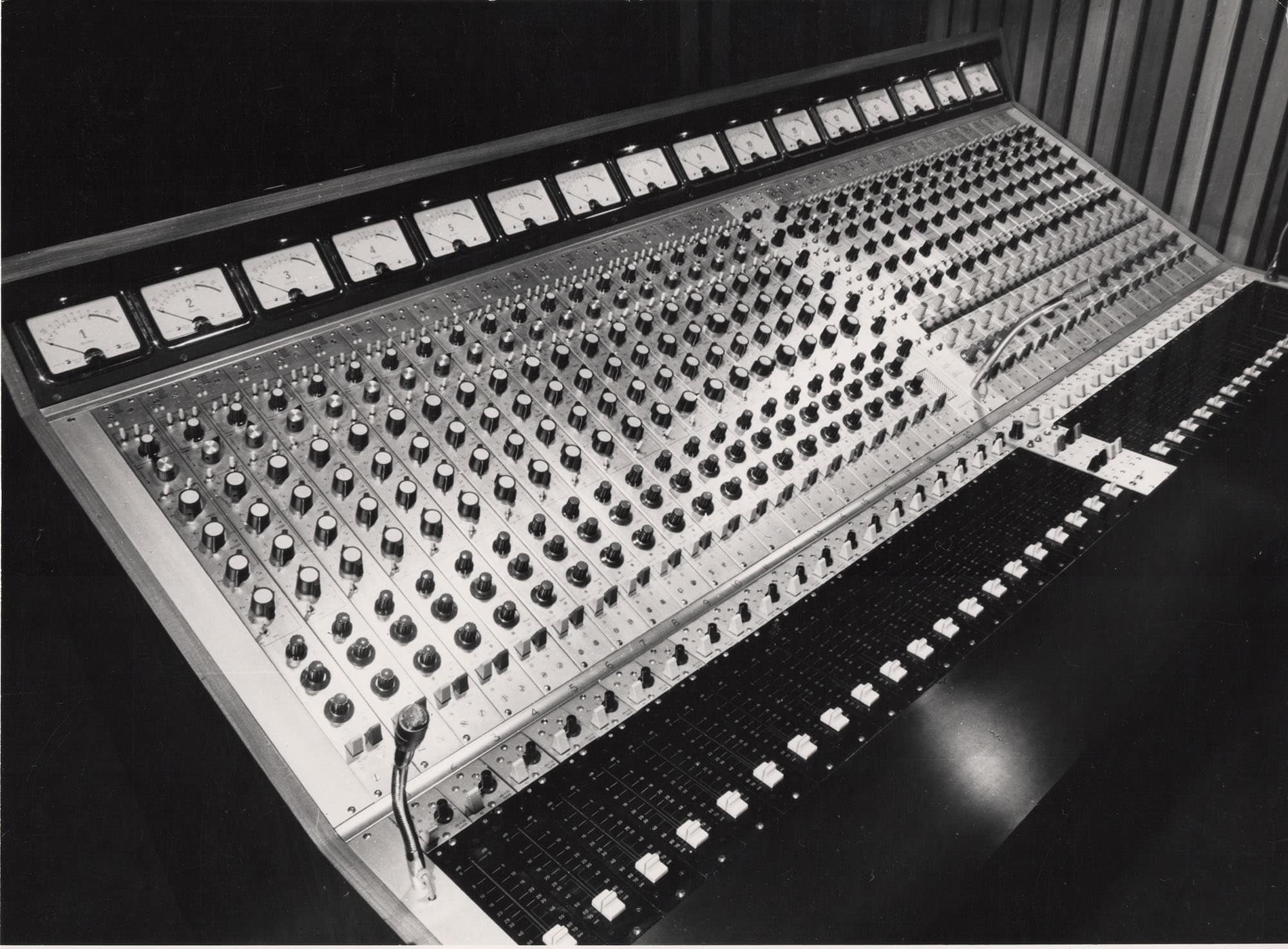
A Sound Techniques 20x16 A-Range console at Trident Studios around 1970.
The Trident A-Range console was entirely different from the Sound Techniques—the only thing the consoles have in common is the name A-Range. The console was also small, it had to fit in Trident’s 16’x16’ control room. The Trident became famous for its EQ, which was tuned by ear by Trident’s staff of heavyweight engineers, Ken Scott, Roy Thomas Baker, Barry Sheffield and Malcolm Toft. It had a whopping 170° of phase shift at some settings—I wrote an article on how this happens. The Trident A-Range was completed and installed in the main studio, the Sound Techniques 8-bus was moved upstairs to the mix room, the 16-bus Sound Techniques... who knows what happened to that.
So, what was recorded on a Sound Techniques and what on a Trident? And what about the name A-Range?
A Confusing Timeline
Everything pre-1971 at Trident was recorded and mixed on the Sound Techniques A-Range. Sometime in the middle of 1971, the Trident A-Range came online and records were tracked on it and mixed on the Sound Techniques 8-Bus A-Range. The Sound Techniques was pulled from the mixing room in 1976, so a lot of the golden era Trident records were often mixed on the Sound Techniques console.
Super-engineer Ken Scott has said in interviews that Ziggy Stardust was recorded on the Trident and mixed on the Sound Techniques, and he's expressed that the Sound Techniques was the best-sounding consoles he ever worked on.
The Sheffield brothers sold the studio in 1981.
Trident consoles were made by a separate company, TRIAD (Trident Audio Developments). They built 13 A-Range consoles, 11 of which survive. That was followed by the smaller B Range and then the very popular Series 80—the 80, 80B, the 80C, the TSM, the Series 70, the 75, the 90, the Vector, the 60, the 24, yada yada yada. TRIAD lost its trademarks and for a while, a guy named John Oram was making Trident consoles. Finally, PMI Audio Group acquired Trident along with Toft Audio Designs (Malcolm Toft's post-Trident company). PMI registered A-Range.
So, why do we know the Trident A-Range today and the Sound Techniques A-Range is forgotten? It would be so romantic to think that there was some sort of conspiracy going on—Sound Techniques seems to have been so thoroughly erased.
The truth is mundane. Sound Techniques went out of business and Trident didn't, and Trident didn't do anything particularly helpful—on official histories they list the albums recorded at Trident and don't mention consoles, and visitors make the connection themselves: if it was recorded at Trident, it was recorded on a Trident.