
Sound Techniques Studio, 1965 – 1976
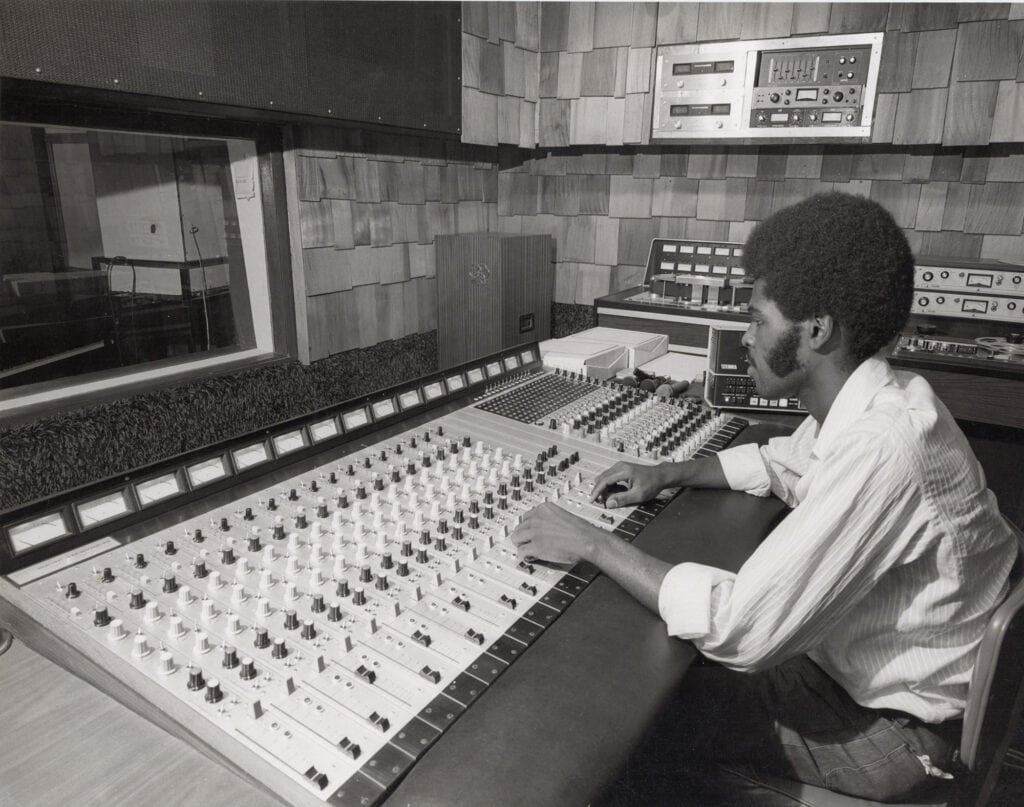
In the summer of 1965, Sound Techniques Studio opened its doors for business. It was built in an old dairy and was a departure from other studios in London. The founders, Geoff Frost and John Wood, designed it to sound like an American recording studio. English studios at the time were heavily treated, dead spaces. Sound Techniques sounded more open and ambient. The working atmosphere followed the acoustics—the staff was unfussy and laid back, not a bunch of uptight guys in lab coats that was typical at the time.
Frost and Wood had very limited funds. They bought basically the transports and heads of three decks from Ampex and then cobbled together their own electronics. And they built their own console…
The two struggled for a bit until they stumbled into a lucrative gig recording elevator music. The studio soon became the center of the English folk rock scene, cutting albums for Fairport Convention, Sandy Denny, Steeleye Span, and every record by Nick Drake. The studio also hosted Pink Floyd, Jethro Tull, The Yardbirds, The Who, and Elton John. For about ten years, Sound Techniques was a very hip recording destination in London. In 1976, though, they lost their lease and the studio side of Sound Techniques went out of business. Olympic Studios bought the space and ran it as Olympic Chelsea until the early 80s.
Sound Techniques Consoles
The other side of Sound Techniques was their recording consoles. After building their first desk, known as the Chelsea Console, the company started making consoles for other studios in London and later in the US. Frost and Wood eventually set up a factory. These consoles were known as the A-Range, and fourteen of them were hand-built from 1965 to 1971. Most recording consoles of the time, really all recording consoles, are based on a circuit design that previously existed. The circuits Geoff Frost developed were without precedent and unique. The technical details I’ll get into next week, but the ramifications of the circuit design were that the console had a very distinct sonic signature—big bottom, smooth top, lots of punch.
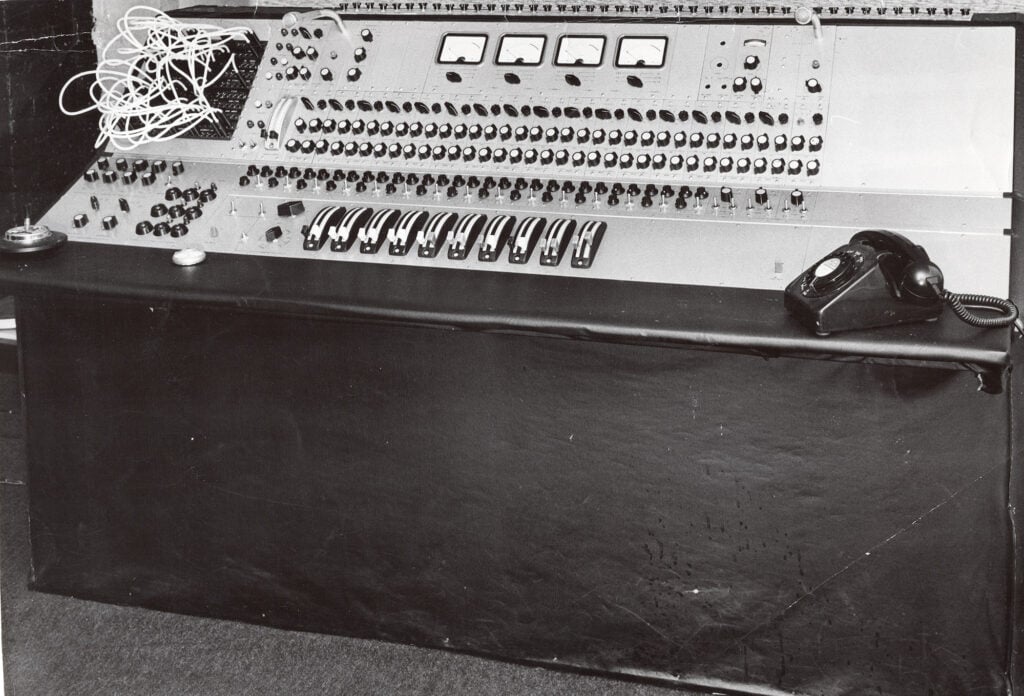
De Lane Lea was a major recording services company that had three studios in London, all with Sound Techniques consoles. Much of Jimi Hendrix’s debut album was made on an A-Range at De Lane Lea. Other notable studios with an A-Range were Central Sound (Bowie demos and Olivia Newton-John’s I Honestly Love You) and Marquee—which was mainly a demo studio. And of course, Trident Studios had a Sound Techniques A-Range.
Found this on Reverb—it’s the Sound Techniques A-Range that was installed at De Lane Lea Wembley. Smoke on the Water was mixed on this!
https://reverb.com/item/7934042-1971-sound-techniques-console-original-cts-wembley-studio-1
The company also developed what is probably the world’s first compact mixing console, the System 12.
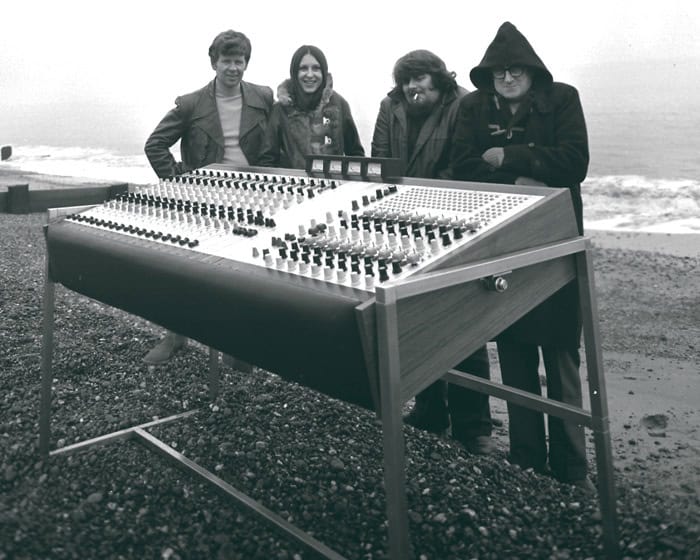
System 12 was designed to be less expensive than the A-Range and found its way into a number of studios in England and Jamaica. Black Sabbath’s debut was cut and mixed in two days on a System 12 at Regent Sound. The Rolling Stones bought one for Dynamic Sounds in Kingston—they made Goats Head Soup on it. Early Bob Marley records were done on a System 12, and the only operational System 12 console (and maybe the only System 12 console there is) is at Randy’s Studio 17, where it’s been since installation in 1970.
We put together a playlist of songs recorded at Sound Techniques Chelsea, De Lane Lea, and other studios in England and Jamaica. This is just the start of the playlist we’re putting together.
https://youtube.com/playlist?list=PLe6ZCJT_4KPlJi0nSKnMgYOXO5E76owa_&si=RKzv1M96Rs8prkTv
As I’ve mentioned in previous New Mondays, the first English-made console in the US was a Sound Techniques A-Range that was installed at Sunset Sound, the second was at Elektra. A channel module from the Elektra console was our model for our plug-in. Next week, we’ll jump to California…
A Sound Techniques A-Range console was installed at Trident Studios in London when it opened in 1968. Most of you have heard of the Trident A-Range console, and I’m sure some of you are thinking that perhaps Trident stole the name or perhaps the console’s circuitry. The Trident A-Range is a completely different circuit design, nothing like the Sound Techniques, and A-Range is a marketing term from back then—it means top of the line. And there is a bit of controversy in the story here, which we will also cover.