
Happy Monday!
And Happy Birthday to our Talkback Limiter. We released it on this day in 2020. It’s on sale for only $24.99 for the next week. Go here to get one.
The Origin
Might as well read while listening to this:

The drum sound on this track changed the world. It sounds tame now, but at the time, it was a revolution. This song, and the album, remain sonic magic.
The Talkback Limiter’s journey started sometime back in late 1979 when Peter Gabriel, Steve Lillywhite and Hugh Padgham were working on Peter’s third solo album, referred to as Melt, because of the cover, featuring a picture of Peter with his face melting. They were at The Townhouse in London and inadvertently stumbled across gated reverb, which later became the sound of 80s drums.
The SSL 4000 had a limiter buried in it, called the Listen Mic Compressor. It was common in those days to hang a microphone in the studio to pick up musicians’ chatter so the engineering staff could stay ahead and on top of the session. The LMC rode the gain on that mic, bringing up quiet chit chat and keeping anything loud from blowing up studio monitors and engineering staff’s ears. It had an incredibly high compression ratio—100 to 1—with a very fast attack and release. Hugh Padgham put a gate across it—the musicians were distractingly chatty, I suppose. But loud drum hits would trigger the gate open, flooding the control room with huge snare and tom tom sounds.
That’s the usual origin story. The other, which I find more likely: the talkback system in the control room works like a walkie-talkie, press it to talk, unpress it to hear. While producer Steve Lillywhite chatted with the band, he noticed that cutting off the drums every time he went to talk sounded kind of cool. And if you look at Lillywhite’s discography prior to the Melt sessions, he was alreafy messing around with odd drum sounds. Actually, Lillywhite’s discography deserves its own New Monday or six. That guy is the definition of superproducer. ANYWAY… back to our story.
I do not particularly enjoy huge, stupid snare sounds and a lot of the production of the 80s I hated, but Peter and Steve and Hugh loved it. And so did everyone else for a while. Crushing room mics with the Listen Mic Compressor became a thing to do—that snare sound on Skid Row’s debut album is an SM57 over the kit smashed with an LMC—that’s not a reverb unit! The kit was in a car park or a ballroom—someplace huge. And engineers still do this, crush things with a Talkback Limiter, to get bigass drum sounds.
The second step in the evolution of our Talkback Limiter was Dan building his own for a session out of spare parts found in a studio workshop, and that hardware unit became the model for our plug-in.
The Circuit
The Talkback Limiter uses an FET (short for Field Effect Transistor) as a gain reduction. The FET has response characteristics which are somewhat tube-like, and FETs are really common in compressors—the 1176 and ADR Compex are both FET-based. FET units are very fast in responding to the signal, hence the very fast (and non-adjustable) attack and release of the TBL. The fast attack lets a bit of the transient through—that’s the punch—and then the very fast release brings the gain up in a distinctly unmusical way. It doesn’t politely “ride” the signal like an Opto compressor: it smashes it down, then lets it up, then smashes it down again.
Whenever I hear something going through the TBL, it has a certain tightness to it and—this is weird—I feel it in my jaw. I find myself clenching my jaw when I hear it. There’s a tightness to the TBL, and to my ears it sounds more like a diode bridge compressor, like a Neve 2254 or a 33609. That same “tightness” but more punchy than a Neve diode bridge unit. I’m guessing that the tightness I hear… in my jaw… is caused by a combination of the attack and release and the particular saturation caused by the FET.
So there are three elements to the sound of TBL: the very fast attack and release, and the tightness. Let’s break this down further.
Changes to the Waveform
Here’s a typical waveform.
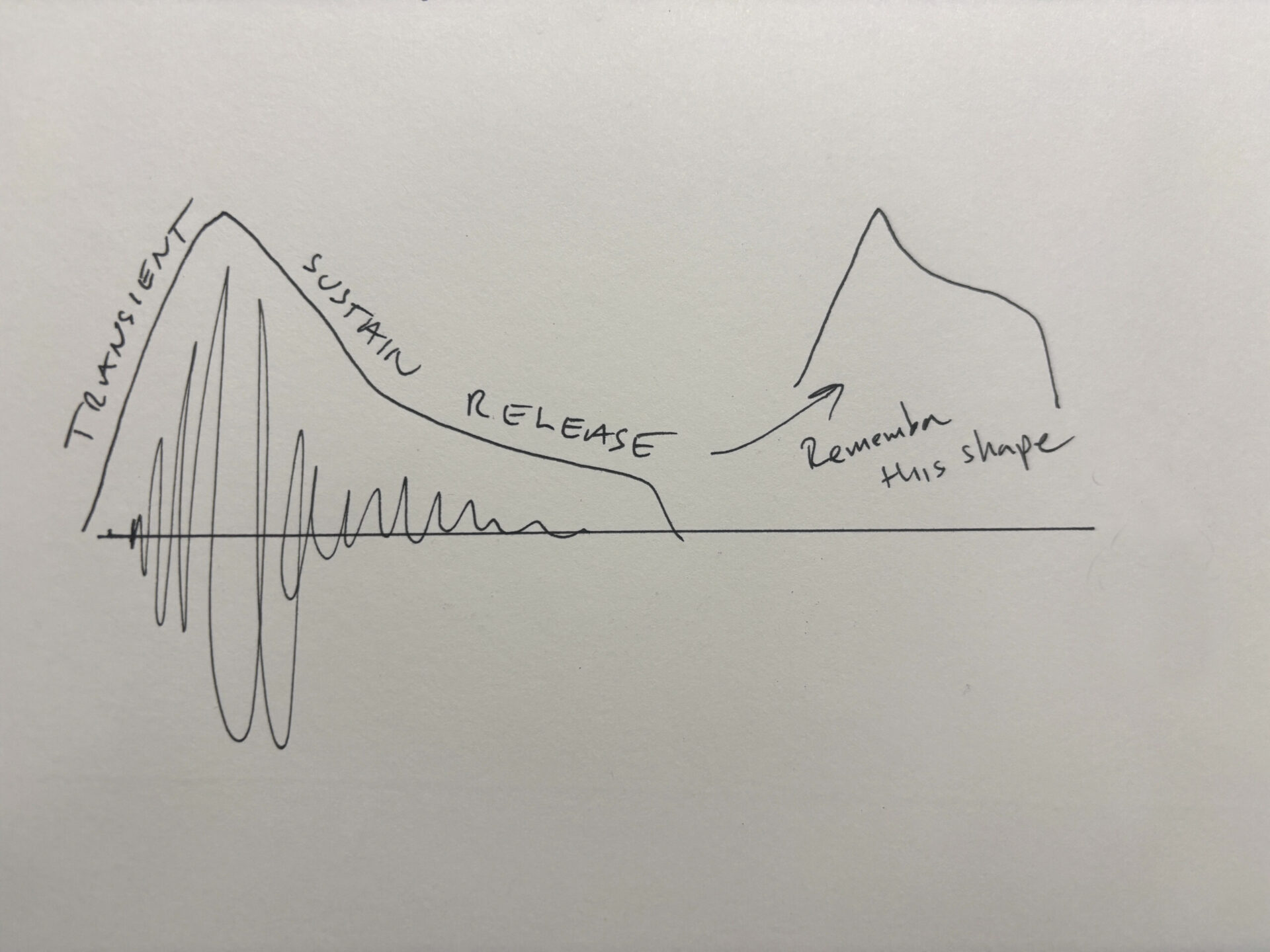
At the beginning is the transient, also called the attack, and most of the energy of the signal is located there. The transient is usually the part that goes over threshold to trigger a compressor or a limiter. Next comes the sustain and release, which has much less energy than the transient, and often a fast limiter with a quick release will basically turn off the gain reduction at this point, which brings up the volume of the quiet stuff. The quiet stuff: resonances, the rattle of snares, the lip and mouth noises singers make, and the ambience and sound of a room.
To better understand, we can break down a sound into simply the front part (the loud stuff) and the back part (the quiet stuff). Think of the general level of a mix, and when you’re compressing a part, you’re changing how that part sits against the general level of the mix.
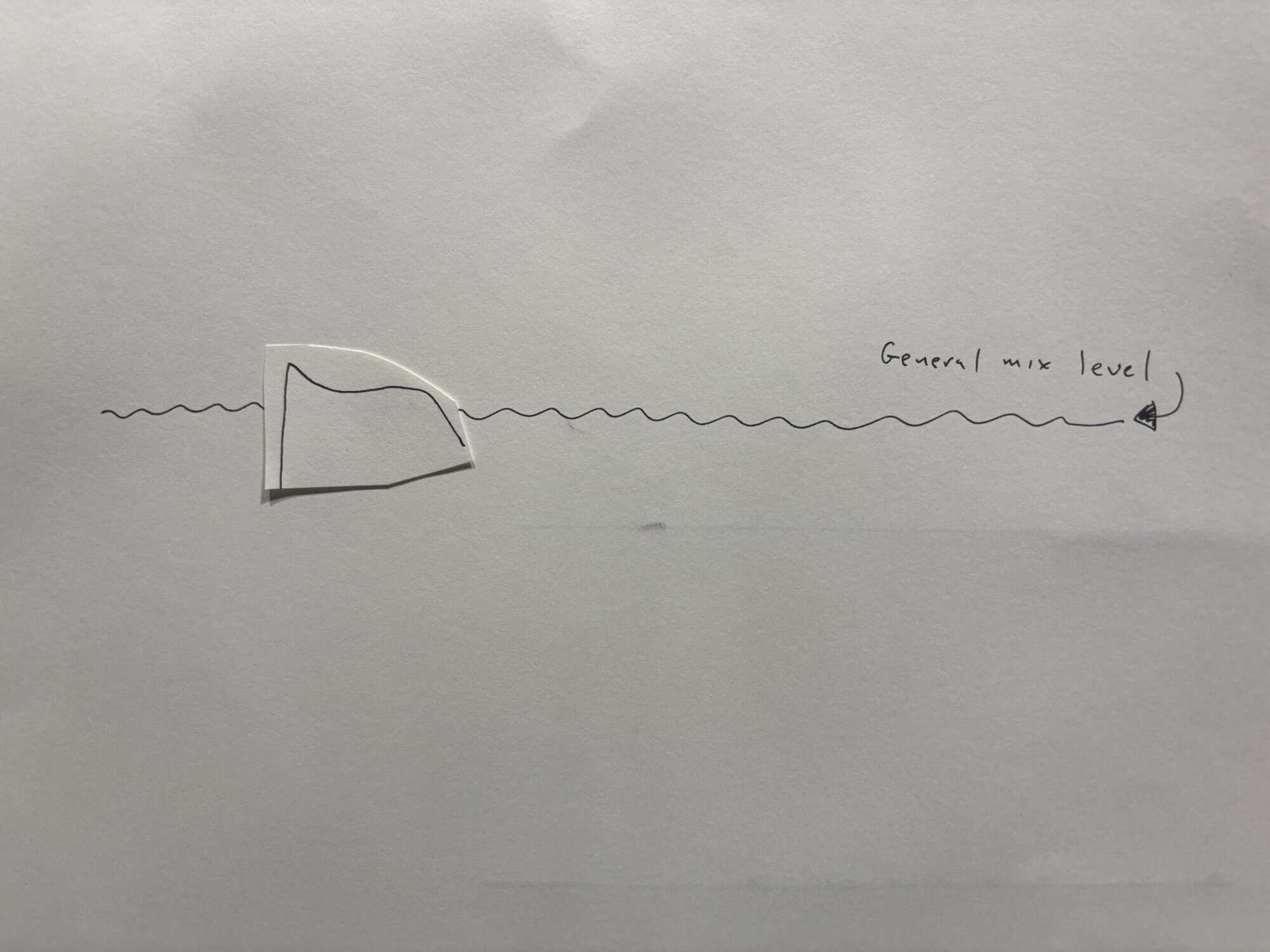
Think of a see-saw. If you let the attack through, the front part gets louder compared to the quiet part.
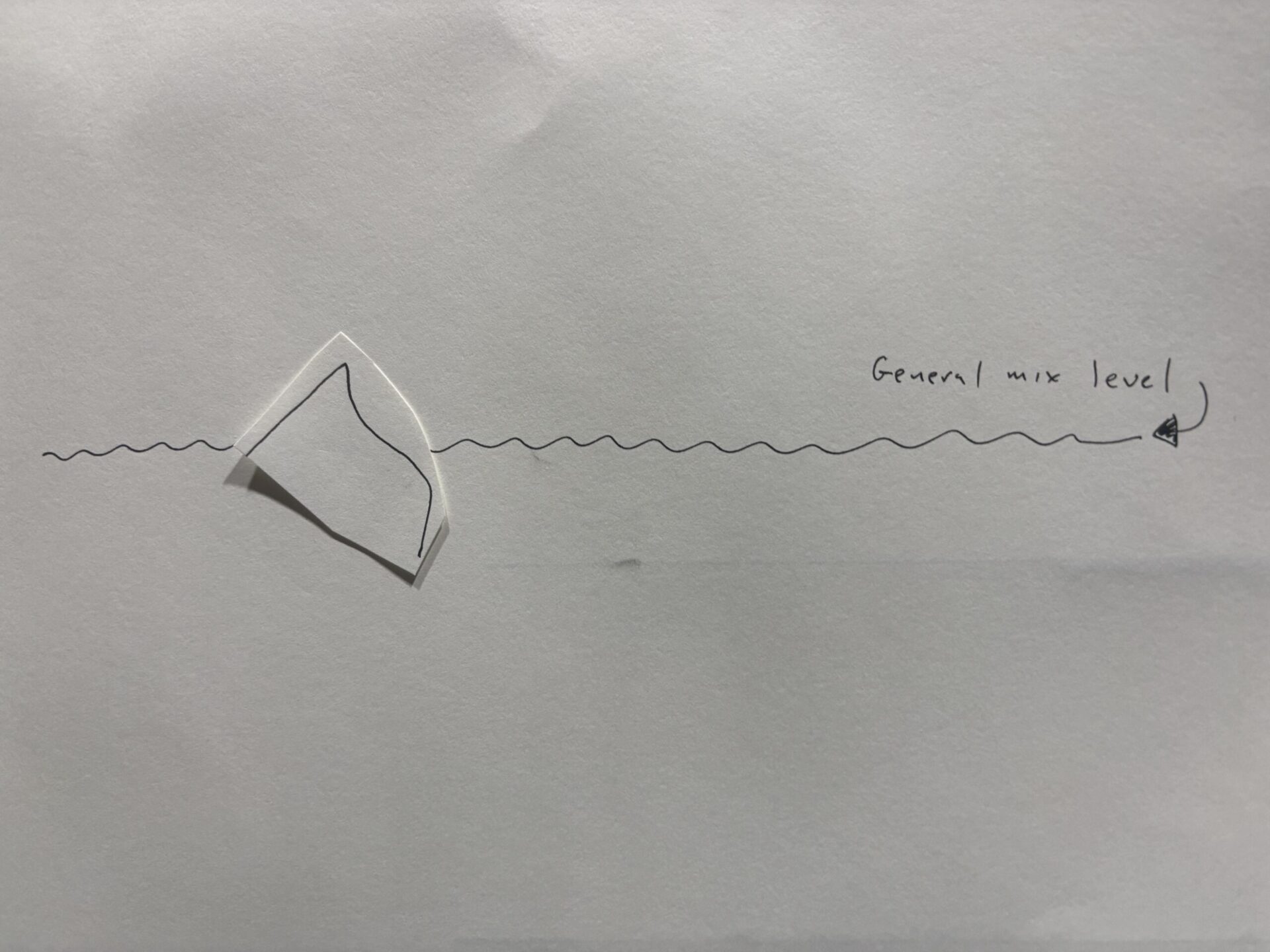
A slow release keeps the back part quiet; a fast release makes the back part louder. Call this Poke and Hang—what pokes through the mix and what hangs around longer. You can read more on it here.
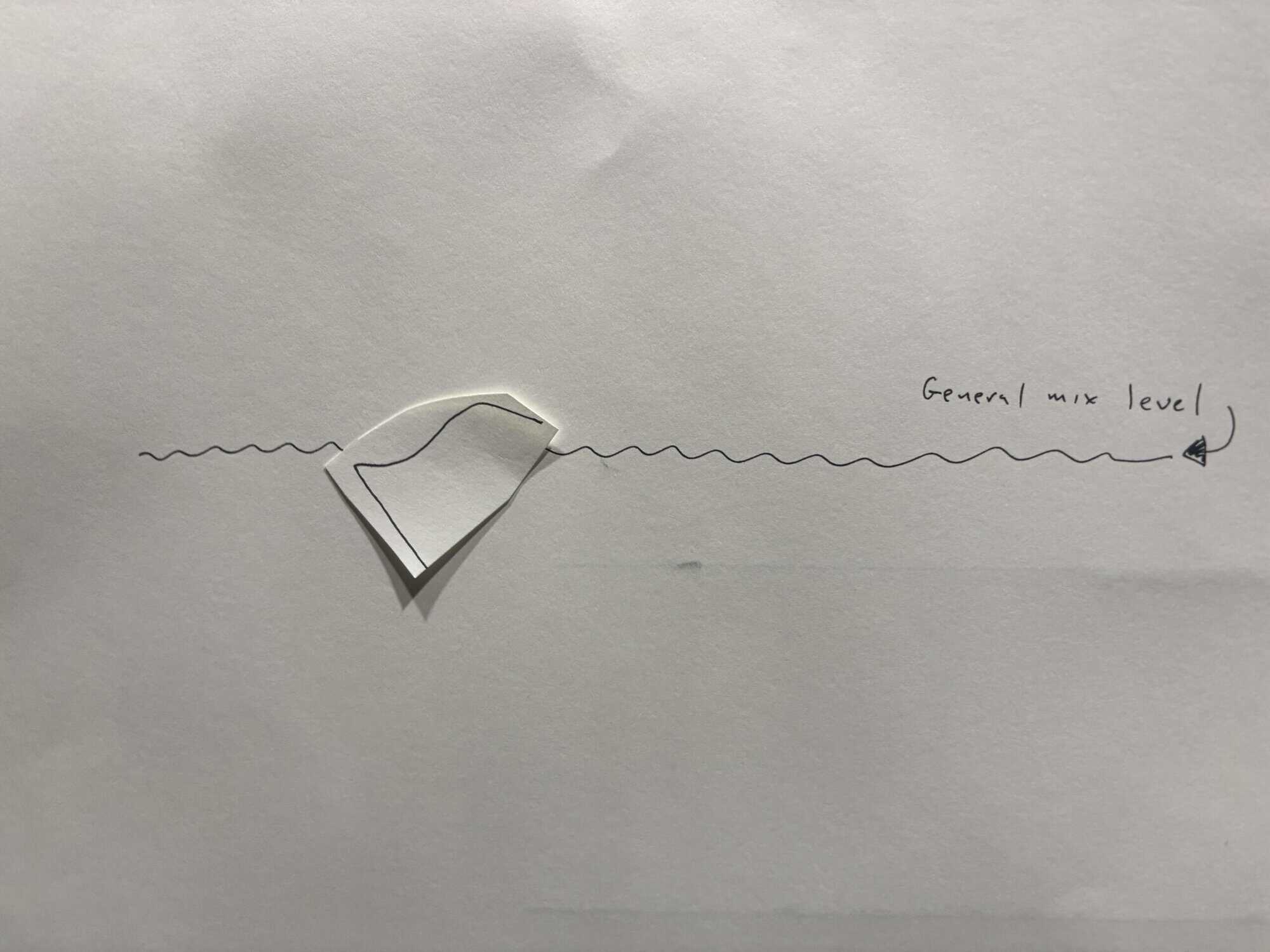
So, what does the Talkback Limiter do? It lets the tip of the front part through and ALL the back part. Put it on a snare and you get a bitey attack and tons of ring, resonance and room. Instant hugeness. It’s great on drums or really anything percussive.
Not just drums
The Talkback Limiter is simple and brutal, and that’s what makes it great, and it’s also what makes it problematic.
If you want to tighten up a vocal or an acoustic instrument, and you run it through a Talkback Limiter, it just smashes the hell out of it. Now, what it’s doing is letting transients through and then bringing up resonance constantly while adding saturation. These are all things you do when you’re processing a vocal or really any instrument when you’re trying to make it more present in the mix. You want to add thickness and energy to it. The Talkback Limiter does exactly that, only WAY too much. It’s a party animal with no moderation.
You have to be the designated driver to get it to work with non-percussive sources, and if you master this, the TBL suddenly becomes your best buddy and super useful. You do this by using the TBL in parallel.
In the old days, we would “mult” a track to two channels, crush the crap out of one and then sneak the crush under the unprocessed channel until the two blended to make something natural yet hyped. You can do the exact same thing on the Talkback Limiter by using the DRY/WET. In fact, when Dan or I are using the Talkback Limiter, it’s often barely in, set just above DRY. And it sounds marvelous.
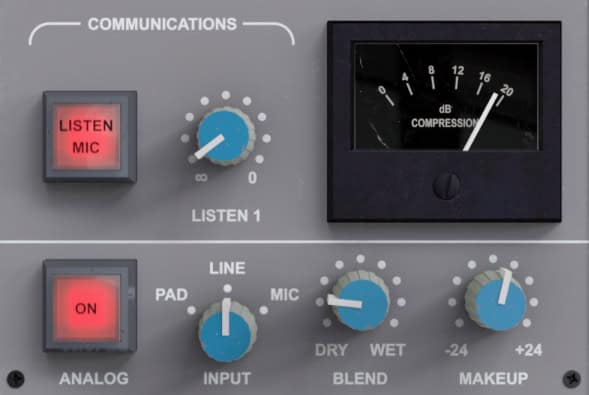
The TBL is always on Dan’s vocal chain, as well as on acoustic guitars. You can use it anywhere when you need a touch of presence, a little bit of smoothing. The TBL in parallel is a secret sauce.
The Talkback Limiter also does saturation and distortion. I’m running out of words for this New Monday, so here is a link to our Talkback Limiter playlist:
https://youtube.com/playlist?list=PLe6ZCJT_4KPmptnZNSVRrHYnWHFXnT8eD&si=gfLdpYCKAoMiHtNW
Enough! Thanks for reading! I hope you’re all well and we’re off into something new next week…
Warm regards,
Luke