
Korneff Tips 002: The Magic of M/S
M/S is magic.
M/S, or Mid/Side, is a way of processing a stereo signal. It can be from mics, set up in an M/S pair, or it can be the way you compress or EQ a bus, or any stereo signal. The bottom line is M/S sounds better than most stereo mic’ing techniques, especially for rock, jazz and pop, and it’s a super creative way to work with tracks in a mix. Here’s a little bit of tech talk and a lot of ideas for using M/S creatively.
Instead of stereo with a Left and a Right channel, M/S has a MID (M) and a SIDE (S) channel. M contains the information that is basically down the center, or in both the left and right channels, while S contains information that isn't in the center, but instead over to the left or the right.
A clunky explanation but it will have to do.
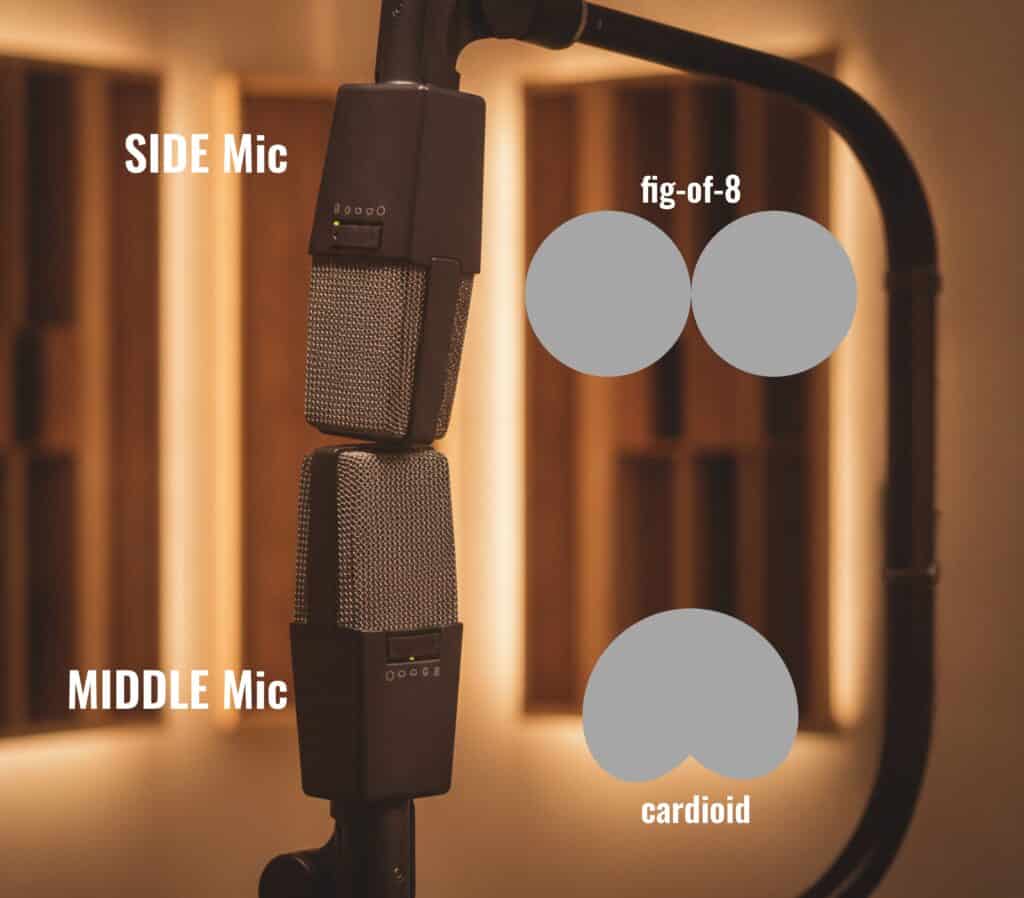
To record M/S stereo, you need two mics, one with a directional pattern, like cardioid—this is the M mic, the other is a figure-8—this is the S mic. Point the M mic at the sound source and put the S mic perpendicular to it. Make sure their capsules are as close to each other as possible. You’ll do this generally by putting one on top of the other.
Record them each to a channel. On playback, pan the M to center. Split the S into two channels, pan one to left, pan the other to right, and reverse the phase of one of the S channels. Instant stereo.
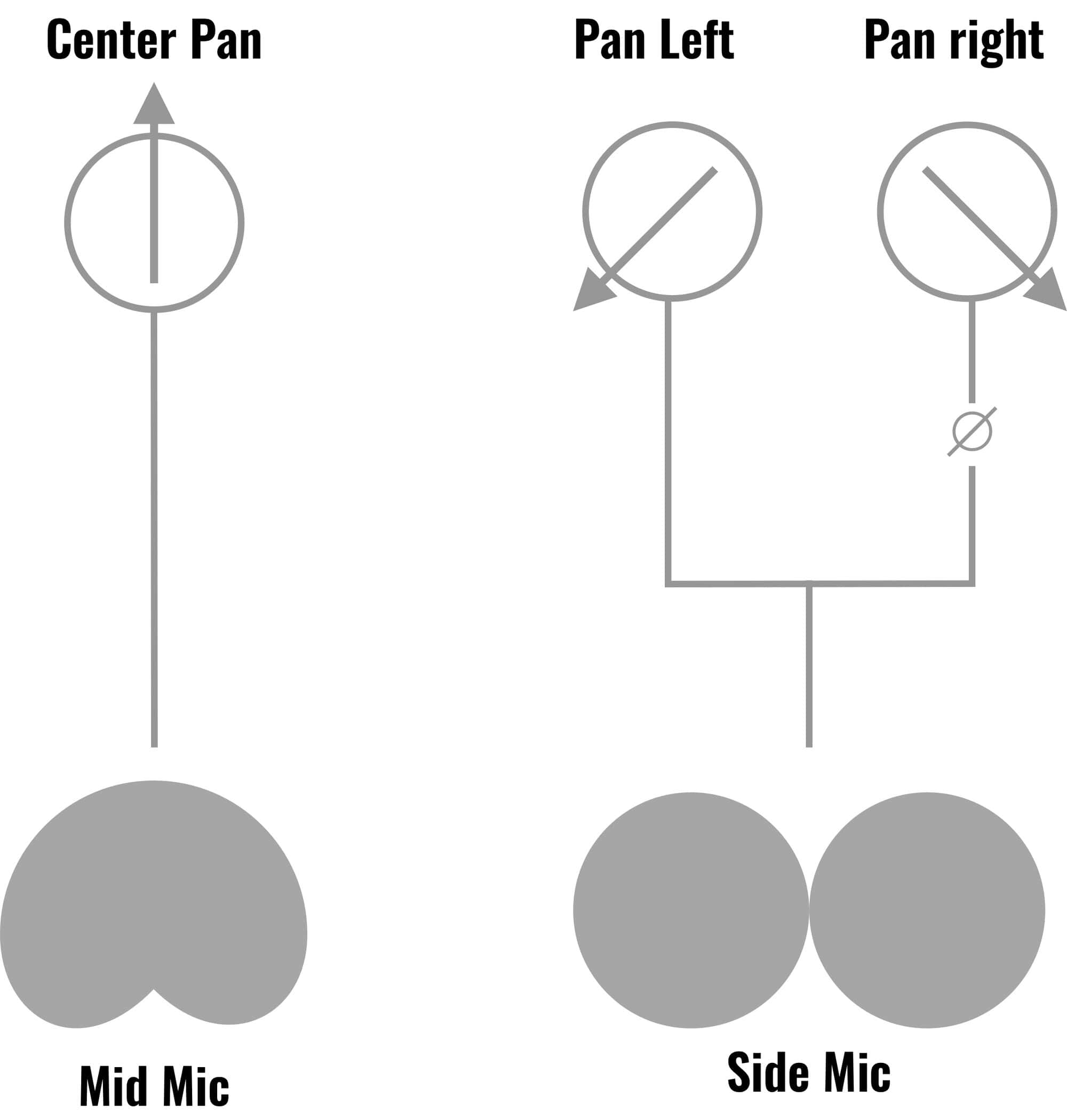
Setting up routing to convert the two M/S channels to record or mix.
M/S Micing is better
When you mic things using a crossed pair, like typical XY stereo micing, you'll notice that the main thing you're micing is slightly off-axis by both microphones. It doesn’t have a microphone pointed right at it. If you’re far away, this isn’t a big deal. If you’re close, it is, because a mic’s frequency response starts rolling off at the top and getting weird as the sound source gets off-axis. This is why singing into the side of a mic is dumb. Why would you mic something by NOT pointing the mic directly at it?
With M/S, the M is pointed straight at the source, you get full frequency response. This is better.
Once you mic an acoustic guitar with M/S you will never go back.
Switch the Mics out
XY requires you use the same mic for the X and the Y. M/S, he doesn't care, as long as you have a figure-8 for the S. This means you can use a dynamic for the M and a ribbon for the S, or a small-diaphragm condenser for the M and a large-diaphragm condenser for the S. What I just wrote will drive the purists out of their minds! "No! They need to have matched frequency response!"
When someone listens to your recording and says, “Ya know... this would be better if the mics had matched frequency response. It would have a better hook.” call me and I’ll make you a sandwich.
Choose an M mic that LOVES your sound source.
Stereo Lead Vocals That Don't Suck
Recording lead vocals in stereo is a dumb idea. First of all, if the person moves around while singing, the stereo image jumps around. And if you use XY, they're off-axis, which sucks.
But... stick the VOCAL MIC THAT LOVES THEM as the M and you get a beautiful, full vocal sound, and then you have an S that gets some vibe and room sound. If they move around too much, bring the S mic down in the mix. Or while mixing, keep the S down most of the time but bring it up for those special moments when you want people to notice something cool about that vocal. You can also squash the crap out of the M and let the S breathe, or squash the crap out of the S and let the M sound natural.
MS Drum Overheads
These days, everyone is sticking a lone overhead over the kit, then blending a left and a right overhead, and causing a phasey mess. Just use M/S.
Pick a MIC THAT LOVES THE DRUM SET as an M, and put that right over the snare and the kick. Now you have your single mono overhead. Put it in the perfect spot. Make it sound killer awesome gold.
Then, get a figure-8 for the S—perhaps that smooth ribbon you like so much. Align it to the M. Now, remember, there is the VISUAL axis of the drum kit, which is the view of the kit from an audience member, and it looks like this:
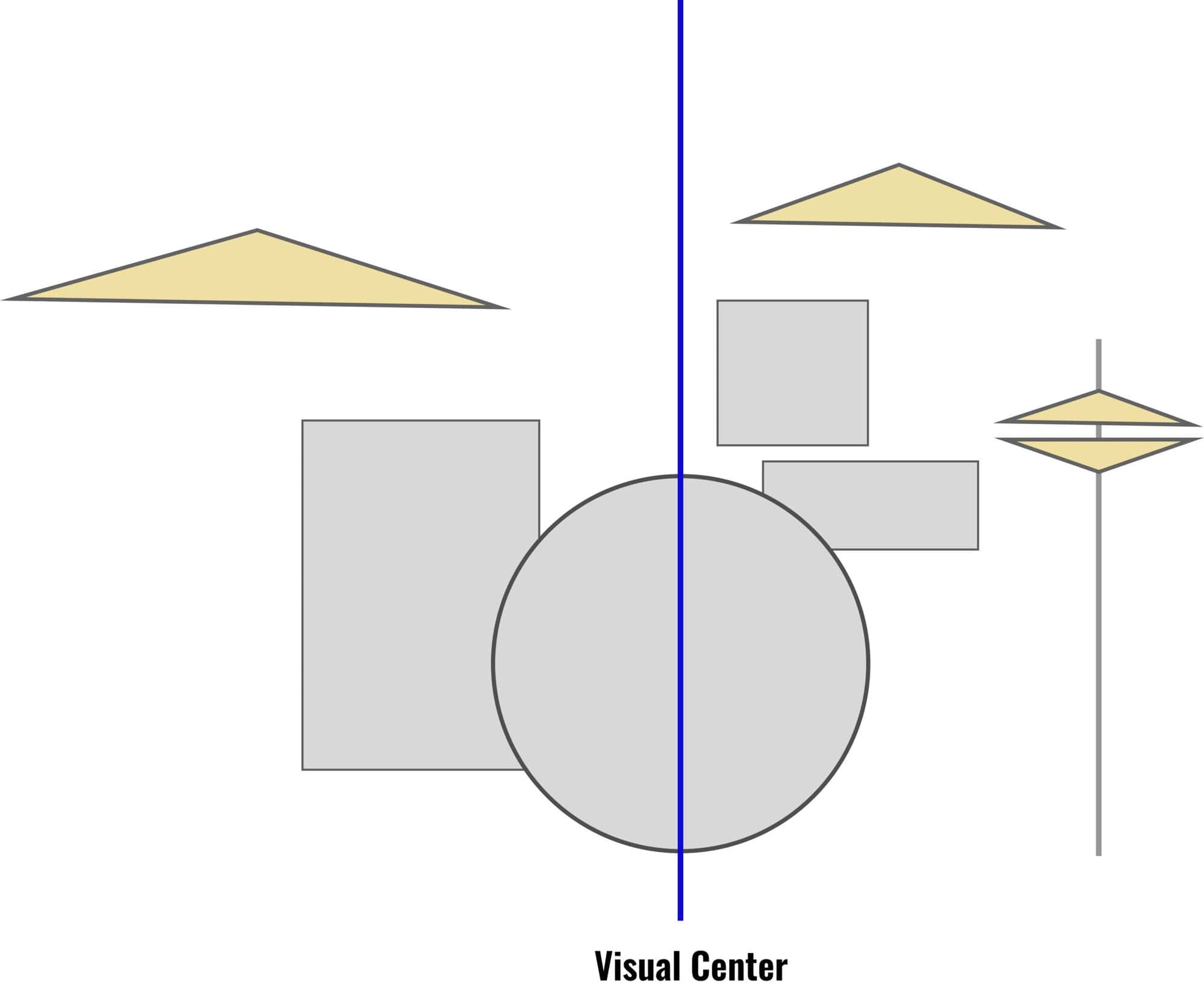
The visual center of the drum is generally the kick, but cymbals and tom placement can move the visual center left or right.
And then there's the acoustic axis of the drum kit, which looks like this, as if you’re floating over the drum set:
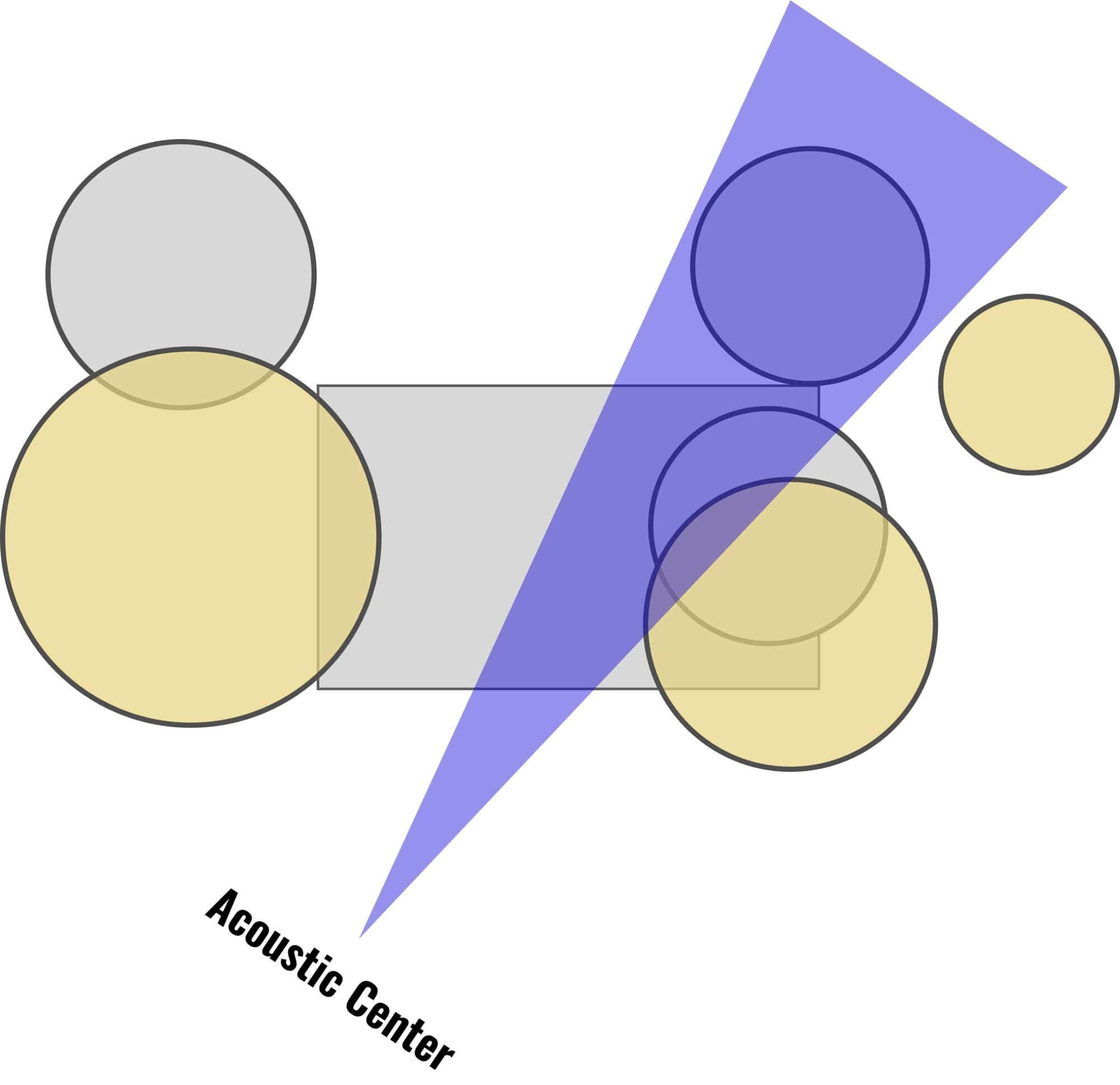
Typically, kick and snare are centered in the mix, and toms and cymbals more to the left and right. When using stereo overheads, think about the mics presenting an image centered on what you want centered in the mix.
I cheat my M and S, or whenever I do overheads, to favor the acoustic axis.
Record them drums. In the mix, you can vary the width of the kit by changing the S level, but you never lose that solid mono overhead. Of course, you can play with the S during the mix, tight on the verses, spacey on the bridge, etc. And of course, you can compress the M and the S differently, EQ them differently, etc.
M/S in the mix
Well, look. Process your drums through our KA1776 set to unlinked Mid/Side. Process the M and the S differently with it, it will change your life more than lowering your cholesterol.

Remember that the S signal is really mainly ambience. SO... if you're going to add reverb or delay to something, add it to the S for... uh... extra double reverb?
Like on the drum set, adding reverb on the S signal only gives you a sort of a fake-ass room sound. Try a short, small-sounding reverb patch. Put our Shure Level-Loc on the S and DESTROY IT.
Tchad Blake's fave way of faking reverb is to crush signals until they sound ambient. The Level-Loc does this.
On vocals, keep the M dry so that vocal has some immediacy and purity to it. Add the reverbs and delays to the S and get that phasey richness that your audio professors warned you about. Put a flanger just on the S. Automate the level of the S, so the signal gets wider and smaller.
OH! Here's a really cool one I just thought of: Duck the S signal.
So, like, with a vocal, feed the M into the key of the S, so when the M gets louder the S turns down, and the vocal seems to bloom as the singer gets quieter.
On drums, key the S to the snare, and gate it so that on snare hits the S gets louder, which will sound more ambient and wider. And duck the S with the kick. So on the kick, the S goes down, on the snare it opens up. What fun! A breathing drum set!
The possibilities are endless.
XY is kids' stuff. Go M/S, young friend.