Happy Monday –
Today, 4/20, is the birthday of our Puff Puff mixPass plug-in, which is on sale for 40% off, and the rest of our plug-ins are 20% off, because it’s a party! Go here.
The Puff is one of the plug-ins that both Dan and I use everywhere. You clap it on something, maybe tweak it (often not), and things get louder and more defined. It has weird controls as well as a weird look. What the hell is going on with that thing???
Today, we’re going to look at the birthday boy, and how loudness kinda works in general, but not from a tech-heavy viewpoint.
Me, personally, I often find that technical know-how isn’t as helpful to me creatively as a wider, perhaps more metaphoric view. Perhaps something is lost in translation as the math and decibels move from the nitpicky, procedural left side of my brain to the wandery, dreamy right side. Or maybe it’s that having an intuitive sense of what’s going on is faster in the studio and leads to creativity that’s less doctrinaire and typical.
For today, let’s approach loudness, and the Puff Puff, from the more intuitive position, and tie that into the technical. And you can all write me later and tell me if this is dumb and sucks.
Loudness is Density
Loud sounds are dense sounds. They’re simply more—that’s why they’re loud. A single flute is one level, a whole section of woodwinds is at another level, an entire orchestra is yet another. More is more. More is dense. Lots of food in the fridge? The fridge is dense with food.
It’s a summer night. You’re outside and there’s a steady drone of crickets, cicadas, little frogs—whatever noisy bug-like things happen outside in the summer. Summer bugs individually are quiet, but tons of them all together can get very very loud. A density of bugs.
Then someone sets off a firework—there’s an explosion. That explosion can easily be heard over the bugs, but it dies out quickly, leaving the buggy guys, which drone on across time all night. If we set off a lot of fireworks across time, we increase the density of explosions, then we get an even louder loudness. Loudness is an expression of density.
Dynamic Range and Density
Take those crickets and that single explosion and plot them on a dynamic range diagram, with decibels along the Y axis, time across the X, and the point at which our recording equipment—the microphone or the preamp or the converter, or our ears—overload and break up. We’ll put the explosion right near the top, right below clipping. That’s the loudest peak. The crickets are much lower. It’s dense down low, less dense up top.
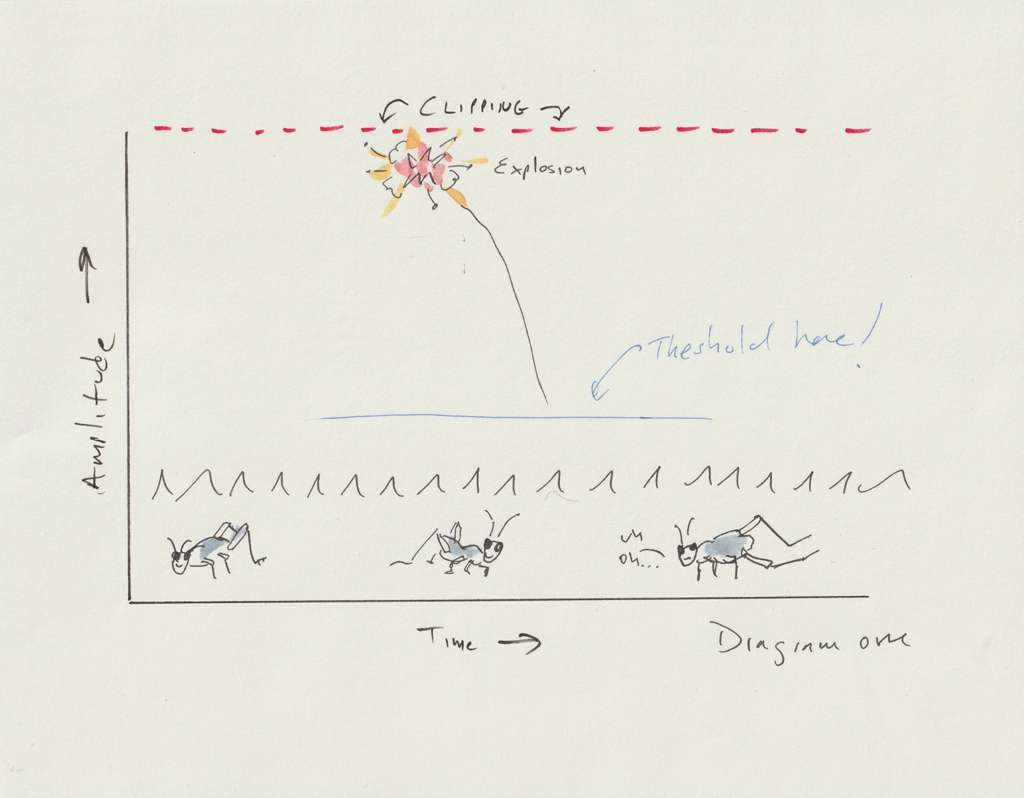
Let’s move that low density up.
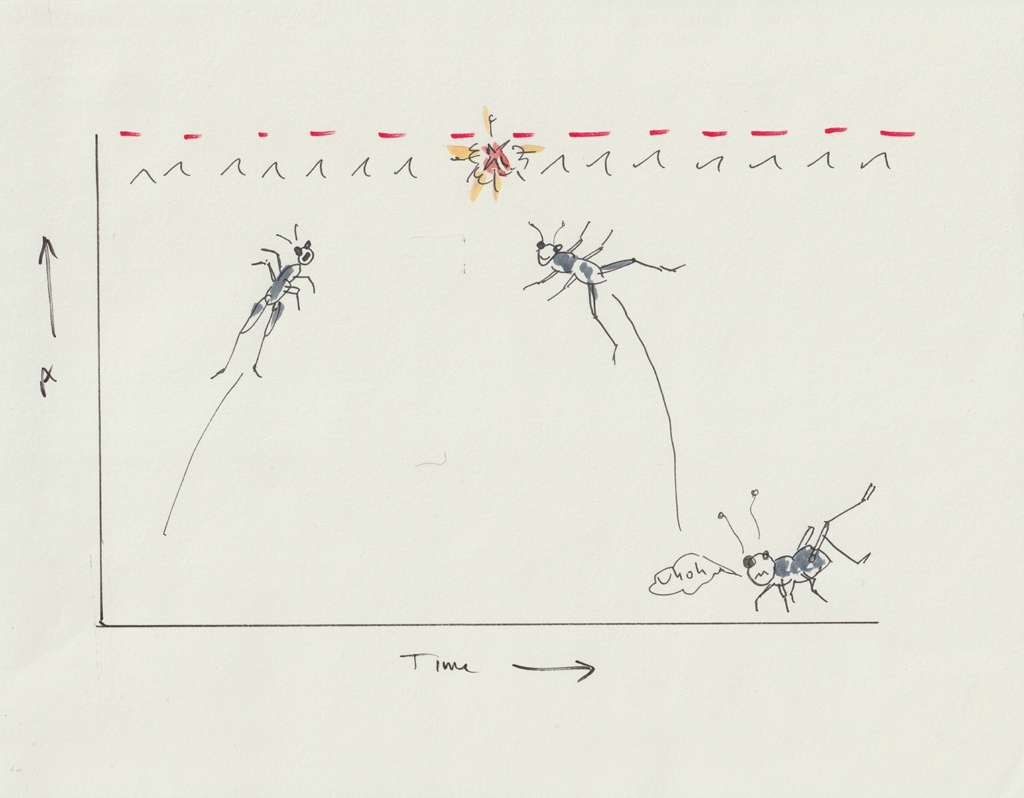
If we compress—setting the threshold to push down that explosion but not hit the crickets, then we use make-up gain to turn the entire thing up and move those crickets towards that clipping point, the density of what’s audible increases.
But there are even quieter things underneath the crickets. Perhaps the crickets are farting.
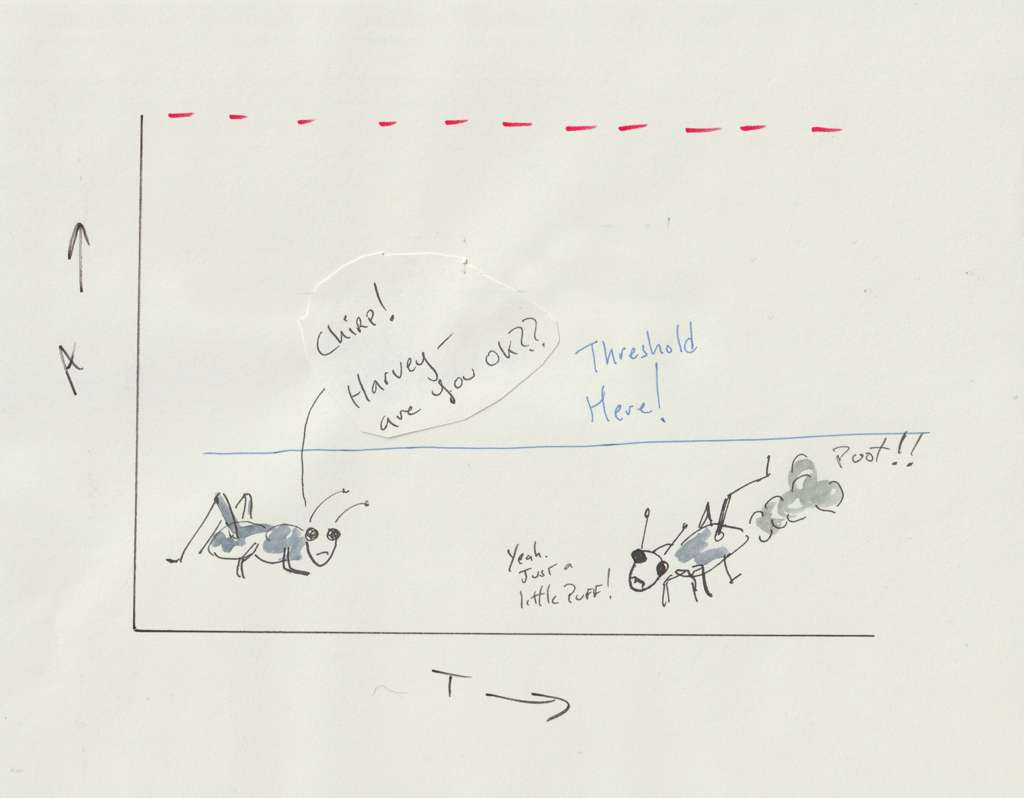
We can apply another layer of compression, push those chirps down, and then bring the whole thing up again, again increasing density and loudness.
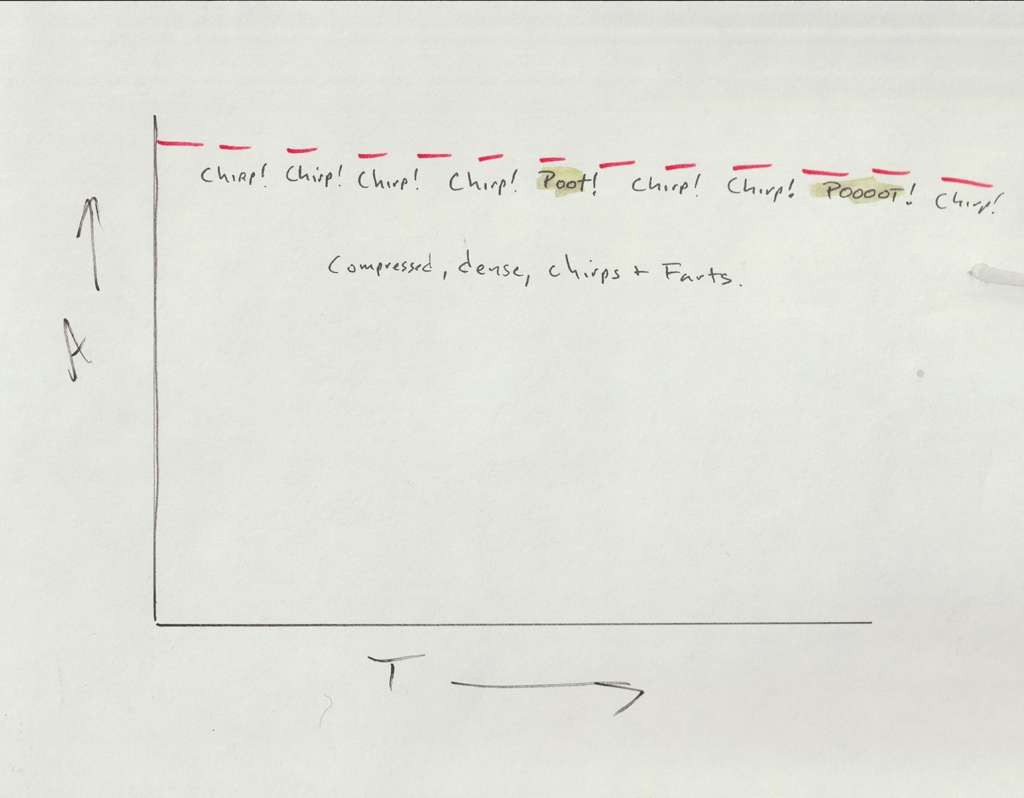
This is how peak limiting and compression make things louder. We squash the dynamic range, increasing its density, and raise it up. The signal gets “thicker” and more dense.
There’s a technical measurement that tracks this well: RMS, which is essentially the average level over time. A peak measurement tracks that explosion. RMS captures the crickets. Humans move across time, so RMS is much closer to how we actually perceive loudness. LUFS — which is the unit everyone chases these days — takes this further by futzing with the measurement by taking into account how the average human ear hears. And that leads us to our next topic…
Frequency Response and Density
Our ears are designed for maximum intelligibility of speech. Specifically, our ears are tuned to be sensitive to consonants. Consonants break up the steady stream of air that vowels produce. A quick, silent demonstration of the power of consonants.
What the hell does this mean: oe auio ae e ooe ui ee?
No clue, right? Sounds like some guy with a face full of novocaine hitting on a dental hygienist. Actually, they’re saying “Korneff Audio makes the coolest plug-ins ever.” Try it as a pickup line the next time you’re at the dentist and let me know how it works.
Consonants carry their energy in the midrange, from around 1kHz up to 4kHz, and that’s where our hearing is most sensitive.
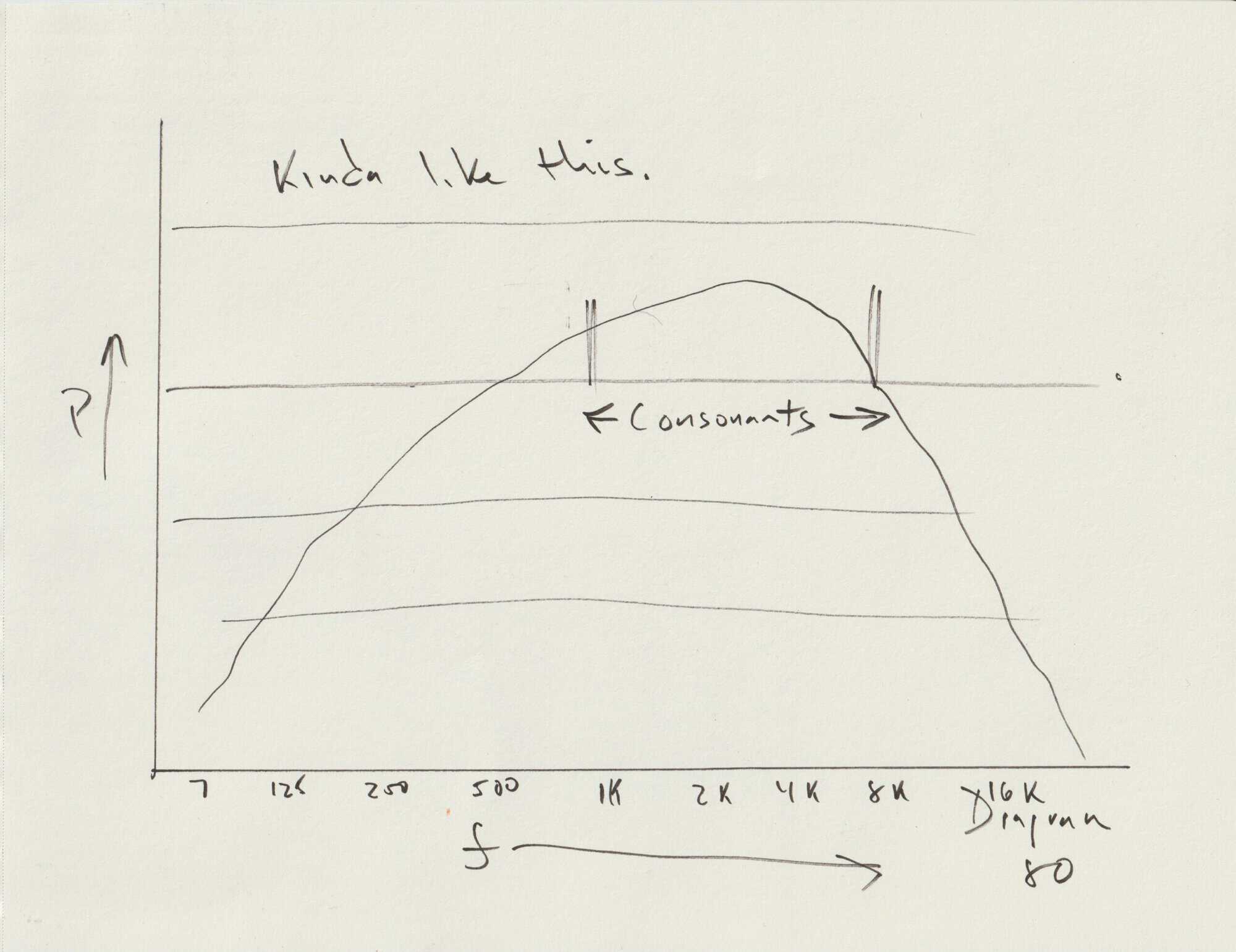
Our hearing is less sensitive to the lows and highs, essentially rolling them off like a ragged mid-band pass filter. But our hearing is also adaptive. Scientists mapped this out: as volume increases, our hearing flattens, and we perceive more lows and highs. Our hearing is flattest around 80dB SPL, and there’s a lot of mixing advice that 80dB SPL is where you should peg your monitors. Both Dan and I mix lower than that, but the idea behind it is sound.
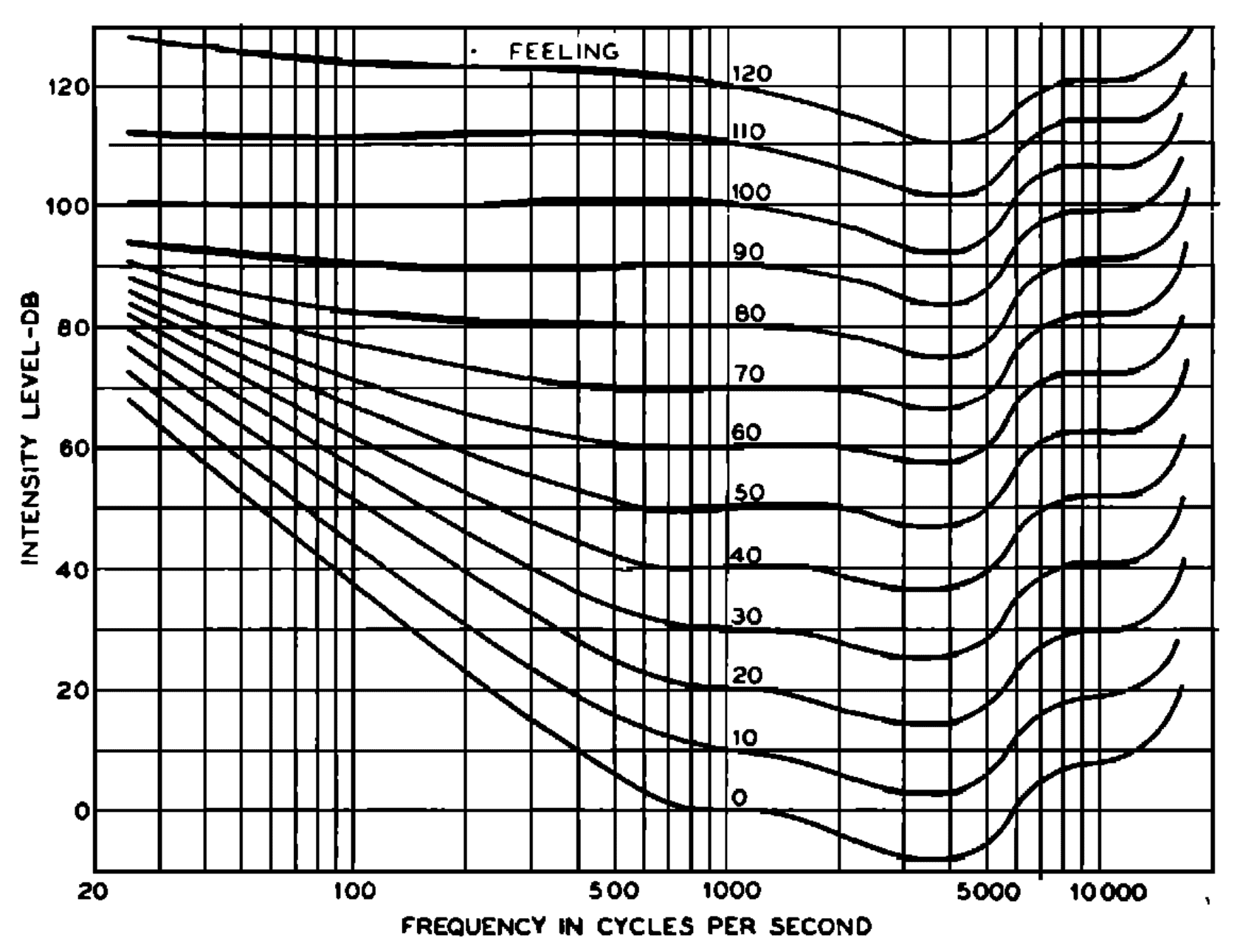
From a density standpoint, this makes sense — as volume goes up, more frequencies become audible. We’re increasing density. Our ears interpret hearing more bass and more highs as sounding louder, which is what the loudness button on a stereo does, and what the smile curve on heavy guitars and loud records is doing. It’s a loudness hack.
Time and Density
A solo voice in a dry room is quiet compared to the same voice in a church. The acoustics of the church help the voice bounce off the walls and return to listeners as reverb. In essence, that single voice becomes a choir. Put an actual choir in the room and it can get incredibly loud. Cathedrals and concert halls are basically designed to be amplifiers, and they do this by “repeating” the sounds in the space.
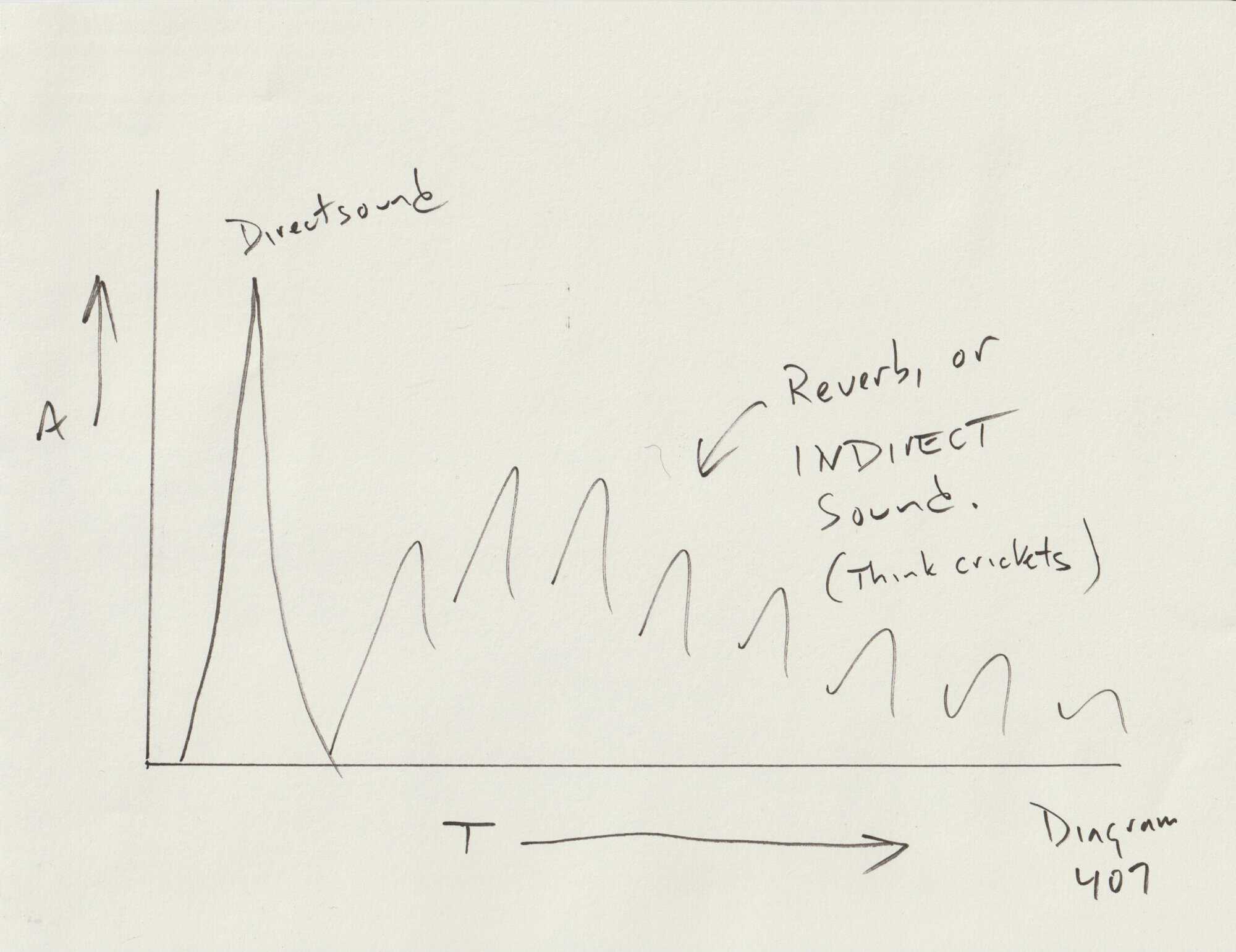
Delays and reverb increase density over time. Depending on delay times, there can be phase cancellation, which can reduce density, generally more affecting frequency response than overall loudness.
Harmonic Density
More average level is more dense. More lows and highs is more dense. Reverb and delay are more dense.
What if we had all of the frequencies happening at once? Everything from 20 Hz to 20,000 Hz. Would that be loud? Hell yes! This is basically what White Noise and Pink Noise are, with Pink generally sounding the loudest to us because its distribution of energy results in it having more low end than white noise (and more low end sounds louder to humans, remember?) Put equal-level music and pink noise through a sound system and the pink noise will sound louder, because there are no gaps in the frequency response of the signal. Music, to sound musical and not like noise, has to have some sort of pattern to the distribution of frequencies. It can’t just have everything all the time.
A note played by an instrument or sung by a voice has overtones—harmonics. The particular arrangement of harmonics are a large part of the timbre—the distinctive sound—of an instrument. Guitars have a set of “guitarist” harmonics. Individual singers each have their own sets of harmonics. It’s how we tell them apart from each other. The harmonic structure also reinforces a sense of pitch. Pink noise is noise because it is all pitches at once, whereas an A or a G has a particular pattern to the frequencies involved, which to our ear sounds like a specific pitch, or a collection of pitches—a chord.
Instruments with more harmonics tend to be louder, and this makes sense if we think in terms of density, and if we think in terms of the density of sounds, such as Pink or White Noise. Drums are very noisy—lots of harmonics and most of them mathematically unrelated—and essentially pitchless.
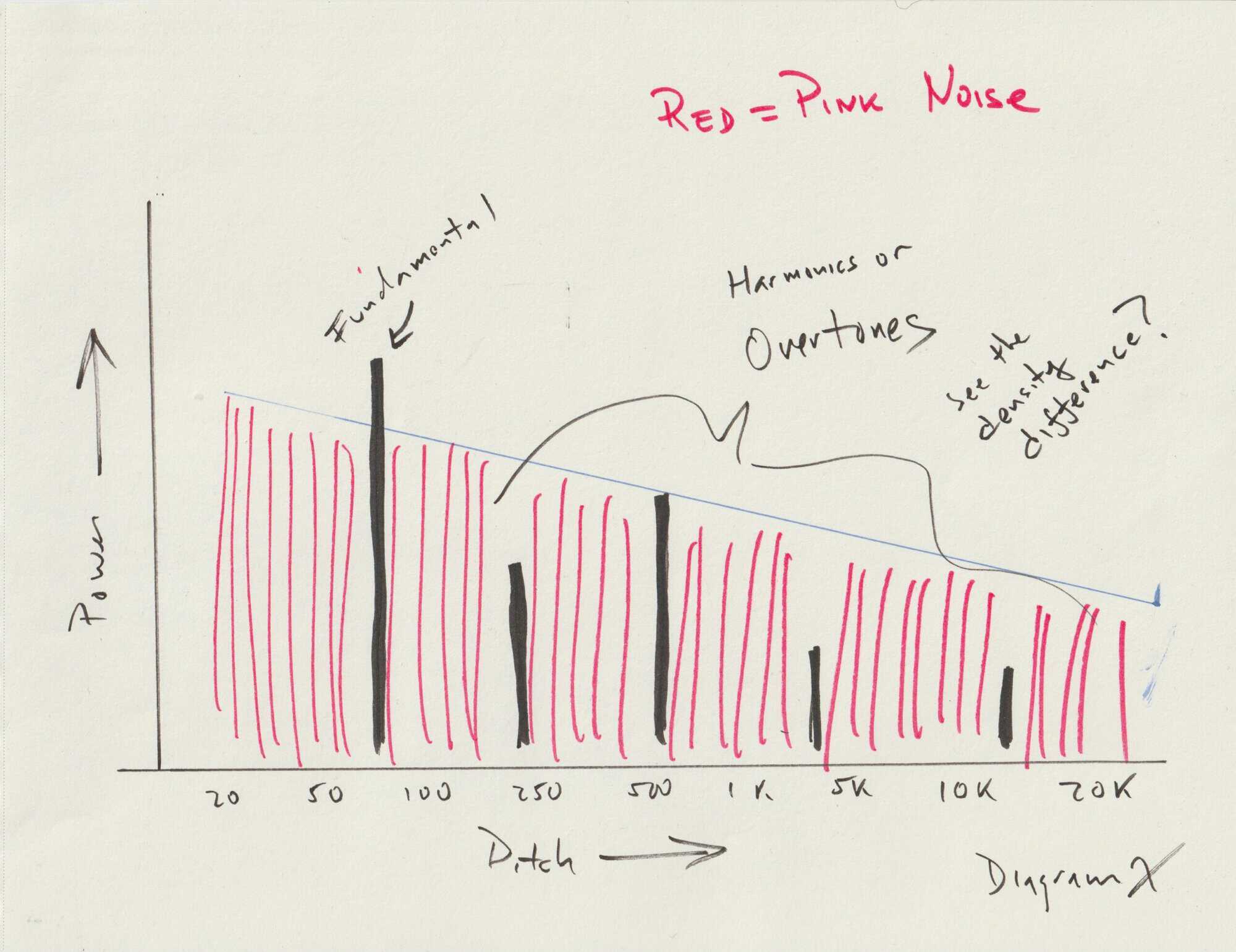
Is it obvious that we can make something louder by increasing its harmonic density?
This is how the Puff Puff mixPass works.
The Puff Puff adds Harmonic Density
When a signal is fed into the Puff, it generates harmonics and overtones that are mathematically related to it, and this makes the signal apparently louder. This doesn’t move the meter all that much, because harmonics are typically at a very low level, but our ear can detect this added density and perceives it as sounding louder.
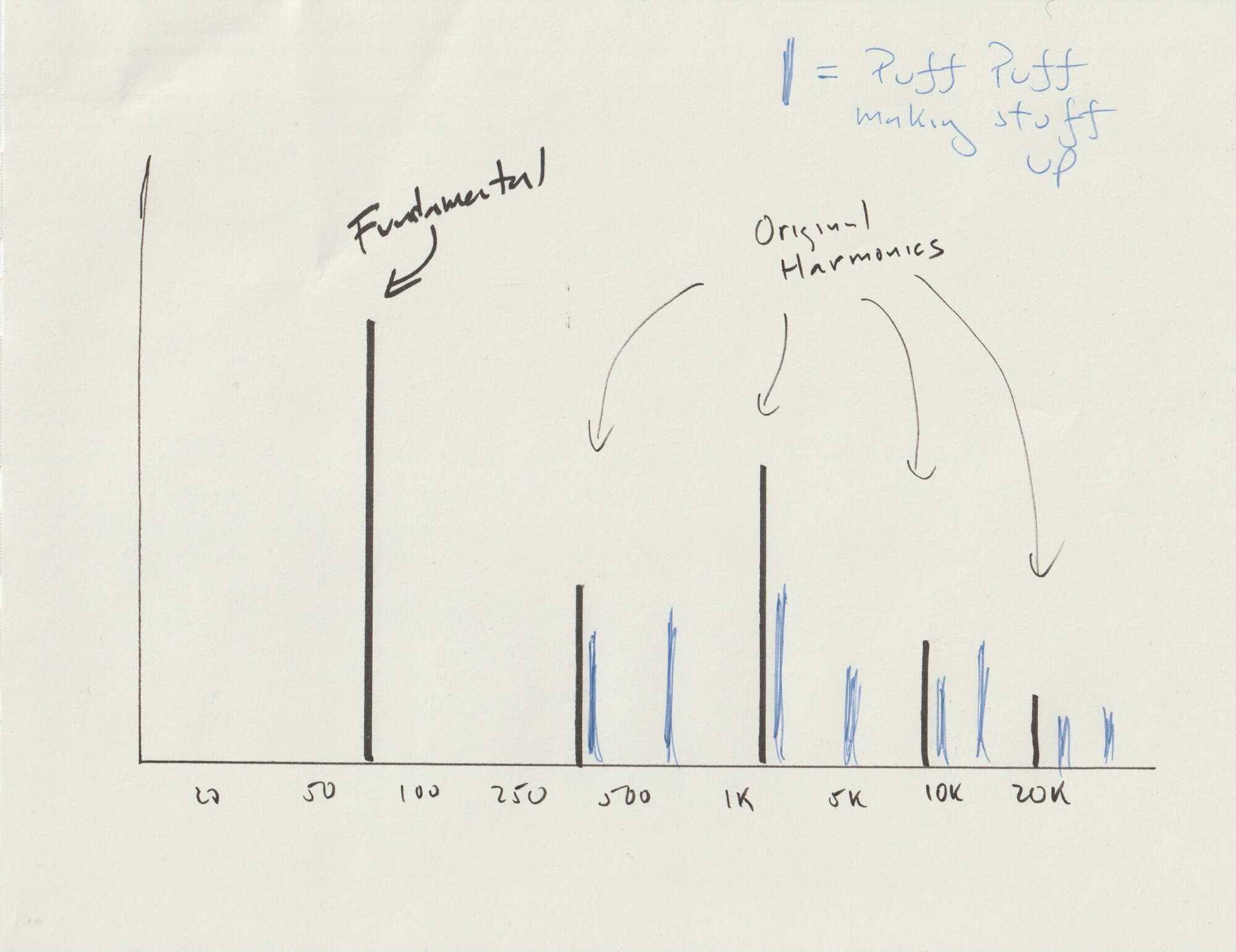
The Puff Puff also adds some apparent presence and brightness, because added harmonics go up in pitch, which is why if you really saturate and distort a signal, it gets buzzy and thin-sounding, because a ton of bright stuff is added.
The Puff Puff can be thought of as a very controlled, strategic saturator. It is adding saturation not by clipping the waveform, but by reshaping the waveform according to a proprietary algorithm. The result is that the Puff will add loudness and clarity, not something our ear might tag as saturation and distortion, although at some settings the Puff can play some distortion games.
More Thoughts
I want to give you all more thoughts on this, and some usage ideas and guidelines on the Puff, compression, and loudness in general, but I also don’t want this too long. SO… look for Part 2 on Tuesday. We’ll call it New Tuesday.
In the meantime, even if you don’t buy a Puff, download a Puff Puff demo and play with it, and some of what I write about tomorrow will make more sense.
Warm regards,
Luke