
Happy Monday,
A very mixed bag this week, after all the PUFFery of last week. It’s the last few days of the Puff Puff mixPass birthday sale, so now is the time to strike.
If there’s one thing threading through all of this, this week, it is perhaps slide guitar?
FPSHOT
I stumbled across this. Put it on—it’s a lovely thing to hear in the background.
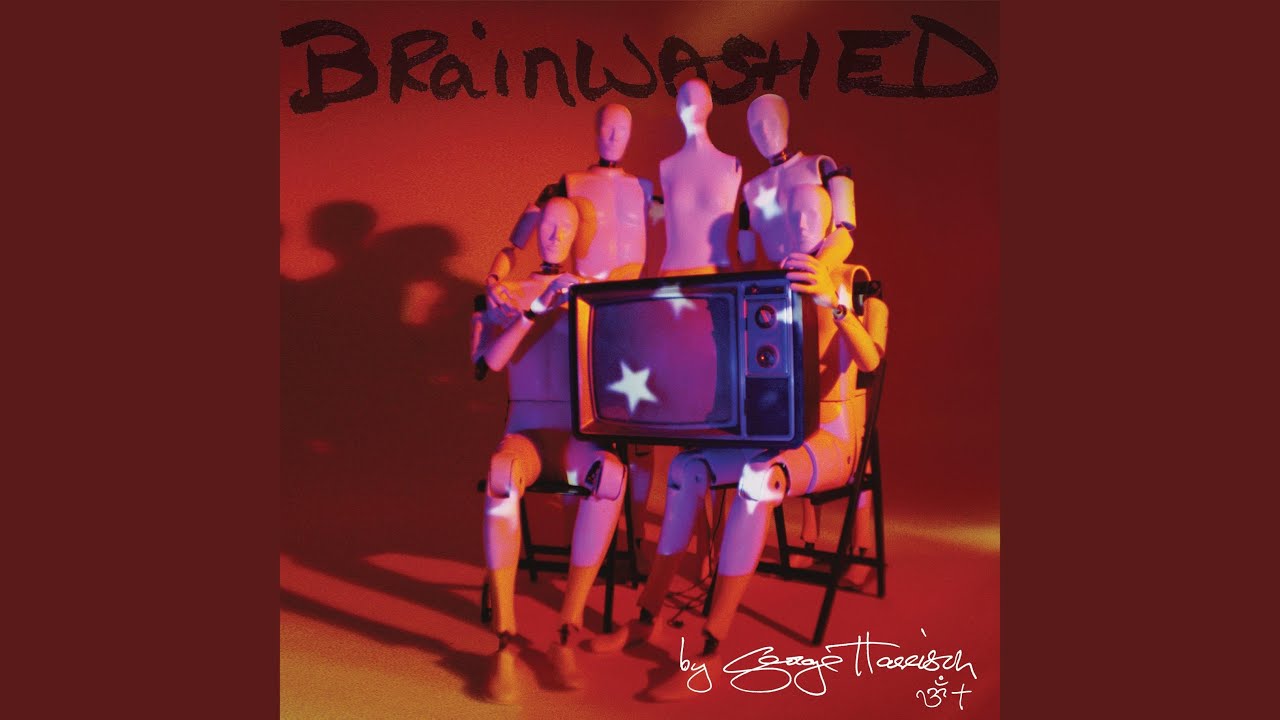
I don’t know if guitar instrumentals get more beautiful than this. George Harrison recorded this shortly before he died in 2001. The album it was on, Brainwashed, came out in 2002, and this, Marwah Blues, received a Best Pop Instrumental Grammy.
Harrison recorded this, and most of his solo albums, at his home studio, Friar Park Studios, Henley on Thames, also known as FPSHOT. I’ve no idea how that is pronounced. FP Hot?
Friar Park was George’s estate, purchased in 1970. It was a late Victorian mansion with gardens, a grotto, its own mountain, and statues all over the place. It was quite a fairyland and it often found its way into Harrison solo album artwork. The studio was built by Eddie Veale, who also constructed John Lennon’s home studio, as well as studios for Eric Clapton, Pete Townshend, and commercial facilities including Advision, Trident and SARM. Mr Veale has built well over 500 studios and is still working. Here’s an interview with him. It’s about half an hour.
Harrison’s studio started as a 16-track with a custom console made from Cadac channels and components. You find Cadac woven throughout English console history, kind of the way API is throughout West Coast studio history. If someone needed a console, they would often start with API. In England, if one wanted a custom console, Cadac was often the base genetic material.
Captain Beefheart’s 10 Commandments of Guitar Playing
I was at a stationery store buying a notebook and ink and somehow the sales clerk worked Captain Beefheart’s 10 Commandments of Guitar Playing into the conversation.
Beefheart, or Don Van Vliet… was a nut or a genius, probably both. These days he’d be considered a performance artist like Laurie Anderson. He did everything, from music to painting to sculpture, and did it all weirdly.
Musically, he got his start with Frank Zappa, and he’s just as far out there. Farther. Here he is with The Magic Band—he’s the singer.
His best-known record is Trout Mask Replica. Zappa produced it. It’s considered a masterpiece, albeit an unpleasant one. It’s #50 in Rolling Stones’ Top 500 albums of all time. It’s atonal, either polyrhythmic or a-rhythmic. And then there are vocals… sigh… It is aural chaos that required weeks of gulag-like rehearsals, with Vliet freaking out to the point that musicians broke down and cried.
I don’t even know how to describe this album. Unlistenable comes to mind. Here’s a quick moment from it:

A few songs on it were cut at Sunset Sound on the Sound Techniques console. Amazing how that fact keeps slipping in here and there…
What are Beefheart’s 10 Commandments of Guitar? I think they’re tongue-in-cheek, but there is some good advice in there.
1. Listen to the birds
That’s where all the music comes from. Birds know everything about how it should sound and where that sound should come from. And watch hummingbirds. They fly really fast, but a lot of times they aren’t going anywhere.
2. Your guitar is not really a guitar
Your guitar is a divining rod. Use it to find spirits in the other world and bring them over. A guitar is also a fishing rod. If you’re good, you’ll land a big one.
3. Practice in front of a bush
Wait until the moon is out, then go outside, eat a multi-grained bread and play your guitar to a bush. If the bush doesn’t shake, eat another piece of bread.
4. Walk with the devil
Old Delta blues players referred to guitar amplifiers as the “devil box.” And they were right. You have to be an equal opportunity employer in terms of who you’re bringing over from the other side. Electricity attracts devils and demons. Other instruments attract other spirits. An acoustic guitar attracts Casper. A mandolin attracts Wendy. But an electric guitar attracts Beelzebub.
5. If you’re guilty of thinking, you’re out
If your brain is part of the process, you’re missing it. You should play like a drowning man, struggling to reach shore. If you can trap that feeling, then you have something that is fur bearing.
6. Never point your guitar at anyone
Your instrument has more clout than lightning. Just hit a big chord then run outside to hear it. But make sure you are not standing in an open field.
7. Always carry a church key
That’s your key-man clause. Like One String Sam. He’s one. He was a Detroit street musician who played in the fifties on a homemade instrument. His song “I Need a Hundred Dollars” is warm pie. Another key to the church is Hubert Sumlin, Howlin’ Wolf’s guitar player. He just stands there like the Statue of Liberty — making you want to look up her dress the whole time to see how he’s doing it.
8. Don’t wipe the sweat off your instrument
You need that stink on there. Then you have to get that stink onto your music.
9. Keep your guitar in a dark place
When you’re not playing your guitar, cover it and keep it in a dark place. If you don’t play your guitar for more than a day, be sure you put a saucer of water in with it.
10. You gotta have a hood for your engine
Keep that hat on. A hat is a pressure cooker. If you have a roof on your house, the hot air can’t escape. Even a lima bean has to have a piece of wet paper around it to make it grow.
The Captain mentioned One String Sam and his song I Need a Hundred Dollars. I found it here. It is exactly what it appears to be.
Now I’m in a Beefheartian mood….
Maotai and the Solo Button
Maotai is 110 proof Chinese rotgut distilled from sorghum. I have to tell you, it’s pretty bloody awful. And it’s also instantly addictive. One shot of Maotai leads you to having nine more and then throwing up in the back of a cab in New York City in the mid-80s. And then doing the same thing weekly until the grunge era starts.
When mixing, the SOLO button is Maotai. Especially for those new to it. You press SOLO, hear just that track, and you can really focus and fix every little wrong thing and make it perfect… and then unsolo it and hear it in context with the mix and it’s… far from perfect. Because sound combines. It mixes in the gear and the air, and something heard by itself can sound radically different when heard against a mix.
Because it is a MIX. You wouldn’t make a cake by first cooking just the flour, then the sugar, then the egg, then the vanilla and chocolate, and then throw that all into a blender, would you? Cake and music are enjoyed at once, not on a molecular level.
But damn… that solo button is tempting. And truthfully, it does help one to really focus on that one element of the mix.
What you need to do is train yourself to mix in context. This is easier to explain how to do than what it is.
Most DAWs have channel or track stacks—you put all the guitars together on a bus, all the vocals on a bus, the drums on a bus, etc. Each of those can be thought of as a context.
DAWs also have VCAs, which just change levels of faders, no audio passes through them like a bus.
Take all of your individual buses—drums, guitars, keyboards, vocals, backing vocals, sweetening, etc., and assign them all to a single VCA fader. Make sure that VCA is at unity gain, so the levels stay even. Now, let’s say you want to work on the Bass. Rather than soloing it, remove the bass bus from the VCA, and lower the level of the VCA so you hear the bass a bit louder than the rest of the song. Now you can focus a bit better and still have the rest of the music for context.
You can also set up contexts for instruments that have to work together in the mix. As an example, set up a drums & bass VCA/Context, a keys&guitar VCA/Context, a vocals only VCA/Context, etc. If you’re working on bass, keep the drum&bass context up and slide down the other contexts a little bit.
Some of you are saying, what if I just adjust the buses? You can do that too, and that is often what I do when mixing. The thing to avoid is changing levels on individual channels that are feeding a bus IF there is processing on that bus, because changing levels feeding into a bus will change the signal hitting whatever is in the inserts. Dropping the levels will screw with compression, etc.
Mixing without soloing takes a lot of discipline, but if you mix every day for two weeks, keeping things in context and not hitting solo, you’ll adapt to it and it will become second nature.
If you’re new to mixing, this will up your game more than almost anything.
ANYWAY… off I go.
Warm regards,
Luke